Thursday, December 22, 2011
The Lemmings of Profit
There has always been an element of the population which possesses an insatiable monetary greed. In the past the consequences have been the inevitable social trauma of a widening gulf between the "haves and the have-nots". Yet now there is the added dimension of a lasting environmental impact due to single-minded profiteering. It seems that no matter how much evidence scientists bring to the table about the destructive effects of using fossil fuels, it's like trying to tell a circle of gambling addicts to put away their cards or they are going to end up bankrupting their families. They just can't stop. But in this case what we are bankrupting is the ecological fund for life itself to exist on this planet. The super-rich are behaving like that fascinatingly self-destructive rodent, the lemming. They are racing to the precipice to dive into the sea of chaos and death. That might be all right for the rest of us if they were the only victims of their obsessive-compulsive disorder with regard to piling up wealth. Yet we are harnessed to these stock-market lemmings, whether we like it or not. We can recycle, we can support local and small businesses, we can support organic small farming, we can use green transportation and green housing, we can plant trees, but if the masters of our economy do not cease this lust to continue to keep the energy that generally fuels our civilization (i.e., petroleum, shale-gas deposits, coal) as a commodity of upwardly spiraling profit margins, we will destroy our planet. As it is, scientists say we have set into motion forces that will take hundreds of years to reverse, in terms of the trends that are already causing deterioration of climates amenable to flourishing life -- even if we finally get off our backsides and start using alternative energies now in a massive way. So now we are fracking the backyards and fields of our own living space in the United States, poisoning our well-heads and aquifers, and resorting yet again to a fossil fuel to unleash upon our already besieged atmosphere. All I can say is, there is no life on Venus, and greenhouse atmospheres a thousand times less harsh than those of our sister planet would still make for a very unhappy existence. The lemmings are marching steadily into that invisible deadly smog, and we are strapped to them. The innocent will be dragged over the precipice with the money-mad fools. Let us not make any claim that human beings are superior to rodents.

Wednesday, December 21, 2011
The New Tyranny of Monolingualism
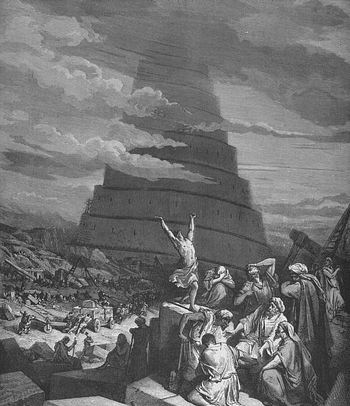
Language, pure and simple, is about communication. Humankind, perhaps very early on when we numbered only a few hundred individuals with the capacity and culture for speech, had one language. From there, linguistic differentiation began as separating bands of our species started to spread out across six continents and the islands of the Pacific. The Modern concept of political boundaries is a very recent factor. Before that territories were constantly changing hands, often peaceably through marriages of land-owning elites. Aside from that, much habitable topography lies on geographic margins and cultural fringes. It is in such places that languages mix, exchange vocabularies, and where bilingualism or even polylingualism becomes a practical necessity. Sometimes a patois or sign language emerges for purposes of necessary communication and economic barter. Today we have politicos across the planet who are pushing for an unnatural monolingualism within state borders, never mind that the state borders may have been created in a completely arbitrary fashion. The international community frowns on ethnic prejudice and genocide, and sometimes (though not often and forcefully enough) the international community intervenes before yet another country creates its own miniature (or even comparable) version of the Holocaust. So what we now see, especially in countries that are trying to preserve a veneer of respectability for purposes of trade alliances with wealthier countries, is the ethnic bigots trying to hide behind a "rational" argument for the legal enforcement of one language. Oh, we've seen it all before, even in countries of ancient "respectability" -- England forcing the Welsh and Gaelic children to speak English in school. France forcing Bretons and the Langue-d'oc region to speak the Parisian dialect of French. Now, just as the Latino community of underpaid disenfranchised workers are starting to exercise some political clout based on the very real and significant contribution they make to the American economy, we have the conservatives barking for "English" (or even "American") only speech in all affairs. Coincidence? In Slovakia, ethnic Magyars aren't allowed to speak Hungarian, even though they have lived in the towns and farms of eastern Slovakia for literally centuries. In general, minority speakers belonging to the Finno-Ugrian language family (of which Estonian and Hungarian are better-known examples) are being harassed across the European and Asian worlds, their books burned, their printing presses smashed, their radio broadcasts electronically smothered. On another front, languages thousands of years old are dying out every year simply because of the confiscation of lands from aboriginal peoples who are then scattered to the four winds as they brokenly relocate in urban settings, desperately searching for a way to survive in the ugliest side of the modern world. These phenomena are not about improving communication. They are about finding ways to separate portions of the population from political and economic enfranchisement. This is all about ethnic chauvinism, domination by the linguistic majority -- not about inclusion through homogenesis ("the melting pot"). There are three historical proofs against the seemingly "reasonable" arguments of conservatives on this issue: the Austro-Hungarian Empire, the Persian Empire, and the Jews. Austro-Hungary was the most cosmopolitan Modern state the world has yet seen. Anyone who wanted to be anyone had to be multilingual. In that state (of which a host of European countries were carved) people had to learn to speak such languages as German, Hungarian, Czech, Slovak, Slovenian, Yugoslavic (Croatian-Serbian-Bosnian), Wallachian and Yiddish! Business (political, economic and cultural) was carried out in all these languages between citizens of the Empire, whether as native speakers or as a second language. Many people knew other languages as intimately well as the one they learned at their mother's knee, and many households engaged in more than one language for daily domestic use. The Persian Empire of Antiquity was an ancient analogue to the Austro-Hungarian Empire. The Persian Empire lasted many centuries (much longer than the feuding Macedonian states that later carved it up in Alexander's destructive wake). Ruled from the grand city of Persepolis, the Persian Empire respected ethnic difference, multicultural education, encouraged religious freedom, and multilingualism was the order of the day. They ran an efficient, centralized, harmonious, bureaucratic state of equal citizenship integrating many more languages and cultures and over a much wider territory than Austro-Hungary. Then there are the Jews, who since at least Hellenistic times have been renowned for their multilingualism and cosmopolitan expertise. Jewish artisans and merchants prospered because they knew monolingualism was the bane of success. You learn to speak the language of your customers and trade partners and you out-compete everyone from the get-go. The Jews knew that learning other tongues was a way of showing respect and real interest in whom you were dealing with as human beings. A good example of this Jewish sensibility of linguistic neighborliness among non-Jews is the multilingualism that now flourishes in Central Europe, where many people speak French, Italian, German (and sometimes other languages to boot), and create a healthy everyday living from such polyglot facility. So please, don't give me this talk that if we all are forced to speak one language there will be prosperity and peace in the world. If such claims are correct, that "prosperity" and "peace" could only be paid for with blood and strangling exclusionism. Aside from the massive tragedy this would be in any of the world's regions, what would remain for the triumphant ethnic majority would be pretty damned boring.
Thursday, December 8, 2011
Are Poor Kids Only Worth Being Made Drudges?
We now have in America a front-runner for the presidential candidacy suggesting (by unavoidable implication) that we should do away with laws protecting kids from sacrificing their childhoods (the foundation of their lives) in the service of sweatshops and service industries. Besides the obvious question of creating a situation that would effectively deny children of a certain socioeconomic class the right to a public education, my basic common sense question is this: if there aren't enough jobs for adult citizens of the United States, what are these jobs we would make these poor children do? Are they jobs that adults wouldn't apply for because they would pay less than a living wage, going back to the pre-Fair Labor Standards Act rationale that children can be employed in menial adult positions and be paid less for their work? This of course would be another "killing" for the voracious corporations, who could tap into yet another slave-like workforce that they could poorly pay -- added to the cheap illegal migrant labor for the fruit and vegetable farms and for the fly-by-night, low-bid, sub-contracted construction companies. Presidential Candidate Newt Gingrich's defenders claim that the only thing he did wrong was in "just the way he said it" but that the "principle is sound". So how do you say nicely that you want to repeal the Fair Labor Standards Act and destroy the adult future of American children by making them drudges for corporations? Let's face it, if you don't get a chance at a decent education when you're young, you are fit for nothing but de facto economic slavery for the rest of your life. We citizens need to be watch-dogs about the things these politicians throw into the air. They are testing the waters, seeing how their radical notions are publicly received, and often the media tries to put on a straight face even when the reporters should express editorial outrage. If we allow these politicians to say these things over and over again without being properly challenged, the "appeasement crowd" will hold up these radical notions as the new "norm", and from there comes the boldness to create legislation that can erode our sacred body of human rights. The Nazis employed a similar technique, telling lies and proposing "solutions" to these lies, over and over again, creating a societal hypnosis, and people began to allow their government to support inhuman things that they would never have permitted but a few years before. A politician saying that the solution for financially struggling parents (who may already be collectively working two to four part-time minimum wage jobs) that they should also send their children to work, seems a far graver gaffe than that made by some other politico, who foolishly engaged in a sneaky episode of banal hanky-panky with an office aid. So please, let us not permit Newt or any of his "austerity" cohorts to one day in our Great Recession repeal a piece of humane legislation conceived and made into law during the Great Depression. Back in the 1930s, times may have been desperate, but they still had faith in a better future for their children. And because of that determined faith, their children got it!
Sunday, December 4, 2011
We Need Laughter to Cope -- Here is a Recommendation!
So often the kind of humorous stories we encounter these days are cynical, whether they are in cinematic or print forms. One can feel no human sympathy for the characters, and therefore what laughter it elicits leaves one feeling empty or wincing with discomfort. In short, a sense of the comic and the satiric that has compassion for humanity comes rarely these days. Comedy in the popular media today usually appeals to the bald one-dimensional humor that stimulates the undeveloped sense of laughter of an insecure pre-adolescent or early adolescent consciousness of life's irresistible imperfections and awkward social inhibitions. Comedy is also often grafted to a bizarre obsession with a precocious or obsessive (and jaded) "street-hipness", and the butt of the joke is the one who isn't "cool". The "uncool" are mocked and bullied with pranks and the manic goofballs or "hip" perpetrators are made to seem the "heroes" of the comedy. On the other hand, to attract the more "intellectual" or "literate" sense of comedy, the media usually serves up a form of storytelling that makes the consumer feel superior by identifying with the protagonist or narrator (if it is a book) who uses urbane "in-crowd" jokes and attitudes, slyly mocking the uninformed rubes of some more parochial part of the country. Finally, there is the "gross out"/"reality" comedy where a comic conman dupes unsuspecting people into humiliating situations, employing behavioral cues to engage multiple age groups for maximum profit, all of it weakly justified as "penetrating satire" but really just a dressed-up form of nihilistic puerile rebellion toward having a sensitive level of fully-realized adulthood. With such configurations dominating American humor these days, I find myself hardly ever laughing at "creative humor". Laughter for me more often comes from the half-subdued madness of daily life with its wonderful confusions and astounding social effusions.
Which brings me to my recommendation. A book written in 1965, finally published (posthumously) in 1980: Confederacy of Dunces by John Kennedy Toole. Here is a work of comedy (more sober sorts might say "tragicomedy") which amounts to a loving satire of a New Orleans milieu of fully-fleshed characters from every social class and ethnic group, and while the author pokes fun at every fascinating character he so deliciously creates, he also bestows a genuine human sympathy for each. This complex authorial outlook creates a guffawing depth of humor precisely because it renders the characters into real people. The situations are by turns madcap and realistic. You get to learn about several subcultures, their foibles, their misperceptions, their inherent strengths, and the hilarity when personalities and agendas from these different subcultures collide with each other. The book is rooted in a world now disappearing but which was vibrantly real in the 1960s in a little corner of the American South that was a cosmos unto itself. At the same time there is a clever acknowledgement of its cultural opposite, supplied through a delightfully eccentric character from New York, Myrna Minkoff, an adorably inept left-wing activist whom we mostly know through her correspondence with an old friend and intellectual rival from her college days: a reclusive bachelor, New Orleans born and bred, who is her complementary opposite. This is Ignatius J. Reilly, social-reactionary, pretentious revolutionary, and a living anachronism of Medieval thought. In many ways, this novel was too honest to be published in the tense cultural time it was written (and written for) -- though the hilarity of its plot situations and humble human truths are timeless. It addresses a host of issues of the era in a satiric way, showing the mixed intentions and psychological needs behind any ostensible act of good will, the ways people get manipulated, and the ways people find to throw off such manipulation. In one sense the characters and situations are mostly hopeless cases (the "tragic" part) but on the other hand, they come through their experiences wiser and with new perspectives on life's possibilities. There is growth in these characters through all their comedic hardships, and you learn to love them all. The "villains" (as well as being the generators of part of the comic energy) are really the evenly-dealt presence of ignorance, presumption and misunderstanding, and these are overcome internally and externally by the characters. There is really only one character that remains a villain to the end, and that person's well-earned comeuppance is satisfying but not overdone. In this novel, education or the lack thereof are proven to both have their special pitfalls, while naivety and simple compassion are subtly prized. In the end, everyone is just trying to survive financially, psychologically, or both, and their struggles to coexist create strange and ingeniously funny social conjunctions. This is the only book I have ever read twice in a row. It is a work of art in its perfect construction, carefully laid plot, and believable yet surprising psyches.
These factors must be why the novel won the Pulitzer Prize for Fiction in 1981. Sadly, its brilliant but ultimately alienated author committed suicide in 1969. Toole could identify with so many different social groups, it may have made it impossible to be fully accepted by any of them as the multifaceted person he truly was -- a supreme irony, if there ever was one, to befall this person who enjoyed the panorama of human experience and existence. Nevertheless, Toole obviously loved humanity -- it was certainly not misanthropy that led to his self-annihilation. In any case, his ability to relate to something truly human in everyone led him to create a novel perhaps too hard to accept by those who lacked that ability.
Which brings me to my recommendation. A book written in 1965, finally published (posthumously) in 1980: Confederacy of Dunces by John Kennedy Toole. Here is a work of comedy (more sober sorts might say "tragicomedy") which amounts to a loving satire of a New Orleans milieu of fully-fleshed characters from every social class and ethnic group, and while the author pokes fun at every fascinating character he so deliciously creates, he also bestows a genuine human sympathy for each. This complex authorial outlook creates a guffawing depth of humor precisely because it renders the characters into real people. The situations are by turns madcap and realistic. You get to learn about several subcultures, their foibles, their misperceptions, their inherent strengths, and the hilarity when personalities and agendas from these different subcultures collide with each other. The book is rooted in a world now disappearing but which was vibrantly real in the 1960s in a little corner of the American South that was a cosmos unto itself. At the same time there is a clever acknowledgement of its cultural opposite, supplied through a delightfully eccentric character from New York, Myrna Minkoff, an adorably inept left-wing activist whom we mostly know through her correspondence with an old friend and intellectual rival from her college days: a reclusive bachelor, New Orleans born and bred, who is her complementary opposite. This is Ignatius J. Reilly, social-reactionary, pretentious revolutionary, and a living anachronism of Medieval thought. In many ways, this novel was too honest to be published in the tense cultural time it was written (and written for) -- though the hilarity of its plot situations and humble human truths are timeless. It addresses a host of issues of the era in a satiric way, showing the mixed intentions and psychological needs behind any ostensible act of good will, the ways people get manipulated, and the ways people find to throw off such manipulation. In one sense the characters and situations are mostly hopeless cases (the "tragic" part) but on the other hand, they come through their experiences wiser and with new perspectives on life's possibilities. There is growth in these characters through all their comedic hardships, and you learn to love them all. The "villains" (as well as being the generators of part of the comic energy) are really the evenly-dealt presence of ignorance, presumption and misunderstanding, and these are overcome internally and externally by the characters. There is really only one character that remains a villain to the end, and that person's well-earned comeuppance is satisfying but not overdone. In this novel, education or the lack thereof are proven to both have their special pitfalls, while naivety and simple compassion are subtly prized. In the end, everyone is just trying to survive financially, psychologically, or both, and their struggles to coexist create strange and ingeniously funny social conjunctions. This is the only book I have ever read twice in a row. It is a work of art in its perfect construction, carefully laid plot, and believable yet surprising psyches.
These factors must be why the novel won the Pulitzer Prize for Fiction in 1981. Sadly, its brilliant but ultimately alienated author committed suicide in 1969. Toole could identify with so many different social groups, it may have made it impossible to be fully accepted by any of them as the multifaceted person he truly was -- a supreme irony, if there ever was one, to befall this person who enjoyed the panorama of human experience and existence. Nevertheless, Toole obviously loved humanity -- it was certainly not misanthropy that led to his self-annihilation. In any case, his ability to relate to something truly human in everyone led him to create a novel perhaps too hard to accept by those who lacked that ability.
Saturday, December 3, 2011
Our Founding Fathers? -- Our Founding Multitudes!
So much credit has been given to the Founding Fathers, and rightly so, but they didn't do it single-handedly. They needed the support of the multitudes, and it was the multitudes who carried out their democratic covenant with the People from that generation to this.We've got our Sons and Daughters of the Revolution, Sons and Daughters of the Civil War. The Founding Fathers, other than mostly being well-off, were a motley group. Many of them scholars, some of them were military men, some of them were farmers (in the entrepreneurial sense), some of them were urban businessmen, inventors, shipping entrepreneurs, pressmen, high craftsmen. They represented a fair cross-section of our society at the time. Most of them were also very well-educated in political philosophy, economics, foreign languages, and principles of natural science. Many of them were religious, but never so much as to interfere with their belief in, study and implementation of scientific principles. For many, making a living was about achieving the leisure to pursue their true interests, which were scholarly, philosophical, literary and scientific. These gentlemen can be called "plain "or "simple" men only by comparison to certain social counterparts in England, who by comparison, were sometimes somewhat decadent and cynical on the European side of the English-speaking equation. So our Founding Fathers were idealists, and if that is provincial, then so be it. Their ideals were cosmopolitan in terms of the universal expectations they had for the spread of democracy. Recently people have tried to portray them as just "businessmen" who wanted to create a form of government (presumably democracy) that would enable them to more freely pursue their business interests. This is quite putting the cart before the horse. These men could have flourished economically had they not lifted a finger in rebellion to George III. No, they were thinking of the welfare of the multitudes, who were ready to join them. You see, the multitudes were fleeing troubles, such as political impotence, poverty, religious persecution by Official State (Sectarian) Religion. The many regular people who settled in America had one or two things at the forefront of their minds: a means to make a living so that they could set up a happy family life and a means to worship (or not worship) as they pleased in the fashion most comfortable for them individually. Many were debtor slaves, many belonged to persecuted sects whose resulting social ostracism kept them from decent employment, many were the victims of legal chicanery. Many were landless looking for a means to buy a simple homestead for a humble (yet untroubled) means of subsistence. Their ambitions were not great, but they wanted freedom and a stable (and protected) financial existence. That was why they fought in the Revolution, and they got land-grants for their service. Now we should talk about the Sons and Daughters of Ellis Island. They came by the millions from the middle of the nineteenth century until the beginning of World War I. Their sheer numbers enabled the Industrial Revolution to move into high gear, filling the spots needed in the big factories and mines, and in the construction and maintenance of a national transportation network of modern bridges and railroads. This second major wave of immigration came as the result again of religious persecution in Europe, but also because of a quashing of upward mobility by an alliance of old aristocracy and the nouveau rich in Europe who were benefiting from market speculation in global and regional industrial enterprises and wanted to keep the economic pie-slices few and fat in portion. When these mostly Irish, Eastern and Southern European immigrants came in this second major migration, they demanded that the rights and privileges of democracy and economic enfranchisement be extended to them once they established themselves in America. They were instrumental in enabling the Union Movement take on real strength, and voted in droves as their most prized right of citizenship. City life was liberalized, and the spirit of liberalism spread to the rural regions of productivity and transportation that supported the industry and high cultural life of the cities. So let us, with our great American poet Walt Whitman, sing songs of praise for our Founding Multitudes, without whom our Founding Fathers and Great American Figures would have had no legs to stand on.
Thursday, December 1, 2011
We'd Rather Grab a Profit Than Save Ourselves
There is no time to waste where climate change is concerned. Reducing its impact on the biosphere has to come from changes NOW. Yet conservatively-controlled government and profit-mad corporations make only token efforts at green energy development to appease the mildly concerned majority, with lush commercials and magazine ads inflating the impression of their feeble efforts at sustainable energy reform. Fracturing our shale gas deposits with millions of gallons of our public water, lacing it with catalytic carcinogenic chemicals (the disclosure of which is forbidden by law and is exempted from regulation by the Clean Water Act) is a violation of the human right to safe, clean drinking water, but the oil and gas companies pay their political cronies millions in campaign contributions and leave poisoned unsellable private properties in their wake when they pull up their parasitic derricks. And then you have people like former president Clinton sagely pronouncing that this practice of non-renewable energy extraction is the answer to our long-term employment problems?! Really? An inherently boom-bust form of employment is the salvation of our national economy? What comes next when the gas is all gone? When will it be time for engaging energies that are truly effective and liberating but just aren't amenable to the profit-making social pathology, such as geothermal? Who says our energy must be a commodity? Who says our medical care must be a commodity? Why can't these be non-profit services employing its servitors at a decent middle class station of life to perform morally worthy contributions to the quality of life and a higher standard of civilization? Must every speck of dirt be justified on the basis of its potential ability or failure to generate fantastic riches to satisfy the greed of the fractional few? Must the survival of life on this planet be balanced on the knife-edge of our primitive need to make boodles of money on what generates power for our so-called civilization? When our poor Earth starts to resemble the planet Venus, what other world are these human parasites going to jump to? Is there an alien planet with a monetary system where they can even spend the trillions they've made from stealing away the time and effort we could have used to save the Earth?
Wednesday, November 30, 2011
Why There is Concrete Hope Against the Resurgence of Plutocracy
The human race has never been in a better position of insight to usher in a new renaissance of civilization, and this place of strength has only secondarily to do with our technological prowess. There is no former age that can compete with us in terms of our scientifically and morally informed understanding of the equality of men and women and between the world's diverse peoples. Those who believe or act otherwise are expressing ignorance not authority. Previous ages have been handicapped, even stultified because such large proportions of the population were held in check, penury or slavery because of mistaken notions of racial, class or gender superiority. The Modern Age has repeatedly proved that chauvinistic notions are ridiculous falsehoods. Great contributions to literature, science, humanity, technology and medicine have been made by women, people of lowly economic origin, people of African or Asian origin. Geneticists can now trace our family tree and show we truly are just one race whose differences really are only skin deep. The intellects of women flourish where they are not socially repressed, or even despite persecution. The progressive insights established by philosophy, science and spirituality have made it impossible to fool people anymore into thinking they are somehow lesser beings or less deserving than others of a full rich life where they can make higher contributions born of their own minds and capable efforts. Our collective knowledge cannot be contained or snuffed out by any tyranny. It will shine through and finally blast away any barrier imposed by those who would have us return to medieval turmoil and subjugation. The internet is ensuring that ennobling truth and empowering knowledge is made globally accessible, and making it possible for the enlightened to communicate with and take strength from each other, weathering the cycles of adversity from those who would bring the shadows back to the world. Yes, there are those who are working very hard to unravel all the social and political achievements that arose from steadily improved human understanding in the Modern Age. Unfortunately for the tyrants, the jinni has been freed from the bottle of ignorance -- and what a good jinni it is! No matter how much the liberty of the common person is curtailed, no matter how many economic opportunities are squelched and stolen by the powerful, the average individual knows with a certainty akin to the faith in God of earlier times that he or she deserves better. There is no going back now, and there lies the hope.
Tuesday, November 29, 2011
So You Like Hunting and Fishing? -- You Better Become an Environmentalist
There are many people who like to hunt and fish -- Republicans, Democrats, Independents, Libertarians, and the politically indifferent. But the game they hunt and the squab they hook do not exist in separate safe compartments from the rest of the world. All wild animals require clean water -- that means unpolluted rivers, creeks, lakes and ponds. Wild land animals require the plentiful survival of native trees, native ground plants, and large stretches of such wild land, depending on how large the animal. You can't just suppose that you can go ahead and set up thousands of natural gas extraction operations all over our farmland, our state and national forests and parks, and not have the creatures at which you cast your line, aim your rifle and draw your bow be devastated by the effects of such ecological degradation. Benzine pollution from hydraulic fracking to extract natural gas from shale deposits kills wildlife, pollutes drinking water and gives cancer to humans. Fracking operations require many acres of forest and wild meadow land to be cleared, and when they've sucked everything out, they leave a polluted desert in their wake where invasive species can swarm in -- pernicious plants that our wildlife either cannot eat or from which they cannot obtain sufficient nutrition to survive. You see, everything is interconnected, whether you want to face that fact or not. If we ruin the home of our wildlife, there will be no more sporting recreation. More than that: we ruin a place for humans to live too.
Monday, November 28, 2011
Everything Buttoned Down But Ourselves
As one of the last wolves makes a desperate pilgrimage across the Pacific coastal states of America, perhaps to find a lost haven of its kindred, we hear the usual grunts and groans that betray the superficiality of our civilized society. The cattlemen make noises like this lonely creature is a veritable monster who will all by itself slaughter whole droves of their fattening cows. Others want to remove it "safely" from its marginal wilderness freedom and stick it in a zoo. What a convulsive uproar. Every neighborhood cringing at the Big Bad Wolf passing by their pretentiously-named gated communities and electrified-fence beef-factories. AGH! The common consensus between both sympathizers and antipaths is that this creature simply doesn't fit within the scheme of the urban-suburban-rurban three-ringed circus they call civilization. And they exclaim, "oh, it's so BIG!" Well, no bigger (and often no doubt smaller) than many of those breeds of dog many people raise for American Kennel Club shows, or to show off how tough these people think they are by walking down the sunny boulevards of lookism with a gargantuan hound on a leash. This poor wolf has no mate, no family, and coming from one of the most social species on the planet, it can't be too happy about this. People act like it is some sort of menace wandered out of a medieval bestiary, or as if it were a mammalian anachronism that simply doesn't go along with the decor of township planning! Actually, this creature can breed with the woof-woof in your living room, but lives on a regular staple of various rodents instead of doggie chow. All our dog breeds are descended of wolves. Such breeds as Malamutes, Huskies, Collies and German Shepherds have only a hair's breadth of separation from their wolfly origins. The shared, attentive, patient and playful nurturing they collectively give their young, the affectionate and durable bonds between mates and in same-gender friendships are obvious marks of their high intelligence. Adjustments of pecking order are always quickly resolved in their packs, because the species places a premium on cooperative communality and mutual nurturing, making peaceful relations the norm among adults. Remember when Ishi, "the Last Wild Indian" stepped out of the woodland shadows of California into the crowded confusion of the early 20th century? What will be the fate of the last wild wolf? Will we send it to obedience training school? I hope Mother Nature will not have to send us to obedience school!
Wednesday, November 23, 2011
American Indians Left Behind
The Indian Removal Act of 1830 began a series of formal, federally mandated and militarily enforced migrations of American Indian groups living East of the Mississippi. These were native peoples whom war, famine, disease and military treaties had not driven out. It was also a collapse of the political notion that Indians should be allowed to become citizens or belong to legal protectorates within the United States, if they adopted European cultural ways, including agriculture, commerce, permanent housing, religion and essential elements of European dress. Most people think of the "Five Civilized Tribes" and the Trail of Tears when they consider the onset of this era of complete racialization of the "Indian Question". In my home state of Ohio, many Indians and people of mixed Indian/European or Indian/African heritage chose not to board the riverboats that would bear them down the Ohio River, then the Mississippi, and finally into the Oklahoma (Indian) Territory. That these "renegades" were able to to do this in Ohio depended on several factors. For one, the state was still extremely rural and heavily wooded back then, so there were places to hide and escape the detection of military authorities. For another, the Quakers gave them asylum in their villages and collective farms, just as they did for runaway slaves. Then there is a third significant factor: these Ohio Indians were good neighbors within the local communities of the general white population. Such communities simply chose not to "rat them out". So these Indians remained scattered all over Ohio, despite even earlier peace treaties of receding boundaries in the state from wars their forebears had lost in the late 1700s and onward. They largely dressed like Europeans, but still preserved certain words, religious rituals, folklore, cuisine, hunting practices, special craft techniques for making tools and vessels, folktales, and decorative traditions and sensibilities from their native ancestors. They inhabit Ohio to this day. Some might call them "white" or "black" or even assume they are some other race by their superficial appearance, but what matters is their honest sense of connection to their American Indian heritage. When it gets right down to it, native cultural practices and values are more important than how much of the genetics survives in these people, who of course have had to intermarry with the people around them over the generations. Most of these people aren't thinking about trying to find a way to get a share of tribal money, or even independent tribal recognition from the Federal Government so that they can receive such monies. They are simply proud not to have to be ethnically covert or ashamed anymore of their heritage. These people have a respect for Nature and preserving and restoring Ohio's scenic beauty, ecological health and the native heritage of the region (including prehistoric earthworks and grave-sites). I myself have no American Indian heritage, but I respect and admire these survivors, these remnants, these descendants of those who stubbornly held on to whatever private homestead they could claim amidst their ancient tribal homeland. They have kept the spiritual flame alive for their brethren and sistren in Oklahoma. In any case, it seems inevitable that one day people of common values from all races and cultures will come together and heal this world.
Saturday, November 19, 2011
How is Legitimate Authority Determined in a Democracy?
If law enforcement officers are faced with a conflict between two social groups, a democratic government dictates that the same law, the same interpretation of the law, and the same method of enforcing that law be applied to both parties. Conflict is inevitable in human society. Along with education and cooperation, social disagreement is one of the necessary components in the social engine of positive change. A culture would have to be static, moribund, in stagnation for there to be no societal conflict. There have always been groups who selfishly only look out for their own interests, to the sacrifice of the needs of others. Democracy was conceived to curtail this tendency in human society. Authority in a democracy rests with the entire citizenry, not with a plutocratic body. There is no "rabble" in a democracy -- that is a pejorative word used by autocratic thinkers who have no business governing America. Protest is a core patriotic institution of a democracy, and we have been doing it on this land mass since we were ruled by the British Empire. It has also been the seedbed of reform and improvement of life in this nation for over two centuries. To say that protest is an illegitimate act is to enable a controlling minority to monopolize political action. This is a transgression against the Constitution. If government is only effectively and consistently used to protect a narrow set of interests (e.g., economic parasitism), then it is not a democracy but the return of Medievalism, of hierarchical society, of unequal legal rights and privileges. This current derangement in American government is destroying the dream, the sacrifice, the hard work of our Founding Fathers and their ideological successors. Law enforcement officers confiscating books (like they were weapons or something) from peaceful protestors (who are fed up with the collusion between those corporations seeking omnipotence and members of government seeking pay-offs to give these corporations free passes to trounce the rights of ordinary citizens) is something I never would have thought could occur in a democracy. The impounding of books is what happened in Nazi Germany, is what happens in China to this day. It is disgusting. But the informing and transforming power of the printed word is feared by those who know they do wrong. Notice that the political forces making the police confiscate books are the same set of ones that are amplifying gun rights demanded by segments of society who typically care little for human rights. Ironic, huh? "We the People..." That's all of us right? Just checking...
Friday, November 18, 2011
A Story Worth Sharing
One of my library patrons late this summer witnessed a wonderful bit of animal behavior that any human being would consider a privilege to behold. A deer buck reared up, and raising his front legs he used his hooves to bend down (and hold down) a bough full of apples, while a doe and a couple of fawns came over and bit off the apples from the branches of the bough. When they were finished dining, the buck released the bough, which flipped back up, tree intact. Here we have a display of paternal sensibility in a male creature we normally associate only with virility and aggression. The patron who shared this account with me is a down-to-earth professional woman whom I have been acquainted with for years. One of the perks of being a public librarian is to hear such stories. Nature can never be overestimated. Unfortunately, both established science and established religion tend to underestimate our fellow creatures. For me as a person who keeps the scientific and the spiritual in harmony within my mental works, this is evidence that the kindness we humans are capable of is a spiritual gift with which all beings are endowed, both soulfully and genetically.
Monday, November 14, 2011
So You Think You Want to Have a Doomsday?
In the 1960s, John Lennon asked in rather savvy lyrics whether people really wanted a revolution, had they considered all the possible destructive effects of such an extreme resort to solving the world's problems? In the sixties, people were looking for positive social change, political reform, ecological restoration, broader economic enfranchisement, and spiritual liberation. Today, we have far too many people trapped by, sometimes even addicted to FEAR. Such people often have in either the back or forefront of their minds the End of the World, and what that means exactly is different from person to person. The psychological truth of this widespread contemporary obsession is that it is an unnatural wish that keeps them one notch above despair. Well, if it is a fantasy that people cling to like a potential future reality, why have they lost faith in humanity to save this world? Or, do they not want humanity to save this world? Do they dislike this world even on its best days? It is a rough place much of the time, and for most, unfortunately, very rough. But it is also full of beauty, love and moral achievement. There are a myriad ways ancient prophecies can be read, and the end of the world has been predicted countless times for literally millenia. In a certain sense, many worlds have been lost over time on this planet, if not the whole world. The Roman world collapsed in the 5th century CE through a deluge of illiterate war-mad barbarian invaders. The rich cosmopolitan world of Yiddish Civilization came to an end with the Nazi Holocaust. The noble Plains Indian pan-cultural society came to an end with the purposeful slaughter of literally millions of buffalo by European American riflemen seeking hide bounties. What became of the glorious Sumerian civilization of Mesopotamia, whose mere fraction of surviving legacies formed the seed of every subsequent civilization stretching from the Near East to the rocky shores of Ireland? What of the Inca and the Maya? The list could go on and on. What we know of these collapses is that they involved terrible suffering and irrevocable loss. And then the world moved on, hopefully wiser, though with a certain beauty forever lost. America has seen worlds within it come to an end. The United States saw its world-renowned working class economy, and the whole flourishing society and culture built upon it, destroyed in the 1980s and 1990s through deregulation of global trade and manufacturing arrangements. Right now we are seeing the dying off of the natural world, the biosphere, which if not checked and reversed will mean the end of us too, because we need the whole chain of living things to flourish to keep food on the table and the planet from turning into a wasteland. And then there is climate change, which could, if allowed to progress, turn us into a planet of ashes. But the doomsday-wishers tend not to look at the lengthy and painful process of world-ending in its scientific implications. Rather, they seek escape: God riding down from the clouds on a white horse, the evil punished, the innocent rewarded, a clean sweep of all they regard as filth and corruption. Yet if history is anything to go on, the Day of Doom should already have happened many times over. This age is no more or less sinful than previous ages, and there are some particularly terrible eras where Divine Wrath (in its ultimate sense) should have descended and restored Eden to the world. The biggest problem with the doomsday-wishers is that, aside from trying to get other people to believe as they do, they are otherwise mostly just waiting for it all to happen. Yet, do they realize that while they passively wait, the "devil's workshop" has been busily at work to try to seal the fate of the innocent? There are plenty of cable channels and websites and books trumpeting the Day of Doom in a thousand forms, stoking the passion for escapist, morbid, vengeful passivity. When worlds end, there are typically many more of the good people who suffer and disappear than the bad. The Book of Revelations allows for far too few to survive its own version of apocalyptic cleansing. I know of enough good and decent people in my own hometown (which is far from unique) that, if I apply a logical extrapolation across all the little and large towns upon the world, there must be literally millions of times more people spiritually worthy of salvation from global destruction than that bitter book of the Christian Testament allows for. So do you really want to sit by and let the parasites have the run of things? Will the angelic cavalry arrive in time? Have you considered that maybe we have a spiritual responsibility to try to prevent the end of the world?
Sunday, November 13, 2011
Aristocracy Versus Humanity
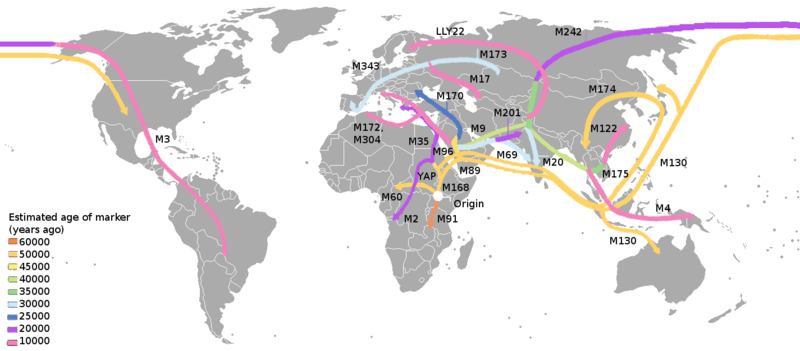
Alexander the Great thought he was a god, but he still had to use the latrines like the rest of his common soldiers. There will always be people who have more or less wealth than others, but when those with wealth become single-minded about grabbing it out of the hands who have less, the question arises: how do they believe they deserve to have so much more than others that the rest of humanity suffers? The implicit justification must be that these super-wealthy must believe that they are above the rest of the humanity, that there is something "special" about them, that they are, in short, the "new aristocracy", a European concept our forefathers tried to eradicate when they began the American experiment in democracy. So let us take a look at the super-wealthy who are calling the shots these days. I would lay odds that they belong to homo sapiens like the rest of us -- i.e., that they are not descended from divine beings, much less are divine beings themselves. But maybe we should be clear about what a "god" or "deity" is. Gods or deities do not have mortal bodies. They are, by definition, ethereal. Their powers are natural, not obtained through sly litigation, market manipulation or graft. Now back to humans. Humans are mortal, they are flesh-bound animals, albeit of a very sophisticated sort. That means, no matter how wealthy a member of the human race is, that person still has to defecate, urinate, perspire, sleep, bathe, eat, breathe, pass gas, take in water, and exercise the body. If it is a rich woman, she must menstruate, just like the poorest woman. If it is a rich man, he must ejaculate just like the poorest man, in order to beget children. If the rich woman has given birth, she will lactate, just as the poorest woman will. The rich are as mortal as the poor, and subject to every disease or form of decay the poor are, including everything from the terror of cancer, the struggle to stave off obesity, or the aesthetic nuisance of hair loss. In a nudist camp, you would not be able to tell the difference between those camp-goers who were poor, rich or middle class (unless of course a person had been severely undernourished by financial privation). History has shown that the aristocracy has tried to cover its mortal pile of dung by making claims that they are somehow endowed with superior intellectual gifts, but history has also shown that some of the greatest nitwits who ever lived have sprung from among the wealthy. Now the neo-aristocrats might claim that they are different than the old aristocracy, because they won their place through well-deployed force and single-minded cleverness. But I have news for them: those methods are just how the old aristocracy came by and maintained its wealth and power (all pretensions of "blue blood" aside). As far as the poor and the middle class go, they have historically and to this day produced many of the most gifted innovators in every sphere of scientific, technological, artistic and intellectual endeavor, but if the super-wealthy make a desert of the world of opportunities for those beneath them, they will choke off this reservoir of talent (which is the majority of humanity). It has to be that the super-wealthy, being mere humans like the rest of us, are also capable of the normal human emotions of love, compassion, sentiment, regret, guilt. If only these people who act as though they are aristocrats amidst our wounded democracy could just apply those human feelings to their fellow human beings, whose only real difference from them is that they have less material wealth. Physical anthropologists and the Genome Project have established that all the branches of humanity that survive today are descended from a single human mother, whom they poetically call, "Eve". That means we are all genetic siblings. So let us stop breaking up the family with violence, intimidation and greed. It is a disgrace and it is unnatural. If there were intelligent races from other planets observing us, they would be appalled. On the other hand, if we can all recognize that every one of our fellow human beings deserves a decent existence, the rich would still be rich, just not super-rich. Then maybe we could finally eliminate the shame of poverty. Is there an economist in the house who might explain where there is any harm in that?
Friday, November 11, 2011
Has the Confederacy Won the War?
The recurrent lunacy of uncertain economic times is proverbial. I see more Confederate States of America flags flying, and not at historical reenactment events. Ironically, I am seeing them flying at private domiciles by roadways in UNION STATES! Outside historical events, films and monuments, this flag ("the Stars and Bars") takes on a whole new context. For African Americans, it is the equivalent of flying a Nazi flag, and this holds true for most European Americans for which it is a reminder of the fault-line that was created in our Republic when we did not give freedom and citizenship to slaves when we won independence from the British Empire. There are now people wearing confederate flag t-shirts that say, "if this offends you, you better go back to your history books". Well, if you do, you find that it does indeed represent the collective desire of a group of seceding states to defend the institution of slavery. An historian pointed out to me that the protest lodged with the Union Government by the rebelling states was that Federal Law had not been properly enforced with regard to the Fugitive Slave Act. In fact, state and municipal laws were trumping it, and law enforcement officials were supporting the abolitionists. The Unionist states knew that slavery was simply not Constitutional, and were not going to support a Federal Law that was a slap in the face of true democracy. So, for those who think it was about "states rights", sorry guys! If there had been no slaves, there simply would have been no "War Between the States". Take away the slave economy as a factor, and you change the whole picture. You create a fantasy history, a bedtime story of a "Never-Never-Land". So why are these people, most especially people living in states that fought for the Union, flying these flags in a non-historical context? Well, a little investigation shows these Neo-Confederates have been misled by manipulative politicians who have convinced them that all their hardships are due to the Federal Government. That the Federal Government has been front and center in historically providing monetary, medical, educational and housing assistance for the poor, their children, the underemployed, the vulnerably aged, seems to have somehow been blotted out by those political master-manipulators tapping into the "Lost Cause" myth. It is a pernicious fairytale, and this sort of misinformation leads people to vote against their own interests, effectively victimizing themselves. You know it's a shell game when these politicians tell you on the one hand that "this a matter for states to decide", and then when it comes time for the states to address the issue, they say "oh, this is a federal matter!" This is a complete "pass the buck" abdication of political responsibility. So if you're going to run the Confederate Emblem up the old flagpole in your front yard beside the flowerbeds, or wear it on a bold t-shirt at the grocery store, why don't you think about going back to the history books yourself and rediscover what democracy has meant to your fellow Americans, men and women, of all creeds and colors, for the past 235 years in these United States.
Thursday, November 10, 2011
Is there an "Us" Anymore in America?
A former president has made a well-intentioned appeal to the Occupy Wall Street/99-Percenter movements, asking them to patiently remember that we live, after all, in a capitalist society, and that "we" (ostensibly the poor, the middle class, and the rich) need to all learn to work together. But this is the sort of reminder that should be exclusively given to Wall Street. What such peacemakers need to be reminded of is that the American people have a right to be angry and to peacefully gather and express that righteous anger -- otherwise we wouldn't be even worthy of the name of "citizens of a democracy". The Wall Street Gamblers are the ones who are behaving like the rest of us don't matter. "We" and "Us" were intended in the former president's speech to signify a much needed collective unity that our country was formerly famous for in better days. The problem has been that the wealthy have shown no loyalty to America as a country of fellow citizens, fellow Americans. Their loyalty is to international profiteering over patriotic investment in our own motherland. We may live in a capitalist society, but when those who control the capital disregard democracy and their necessary economic responsibility as members of a democracy to the people of our country, the Certified Professional Capitalists lose their moral validity and cultural authority. Come on folks, if capitalism is not subordinated to our democratic institutions we lose our freedom. In such a case, we are merely living under just another form of economic tyranny. Literally breaking open the skulls of peaceful protesters with nightsticks and special crowd-control "hand-grenades" are fundamentally not the acts of a democracy. Capitalism at any price? For the sake of "unity", must we toss out our once proud hallmark for a democratic economy whose beacon of hope once brought millions to our shores fleeing feudal tyrannies? This Great Recession is an artificial crisis. The rich won't invest in the gainful employment of our nation, and they won't pay taxes. And now they piously ask us to be "patriotic" and accept "austerity measures"? Ripping out lampposts and plunging city streets and neighborhoods into darkness will invite a rampant level of crime and reduce us to a level of primitive survival the likes of which Western Civilization has not witnessed since the Dark Ages. Our bridges collapse and our paved roads revert to dirt, while the rich take off from the helipads on the roofs of their ridiculously overbuilt mansions to take a personal copter over to the airport or the yacht. They certainly don't need public infrastructure! Public transportation development through electric high-speed trains is hamstrung because the wealthy would rather violently fracture the very foundation of the ground upon which we both live and convey ourselves (instigating thousands of unprecedented earthquakes), in order to extract natural gas and sell it to foreign nations at a nifty profit. They would rather invest in boom-bust nonrenewable energies that further drive up global warming, rather than to build the embankments and steel tracks needed to bear a new network of green-energy passenger trains (which obviously require stable ground). Where is the "We" and the "Us" in all this? Why are the ones being left out getting this talking to? Why don't those who want harmony between the social classes take those arrogant men in the thousand-dollar suits by the ear and remind them where they came from!
Sunday, November 6, 2011
The Lost Promise of Bronze Age Crete
The ancient Minoans are one of the most enigmatic cultures of the World of Antiquity, exceeded perhaps only by the Etruscans. We need to be clear whom we are talking about. The Minoans were the aboriginal peoples of the Island of Crete, who had a language distinct from that of their Greek neighbors with whom they shared the Aegean Sea. They had their own written language, uninformatively referred to by scholars as "Linear A", which is still untranslated. What remains are their buildings and frescoes and references to them in the written records of their trading partners, the ancient Egyptians. What we know of them from their later Greek conquerors (who submerged their culture as successfully as the Romans did their predecessors, the Etruscans) is seen through the distorted lens of prejudiced myth, with such tales as that of King Minos and his monstrous son, the Minotaur. For the Egyptians they were reliable trading partners, who brought to the ports of the Nile Delta not only the finished products of Crete itself, but also the raw materials and artful trade goods the Cretans obtained from Mycenaean Greece and the barbarian reaches of the illiterate Balkan tribes. The archaeological evidence is extraordinary in its implications by how the Minoans differed from all other cultures of the time. They possessed no military architecture. There are no accounts by their literate Eastern Mediterranean neighbors, the Hittites, Greeks, Lydians, Phrygians, Phoenicians or Egyptians that they ever made war upon anyone. Their frescoes and objets d'arte possess no martial symbolism. In fact, their scenes depict elegant features and creatures of nature, acts of recreational athleticism, and figures and expressions of dignified and unsuppressed womanhood. There is now geological and structural evidence that the cataclysmic volcanic eruption of the island of Thera to their north (today's Santorini), generated massive tidal waves that devastated their coastal cities and wrecked the merchant fleet that harnessed their successful international economy. In their disordered societal condition during the aftermath of the tsunami, Mycenaean raiders descended upon their defenseless ruins of habitation and plundered and pillaged what remained. From there on, Minoan culture ceases to be expressed in the archaeological record, and is replaced by the artifacts and writing typical of the Mycenaean Greeks. Crete ever after became a Greek island, and its martial Greek overlords figure in Homer's war-epic, The Iliad. Today, urbane scholars like to downplay any form of idealism of the Minoan culture, finding it impossible that such a society of peace could likely have existed. They assume that one day, when they finally discover the key to translating Linear A that they will discover their cynical expectations proven: perhaps a dark revelation of inventory catalogs detailing military materiel and accoutrements. Yet if they truly were a warlike race, they would not have been able to resist displaying their love of martial prowess in art, which simply does not bear this out. Warlike cultures also tend to minimize the role of women, but the beautiful murals and sculptures of female members of their society do not betray this attitude in any form. Their warlike neighbors in North Africa, Asia Minor and the Levant were not bashful about recording their wars with other peoples, so why would they have neglected to mention any piratical attacks they had repelled from the Minoans? No, the Minoans appear always to have been peaceful traders before their island was settled by the Greeks. Could the apparent social equality between men and women reflected in their art have something to do with the balance of peace and successful trade they maintained for literally thousands of years during the Early Bronze Age? What both history and contemporary anthropology have both taught us is that the more warlike and violent a society, the lower the position women hold in society. The naysayers can declaim all they want, but their cynical speculations carry as little weight in the objective mind as the neighing of goats. In fact, the archaeological evidence has to be completely ignored if one wants to posit that the Minoans were just like everyone else. So let us not allow the "urbane" scholars of minimalist interpretation to blot out the legacy the Minoans have left for us: the hope of a society that has cultural vigor, the sexes on an even par, long-term economic stability -- and no war.
Saturday, September 17, 2011
The Etiquette of a Democratic Nation
The process of democratizing our Western Civilization has been a slow, gradual but mostly progressive process. It is the process that initiated the Modern Age, which began in various places at different dates in the 15th century CE. In that century, the leading trends of civilization chose to no longer allow theocracy to justify hierarchical submission of the human intellect. From there other ideas began to evolve, including philosophical, scientific, political, social and economic. There were and still are groups that don't like democracy, though they may conveniently claim to for political purposes. Or, they may truly not understand what democracy actually means. Either way, there are people who are very patriotic about democracy, but their actions reflect the opposite. In this country today, we have people who don't like the idea that certain people have the right to vote, and they try to create obstacles (legislated and otherwise) to make it hard for targeted groups to do so. There are people who don't like certain groups of people to obtain socioeconomic stability or success. There are people who don't like women and other minorities to have leadership roles in business, science, politics or education. All of these qualities of thought are fundamentally undemocratic. There are also simple everyday behaviors that represent what are either rude or uninformed acts, if you are living in a democratic society and claim to belong to it. If you are reflexively rude or obnoxious to people in the service industry who are honestly trying to do a good job, that is reflection of aggressive class-consciousness. In a democratic society, there are rich, middle class and (sadly) also poor people, but the central idea is that we are all socially and legally equal. There is no etiquette book that says that because someone has a higher economic status that they have a right to mistreat or show unwarranted, unprovoked impatience toward a waitress/waiter, salesclerk, maintenance person, custodian or government servant who is trying to serve you. We do not legally recognize the prerogatives of aristocracy in this country, and neither should we condone social behaviors that reflect any such presumptions. A democratic society also does not condone or legally protect acts of rudeness toward a person because you don't like their gender, their race, their dialect, their economic status, their apparent sexual persuasion, their cultural attire, or their religion. Those people who are abusive toward others for these reasons are mentally inhabiting a totalitarian homogenized concept of society that does not exist upon the real democratic ground they actually tread. It is ironic that the people who are prone to these rude anti-democratic behaviors are often telling people different from themselves to leave the country -- even though whoever they are targeting have a perfect legal right to be here and usually are also citizens born or naturalized in our country. However, if there is any need to suggest who should leave, it should be those who act like the only people worthy of living here and enjoying its privileges are only those exactly like themselves. Of course, uncalled-for rudeness from people of any economic, cultural or gender status should really be frowned upon in any society -- democratic or otherwise. What is more, we didn't have the American Revolution so that we could independently recreate the same feudal society we broke from across the ocean.
Friday, September 9, 2011
Not Without Witnesses
You self-proclaimed "Lords of the Universe" with your evident designs of eliminating the middle class: your actions are not suffered without protest, without conscious understanding, without realization of the future ramifications of this reduction of society and civilization itself. We the People are keeping a record of what you so deceitfully undermine and carelessly destroy: meaningful, gainful employment; the judicial rights of real human beings; public education; decent medical care for all; versatile cities that serve all of humanity; public mass transportation; civic and interurban infrastructure; the unfettered teaching of the humanities and the social sciences; the inspirational endeavors of the fine and technical arts. We mark you who destroy these things in the name of all your false deities. You shall not get away with this without a testament of your wrongdoing. That testament we shall pass on to our children, and they theirs. All shall know that what has been lost has been stolen. All shall know that what has been stolen is our birthright as the American People. Your iniquities are exposed like a stripe of filth behind your beautiful suits. One day we shall have our country back, and if your kind is still among us, you shall play the humblest, meekest and most repentant of roles. And we shall rebuild what you destroyed, and you shall wonder why you felt you had to take it away from us in the first place, for America will shine as it never has before. And all that is now insane shall be healed with love and forgiveness and community for all.
Thursday, September 1, 2011
We Put Down the Neanderthals But...
There were once other species of human on this Earth, even sharing this planet simultaneously: homo erectus in East Asia, homo sapiens in Africa (then outward!), and homo neanderthalensis in Europe and the Near East. Of our two cousins, the media and science itself express the strongest interest in neanderthals, because they were the first alternate humans to be discovered (and were once thought to be the missing link between us and other apes), and because they are the most closely related to us of all other human species that have ever walked this earth. Our common ancestor with neanderthals (homo heidelbergensis) dates back 400,000 years ago in Africa. Neanderthals were (objectively speaking) a highly successful branch in our family. From the time of their evolutionary emergence as a distinct species to their extinction, they were around for nearly a hundred thousand years -- that's twice the amount of time our own particular biological branch has been in existence. Their extinction is the tipping point of interest, and it is related to the entrance into their environment by our own species. Their numbers fell steadily as ours increased. There is not any direct evidence of warfare between the species, though skirmishes might have occurred. What scientists point to is the evidence for a rapid development in social organization, hunting weapons and domestic tools among homo sapiens, and the lack thereof in all categories among neanderthal culture. The general verdict is that the neanderthals were too conservative, and had smaller capacities (because of a flatter skull) for those parts of the brain responsible for environmental adaptation, cultural advancement, and surmounting new stresses in living circumstances. Steady contact between modern humans and neanderthals lasted from around 50,000 to about 30,000 years ago, and then the last neanderthals died off in their final redoubt in the Caves of Gibraltar. In the comparative analysis, the journalists and the scientists now like to trumpet the reasons why we (our glorious species) were the ones that triumphed. They talk about how skilled collectively we have always been at exploiting environmental resources to the most refined degree, and how we have continued to tinker with ruthlessly sophisticated strategies of social organization. The neanderthals, however, are criticized for being too culturally minimalistic, too socially simplistic. And yet in all the time the neanderthals enjoyed their environment free of our presence, they never hunted any species to extinction, and the archaeological evidence shows they decently cared for their children, their mates and their elderly. By comparing ourselves with them to their disfavor, we have been acting especially unreflective. We may be more intelligent, have more raw ingenuity, but we also have a certain flaw in the area of "our wondrous knack for social organization": the majority of any given human population has a habit of allowing itself to be ruled by a morally and numerically inferior elite group, no matter what time in history, nor what country, nor what form of government. This would not be such a problem for the survival of the planet or our species, if we did not now have incredible technologies harnessed to the ambitions of these ruthlessly clever but spiritually moronic leaders. If we destroy our living environment and consequently ourselves in the course of this present century (and there is currently no reassuring sign that we are making any serious efforts not to in a materially substantial way), then those "pathetic" neanderthals will have beaten the term of existence of our species by some 500 centuries. And remember, if it wasn't for us, the neanderthals would likely still be around to this day.
Monday, August 1, 2011
Let's Restore Our Natural Solidarity
We have forces in government who are actively destroying the modern state as we know it. The modern state evolved to be increasingly inclusive of all the people who lived within its territory, endowing more and more elements of its population with legal, political and economic rights, as society hoisted itself out of thousands of years of economic and political traditions based on serfdom and slavery. Modern society was a direct departure from Medieval political theories of fixed hierarchy and exclusive privileges. Today we are undergoing libertarian policies that are winding back the clock to the bad old days. If these trends continue unabated, we will find ourselves one day soon without medical care, without free public education, without pensions for those too old to work, without housing and electricity for the poor, without public works, without care and assistance for the mentally ill and the disabled, and with a negligible middle class entirely under direct obligation to the super-wealthy. Never before in the history of humankind have there been so many billionaires and multi-billionaires, but they make up a minor fraction of a population that is growing poorer by the day. Many voters have been duped into believing they can get a real slice of that small elite pie in the sky, and in having their ambitions so tickled, they have voted against those who would have restored or maintained all the services and public infrastructure that would have kept their lives safe, secure, and healthy while they pursued the American Dream. At the same time, big business is pushing hand-picked legislators to create an increasing number of roadblocks to hopeful entrepreneurs seeking to become small organic farmers and improve our homeland food security. These corporate minions and politicians push for financially-burdensome and arbitrarily-justified regulatory laws disguised as "hygienic standards" against struggling small farmers. Yet these same self-righteous folks are incensed if we dare say anything about the abuses of corporate farming/agribusiness in the areas of genetically modified foods, proprietary pollination and DNA-seed patents, and their careless use of toxic/allergenic/carcinogenic chemicals and hormones. We are slipping back into the ills of the pre-Modern state, which stymied upward mobility, and held a low value on labor (even though labor is the very energy and actualization of capital wealth). We still have leaders who believe in the complete enfranchisement of the American people, but our true fighters are too few. Too many who make campaign promises for the improvement of life for ordinary people show themselves to be weak-willed once they get into office. The conservative element wants hundreds of billions for next year's wars to secure oil and mineral resources in the Middle East, but they claim we need to balance the budget when questions arise over the need to improve public health-care and create a green transportation system. And this, after ordinary people paid billions in taxes to bail out the sacrosanct Financial Sector, which has done nothing to reinvest in our country and put people back to remunerative work. Folks, we are going to have to start listening to the old stories handed down through our families, of how they survived, of how they helped each other, of how they fought for their fair share of this world. Easily most of us come from impoverished origins just a few generations back (if we would only admit it). Labor unions changed that, and it is in the positive changes that the legal power of collective bargaining brought to ordinary people from which most families can trace (if they are honest) their ascent into the middle class. Unfortunately, there are now many who look at the middle class as the status their families once enjoyed. But the origins of the labor unions came from a pre-political sense that everyone was in the struggle of life together. People understood that we all came from different ethnic origins, but here we all were working in the same factories, the same shops, the same offices, the same hospitals, the same constructions sites, and on the same road and bridge crews. Our common humanity emerged daily through positive interactions and productive forms of cooperation. This spread to private life, where people helped each other out when they were in a bind, and where they invited each other to their houses for dinner. They created social clubs and charitable organizations that transcended religious and ethnic differences. From this rising sense of common civic pride, the ordinary people no longer felt shame in their status, and they found a common voice when the business owners and plant managers sought to break them back down into the mute servile obedient industrial fodder they had started out as. That voice of ordinary people made itself felt in the political sphere, and politicians realized there was an active element of the population that didn't want to be pushed around anymore, a sizable mass of voters who wanted economic rights and a decent environment in which to lead their daily lives, raise their children and care for their elderly. They felt their work, their contribution to society, was important, and recognized its key importance to the overall success of the economy. Today we need to remember what our ancestors realized: we are all in this together and we all share a common humanity. Together we outnumber the billionaires' club by an overwhelmingly massive proportion, but they will seek to keep us politically divided by playing up our superficial differences. People! We can organize ourselves into a corporate body more powerful than any commercial conglomerate, but to do so, we must learn to love each other first -- no matter what our differences in spirituality, clothes, skin color, dialect, taste in music, or preferences in food. At the center of all things, we all share the same biology, the same brain structure, the same psyches. And we all want to lead a happy and decent life. Let us first learn a solidarity of the heart, and those who oppose us will never be able to break the political solidarity that emerges from that. Only in this way will our political leaders learn to respect us again -- just as they learned to respect our ancestors. Read, listen and learn, and you will discover that our forebears organized a cohesive political community which arose despite the "rules" laid down by the plutocratic game.
Monday, July 18, 2011
Anarchism: In Practice No Paradise
Anarchy, a situation of no objectively binding government, is not something that exists in the mere theory of the philosophy of anarchism. And it has never worked for the common good. There may be limited conditions when select groups of people of like temperament and outlook can participate in temporary intentional situations which maintain a peaceful egalitarian coexistence without "rules", especially at counter-cultural festivals. However, the annals of history actually show that a pervasive state of chronic anarchy spells societal disaster, especially for the socially, economically and physically vulnerable. When anarchy arises across the demographic mix, those with latent sociopathic leanings and possessed of any wealth and power will step in to take advantage of the absence of law, and intimidate, bribe, coerce, subjugate and exploit those weaker than themselves -- until of course someone stronger than themselves puts them in their place in a hierarchy of might makes right. So the long-held dream of the counterculture of establishing an Eden-like anarchy for all simply cannot be feasibly realized. One of the worst cases of political anarchy happened in China when opportunistic European colonialist powers during the 19th and early 20th centuries weakened the once impermeable fabric of Chinese society by flooding their markets with the highly addictive and emotionally and physically debilitating drug known as opium. Government in China became ineffective and localized warlords mushroomed across the countryside from the morass of chaos, creating a bitter tenor of life indeed, especially for hundreds of millions of peasants. That was the reality of anarchy. In Europe and America during that same time period, there were people who actually called themselves anarchists, and who believed that humankind would never be able to set up a form of government that would be fair to everyone. These Victorian-Era anarchists thought that, if they could demonstrate the vulnerability and ineffectiveness of government in response to acts of terrorism, people who felt oppressed by official authority would rally around them, and a tranquil utopia without oppressive law would simultaneously arise (after those in authority were either purged or converted by the sheer mass of popular will). However, desperate acts of violence do not inspire people's confidence that such instigators will suddenly fade back and become peaceful members of the tranquil and harmonious society they promise. In practical terms, anarchy is really about two related conditions: (1) the rule of law has been superseded by strongmen, and (2) impartial authority has collapsed. Sometimes this arises because of civil war, as it did in the 12th century in Medieval England, when two candidates for the royal throne garnered enough adherents to their respective causes that neither could rule the entire country, and so anarchy ensued as endemic warfare erupted between the factions. After decades of strife, social exhaustion set in, and a settlement was finally reached in which the heir of one of the contenders would succeed to the throne. That was Henry II, and it became that king's goal to reform and bolster the centralized authority of the law as a uniform system in which people of all affiliations and social estates could expect to be treated fairly under the judicial authorities. King Henry II reaffirmed the traditional national code of the Common Law. His reforms established accredited institutions of legal education, a system of qualified appointment selection for all official roles in judicial process. Those vulnerable to powerful local magnates could have real and reasonable expectations that transgressors of whatever rank or title would be duly punished by the executive powers of royal government, whose members could and would exercise regulatory and punitive powers divorced from any conflicting feudal obligations. In short, the enforcers of the law would be loyal only to the law itself, and the king's central duty would be to uphold the law. But of course, being in a time before democracy, feudal society could not always maintain the complete effectiveness of these reforms, however lasting they did ultimately become. Another civil war erupted during the 15th century in England, once again because of weakened central government in which two factions vied to establish their rival candidates permanently on the royal throne. During that time, a system of localized political patronage took advantage of the inter-dynastic collapse of effective centralized authority. From peasants to tradesmen, from knights to petty barons, every person's survival and prosperity depended on obtaining the favor of the strongest nobleman who would accept their liege service. Whether it was a baron winning a position under an earl, or a plowman winning it from a hedge knight, that person became his superior's protected client. If you were in legal trouble, your patron would pack the jury box with other clients who would find in your favor. Judges and sheriffs feared to go against the wishes of local or regional lords who had an interest in a particular case. If you were a client, you did as your patron commanded. It was a polite form of gangsterism dignified with heraldic badges of livery. Your loyalty was not to the law and justice but to might over right, and for most people of lesser social rank there was no other practical choice (whatever their personal moral ideals might have been). And if you chose to give your allegiance to a lord who ended up on the losing side, it didn't matter how legitimate and just your personal case was, you could be stripped of everything. This second civil war finally resolved under a new king (Edward IV), who restored social order by reestablishing effective centralized authority,. However, he died prematurely before the legacy of the preceding years of political chaos could be fully extirpated, and his heirs were assassinated. Once again, anarchy threatened, but a new candidate for the throne from an obscure cadet branch of the royal family won a decisive battle and took the crown to establish the Tudor dynasty. Under the Tudors, the political mechanisms for competing regional and local power were systematically eradicated, and the institutions of centralized authority were legally and fiscally strengthened, so that they could stand on their own even if a weak monarch reigned. The law of the nation now prevailed unchallenged by the great nobles, whose power was now administratively atomized. So you see, even looking at a few historical precedents in England, whose laws and institutional traditions were the foundation for America's, we see that innocent people only suffered under periods of anarchy, and reformist leaders inevitably arose who worked hard to prevent that societal agony from returning. Right now we once again must fear the potential threat of anarchy, because the rich are no longer effectively taxed, and as a consequence the institutions of state and federal government are becoming increasingly hamstrung in their ability to carry out their responsibilities to society. Through legislation that minimizes the role of government, our society is being institutionally disassembled and falling into infrastructural neglect. Our humane and economically necessary traditions of social welfare and public education that maintain a modern democratic society are being dismantled. Our regulation of the private sector against the abuses of exploitation and environmental degradation is being legally undermined by partisan judicial interpretation. And the semi-autonomous magnates of feudal times are coming back in the form of corporations with citizen-powers, who have armies of retainers: politicians and lawyers more loyal to their corporate magnates than to the rule of law. The new heraldic livery comes in the form of corporate logos. These tendencies toward anarchy are a sobering prospect for ordinary people to contemplate, and as anarchistic trends continue to undermine our good government, they will become a dire matter to confront in daily life itself. A reduced role of government will thwart our practical means toward human and civil rights as individuals. We must support leaders who believe in strong government. The laws on the books cannot be enforced without properly funded regulatory means and powers, not to mention the protection of an impartial body of officials. Broadly speaking, human nature has proven itself to be too dangerous to its own kind to be given free reign. The libertarian myth of untrammeled liberty being the highest goal of civilization is really a recipe for anarchy, where the playground will be enjoyed by the rich and powerful alone. This is the real and original reason people long ago walked away from a natural state of anarchy in the first place, and chose to set up legally ordered government by common consensus. A government that encompasses everyone's rights and well-being is the most wholesome compromise if we hope to live peaceably and constructively amongst our fellow human beings. We form a species of such morally diverse natures and purposes that we must be bound by an actionable common law that challenges and impedes those who would act irresponsibly or do harm to their neighbor.
Friday, July 15, 2011
The Way Business Should Be Done: A Shining Example from the Past
Alexander Cassatt was born to a family of comfortable circumstances in Pittsburgh, Pennsylvania. His parents came by their prosperity through a combination of education and hard work. They instilled in their children a sense that prosperous circumstances bring with it both an opportunity and a duty to use these advantages to benefit society. The Cassatt family felt guided by a tradition of integrated life-principles: to strive to excel, to believe in the power of ideals, to understand the value of education, to aspire to bring moral improvement of society, to seek to improve the circumstances of human existence by supporting scientific, technological, architectural and artistic progress. The children of this family felt led to believe that they had only to discover their talents, and then develop them for the good of the world. The most shining example of this family was Alexander Cassatt (1839-1906). After college, Alexander Cassatt found work on the Pennsylvania Railroad (PRR) as a track surveyor and then manager of pioneering railway construction projects into areas never before served by modern transportation. His technical skills, social intelligence and natural aptitude for making innovative improvements in the efficiency and safety of locomotive transportation enabled him to rise rapidly through the ranks of the PRR. He soon become one of its most important leaders in technical and logistical development. Indeed, Cassatt had a knack for finding and befriending the most talented engineers, technicians and architects of his time, inspiring and winning their utmost loyalty, selfless dedication and diligence. Cassatt could take people with a multiplicity of individual ideas and skill-sets, and then enable them to work together with synergy to create new pathways of achievement. By 1899, Cassatt had been elected President of the Pennsylvania Railroad, and he was to lead it to the highest standards the railroad industry had ever known, forcing other major railroads to match him in order to stay competitive. He affirmed, enforced and extended policies of workplace safety. He built double and quadruple tracking to efficiently accommodate the travel and shipping needs of a growing society and expanding economy. He created separate corridors for freight traffic. He improved and helped standardize routing, signaling and traffic control methods to ensure the safest and conditions and fastest methods of coordinated train movements. Station stops were structurally improved to provide conveniences for the needs and comforts of travelers of every description. Viaducts were built to avoid conflict with highway traffic. Cassatt maintained the highest standards of wages, fair work hours, and comfortable retirement pension funds, ensuring he had the most loyal (and even adoring) workforce a CEO could ever hope for; in fact, there was never a strike during his ascending career through the company's principle administrative posts; he took such good care of the labor force that they never felt the need to strike! His greatest achievement though was building a direct and unbroken rail connection between New Jersey and New York City and between Long Island and New York City. He achieved this by creating sub-riparian tunnels using electrified locomotives (eliminating air pollution in confined spaces). No more did people have to rely on traversing the rough and congested intermediary waters of the East and Hudson Rivers to enter the cultural and business capital of the nation, where formerly trains had had to be loaded then floated to the opposite shore via dangerous barges. His second greatest achievement was building the Pennsylvania Station in New York City, with an accompanying stately post office building that handled national mails coming and going by train. These two structures were built in grand and lasting style. But it was the Pennsylvania Station that was perhaps one of the most magnificent architectural and engineering achievement the United States has ever known. Designed by the visionary architectural design firm of McKim, Mead and White, this public edifice flawlessly processed hundreds of trains and thousands of passengers a day. Its aesthetic graces were astonishing, modeled on the Roman Baths of Caracalla, but far, far larger. To build it, Cassatt had to fight the legal chicanery and bureaucratic obstructionism of corrupt political party machines, who liked to bilk the socioeconomic agonies of the status quo in which they luxuriantly wallowed. Moreover, in order to acquire the sheer necessary acreage for his railway complex which included an underground passenger train shed, its above-ground passenger support station, its railway post office and various auxiliary structures, he also had to clear out geographically entrenched criminal rackets that included everything from white slavery to slum landlords, negotiating a myriad real estate purchases from countless proprietors large and small, present and absent. He also had to fight his shortsighted investors. Many of them would have preferred safe mediocrity and fast profits, but Cassatt would not veer from his higher goals. His board remained loyal even under immense politically-motivated journalistic criticism to call a halt to his grand vision of improvements. Cassatt had always stood by the ethical side of the argument and won, and he had never stooped to short-sighted profiteering. He had even helped put down a corrupt system of favors carried out by lower management involving free rail passes and lowered freight charges for bullying clients who wanted preferment over their competitors. Cassatt set uniform policies that were fair and equal for both his company's clients and the financial security of the railroad's employees, thereby creating great institutional strength. Sadly, Cassatt died in 1907, just three years before Penn Station was completed in 1910. The terminal was the culmination of a project whose planning had begun in 1901, with actual construction starting in 1903. By unifying New York City and Long Island with the critical mid-latitude routes of the mainland, it was comparable in its importance to the transportation achievement of the Panama Canal. It had required the alliance of three railroads: The Pennsylvania Railroad, The New Jersey Railroad and The Long Island Railroad. Such an inter-corporate partnership could only have been achieved by a man of great intelligence harnessed to moral integrity, refined articulateness and compelling long-term vision. Penn Station, as it came to be affectionately known, was a monument to modern transportation, and provided more conveniences and amenities than any of today's shopping malls. It was built of lasting materials and soundly structured, characteristics that would have enabled the edifice to safely and proudly stand for centuries. In 1963 however, it was torn down to make room for plans by an allied group of short-sighted business investors whose principle achievement became Madison Square Garden. The beautiful building that was Penn Station, with its incredible Classical statuary, Doric columns, and decorative adornments of travertine marble, as well as its awe-inspiring spaces suffused with welcoming natural light from cathedral-like windows made its visitors feel like they were more than mere travelers but invitees to a palatial nexus where their adventures could either expectantly begin or happily end in the most inspiring surroundings. Like so much outgoing refuse, the transported remains of Cassatt's Penn Station is now a mere expanse of sinking rubble, summarily dumped over half a century ago now into a New Jersey swamp. And yet, however shameful and inglorious this end, Alexander Cassatt remains an example to follow for visionary entrepreneurs of our own time. Do not give up! Brush aside the small-minded naysayers! Build for the future! Build for the mutual and lasting benefit of all humankind. Treat your workers (without whom nothing would be possible) with all the respect and honorable compensation for their labors that you can. Your company and its achievements will shine on. When Cassatt died, he had doubled the Pennsylvania Railroad's assets, annual gross income and share values. It became the highest quality train service in the nation and ranked with the best in Europe. Unfortunately, a trend ensued in the latter half of the 20th century toward a policy of profiteering, seducing the business world into denaturing itself of a sense of responsibility to economic durability for America. The heinous destruction of Pennsylvania Station was just a symptom of this shift from civic excellence to crass selfishness in the world of business. Be that as it may, the larger question for us today revolves around those wonderful passenger trains that inspired all this in noble men like Cassatt. Passenger trains remain the most democratic form of transportation humankind has ever developed, serving people of all incomes and all purposes, both humble and grand. Now our gas prices are steadily rising, our computerized automobiles are growing more expensive to purchase and maintain. People who understand that a modern democratic society cannot prosper without an efficient and stable system of transportation available to all, now realize that we must bring passenger trains back. Cassatt knew they were crucial to the success of his society then. He recognized this system of transportation would be necessary for the future success of the American people, and honored its importance with an impressive edifice. If we cannot bring "Old Penn Station" back, we can certainly bring back what it stood for. The modern passenger train is the most fuel efficient, and least polluting form of transportation in the world, and it is actually saving and building the economies of Europe, South Asia and East Asia. Because it is a safe and direct form of transportation, it has the power to take thousands of unnecessary private vehicles off the road, vehicles whose daily carbon output is making it an almost impossible challenge to combat global warming. It is time America joined the rest of the world in re-discovering the green utility of passenger trains. After all, we were once the leaders in locomotive transportation and long the envy of the world in this enterprise. We have the human and material resources right here on our own native soil. Let us become great again. Passenger trains can build the foundation for everyone's success. To the rested soul of Alexander Cassatt: we salute your spirit as our once and future hope!
Tuesday, July 12, 2011
The Spirit of 1848 and The Spirit of 2011
Popular uprisings spread across Europe like wildfire in 1848. They consisted mostly of working class people and university intellectuals. The intelligentsia felt repressed and the working class felt abandoned. What had happened to all the promises of freedom and the good life made by the great philosophers and revolutionary leaders of the preceding century? How come Europeans couldn't live the dream that America now enjoyed? These were not communist uprisings -- the activist demonstrators were actually demanding the simple fulfillment of the ideology of democracy. The reality they faced was a prospering of the rights, privileges, advantages and opportunities of princely merchants and the industrial entrepreneurial classes, and the onerous persistence of political aristocracy. Some of the revolutionaries of '48 were also fighting for the liberation of their entire ethnic group from political repression and oppression, such as the Hungarians seeking independence from the Austrians, of whom the latter exercised imperial authority over Hungary. But mostly it boiled down to economics. Without equal political rights and protections, regular people would never be able to penetrate the barrier imposed upon them by the allied network of the privileged. So why did it come to a head in 1848 and not sooner? After all, the American Revolution occurred all the way back in 1776, and the originally idealistic French Revolution had occurred in 1789. Well, by 1848, three new factors had entered the picture: (1) huge masses of regular working people had become absolutely critical to a newly dominant mode of production and economy -- industrial-scale factories; (2) this new and significant population of industrial workers had of necessity to acquire literacy skills to negotiate the more complicated existence of urban life and the modern bureaucratic state; (3) intellectuals who still believed in the ideals of democracy set down in the Age of Reason set up "underground" (i.e., not sanctioned by the state) printing presses across Europe to publish free-speech (and therefore illegal) newspapers and pamphlets to help politically and economically frustrated people understand and articulate the democratic rights to which they were entitled both as citizens and human beings. The uprisings of '48 were quite impressive, and some even showed temporary signs of victory. Yet ultimately each of them was brutally or quietly put down. However, they did have an ultimately lasting benefit in that the conservative elements in the countries in which they occurred began to take gradual but steady measures to improve at least some of the circumstances of the working poor, and this was largely brought about by the prospering middle class, who rubbed shoulders with the working poor on a daily business basis, and began to develop a sympathy for them (and perhaps some of those bourgeois-types quietly recalled that many of them had some poor people in their own ancestries). Another reason may have been that the prosperous shopkeepers, middle class professionals, and merchants of trade realized that if the working class could be so unapologetically brushed aside or even put down with guns by their social superiors, so might their own relatively recent rights and privileges be overturned by future reactionary regimes. After all, a sizable, dynamic and socially active middle class was still a very new concept in European states, which otherwise still retained many disguised (undisguised) modes of feudal authority. With the backing of a liberal, reformist and humanitarian middle class (some of its energy bolstered by Christian and Jewish ideals of human decency and compassion), the mainstream press gained the courage to assert free speech, and they went less and less opposed by official censors. The year 1848 had been a wake-up call for self-satisfied conservatives. Reasonable people sensed that what was good for the goose was good for the gander, and conservatives must have privately realized that if a more inclusive vision of democracy did not start to happen through peaceful legislation and liberalized jurisprudence, those very necessary factory workers might one day successfully organize themselves into a force to be reckoned with -- one that might take the job into their own capably work-calloused hands of finally completing the agendas demanded by those eighteenth century democratic mandates. And after all, the marching soldiers of those repressive states were recruited from that very class of working people. Would they fire on their own aggrieved brothers and sisters when the underprivileged exercised protest demonstrations? Laws of reform and widely beneficial civic regulation did happen in many countries of Europe (Russia and Eastern Europe being serious exceptions, though not for want of trying -- and mass exodus to America was the result). So public education improved, enhancing the scope for people to be able to consider socially responsible choices in solving political and economic problems, instead of desperately seeking violently destructive ones, such as later happened when thwarted democratic reformers felt no option left but to turn the Russian Empire into the Soviet Union. Ultimately, collective bargaining for labor became preferred to revolution as the means of settling problems of unfair exploitation in many countries. So what does this have to do with 2011? Well, a similar series of uprisings with dreams of popular revolution are spreading across North Africa and the Middle East. Their energy does not stem from Islamism or communism. They are about regular people demanding what they feel are the fundamental human, political, civil and economic rights to which they are entitled. China is doing its best to prevent the spread of these movements into East Asia, but just as in 1848, their are middle class intellectuals and a powerful form of unregulated media aiding and abetting this rise in collective self-esteem and sense of socioeconomic self-worth. That form of media is this time not underground printing presses but an "overground" transmission of information: the internet. China will not be able to stem the tide forever. They have people getting very rich off masses of poorly paid, poorly treated, overworked factory drudges making products for the entire planet. These workers are coming to know their critical value in the global economy. Already in southern China real attempts have been made to organize unions and engage in collective bargaining. In Hong Kong people are protesting the repressive measures they are made to endure. This is all good for the regular people of America, who are now vastly underemployed or unemployed because of unfair labor competition outside our country. If the regular people of the world get their political and economic rights, the global world of work will become a level playing field. Companies will have to search not for the industrial factory manager or clerical network manager who will provide the lowest bid for wage-slaves, but those who can provide the best workers -- because everyone, no matter where an entrepreneur chooses to shop around, will have legally-protected rights for fair pay, balanced work hours, and safe working conditions.
Subscribe to:
Comments (Atom)