
Wednesday, December 21, 2011
The New Tyranny of Monolingualism
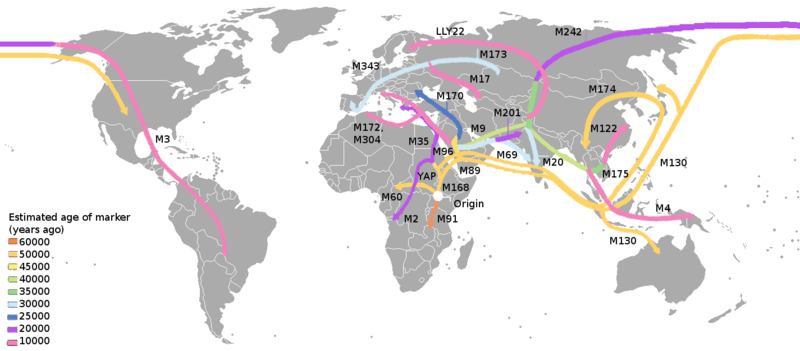
Language, pure and simple, is about communication. Humankind, perhaps very early on when we numbered only a few hundred individuals with the capacity and culture for speech, had one language. From there, linguistic differentiation began as separating bands of our species started to spread out across six continents and the islands of the Pacific. The Modern concept of political boundaries is a very recent factor. Before that territories were constantly changing hands, often peaceably through marriages of land-owning elites. Aside from that, much habitable topography lies on geographic margins and cultural fringes. It is in such places that languages mix, exchange vocabularies, and where bilingualism or even polylingualism becomes a practical necessity. Sometimes a patois or sign language emerges for purposes of necessary communication and economic barter. Today we have politicos across the planet who are pushing for an unnatural monolingualism within state borders, never mind that the state borders may have been created in a completely arbitrary fashion. The international community frowns on ethnic prejudice and genocide, and sometimes (though not often and forcefully enough) the international community intervenes before yet another country creates its own miniature (or even comparable) version of the Holocaust. So what we now see, especially in countries that are trying to preserve a veneer of respectability for purposes of trade alliances with wealthier countries, is the ethnic bigots trying to hide behind a "rational" argument for the legal enforcement of one language. Oh, we've seen it all before, even in countries of ancient "respectability" -- England forcing the Welsh and Gaelic children to speak English in school. France forcing Bretons and the Langue-d'oc region to speak the Parisian dialect of French. Now, just as the Latino community of underpaid disenfranchised workers are starting to exercise some political clout based on the very real and significant contribution they make to the American economy, we have the conservatives barking for "English" (or even "American") only speech in all affairs. Coincidence? In Slovakia, ethnic Magyars aren't allowed to speak Hungarian, even though they have lived in the towns and farms of eastern Slovakia for literally centuries. In general, minority speakers belonging to the Finno-Ugrian language family (of which Estonian and Hungarian are better-known examples) are being harassed across the European and Asian worlds, their books burned, their printing presses smashed, their radio broadcasts electronically smothered. On another front, languages thousands of years old are dying out every year simply because of the confiscation of lands from aboriginal peoples who are then scattered to the four winds as they brokenly relocate in urban settings, desperately searching for a way to survive in the ugliest side of the modern world. These phenomena are not about improving communication. They are about finding ways to separate portions of the population from political and economic enfranchisement. This is all about ethnic chauvinism, domination by the linguistic majority -- not about inclusion through homogenesis ("the melting pot"). There are three historical proofs against the seemingly "reasonable" arguments of conservatives on this issue: the Austro-Hungarian Empire, the Persian Empire, and the Jews. Austro-Hungary was the most cosmopolitan Modern state the world has yet seen. Anyone who wanted to be anyone had to be multilingual. In that state (of which a host of European countries were carved) people had to learn to speak such languages as German, Hungarian, Czech, Slovak, Slovenian, Yugoslavic (Croatian-Serbian-Bosnian), Wallachian and Yiddish! Business (political, economic and cultural) was carried out in all these languages between citizens of the Empire, whether as native speakers or as a second language. Many people knew other languages as intimately well as the one they learned at their mother's knee, and many households engaged in more than one language for daily domestic use. The Persian Empire of Antiquity was an ancient analogue to the Austro-Hungarian Empire. The Persian Empire lasted many centuries (much longer than the feuding Macedonian states that later carved it up in Alexander's destructive wake). Ruled from the grand city of Persepolis, the Persian Empire respected ethnic difference, multicultural education, encouraged religious freedom, and multilingualism was the order of the day. They ran an efficient, centralized, harmonious, bureaucratic state of equal citizenship integrating many more languages and cultures and over a much wider territory than Austro-Hungary. Then there are the Jews, who since at least Hellenistic times have been renowned for their multilingualism and cosmopolitan expertise. Jewish artisans and merchants prospered because they knew monolingualism was the bane of success. You learn to speak the language of your customers and trade partners and you out-compete everyone from the get-go. The Jews knew that learning other tongues was a way of showing respect and real interest in whom you were dealing with as human beings. A good example of this Jewish sensibility of linguistic neighborliness among non-Jews is the multilingualism that now flourishes in Central Europe, where many people speak French, Italian, German (and sometimes other languages to boot), and create a healthy everyday living from such polyglot facility. So please, don't give me this talk that if we all are forced to speak one language there will be prosperity and peace in the world. If such claims are correct, that "prosperity" and "peace" could only be paid for with blood and strangling exclusionism. Aside from the massive tragedy this would be in any of the world's regions, what would remain for the triumphant ethnic majority would be pretty damned boring.

Subscribe to:
Post Comments (Atom)
















































No comments:
Post a Comment