So often the kind of humorous stories we encounter these days are cynical, whether they are in cinematic or print forms. One can feel no human sympathy for the characters, and therefore what laughter it elicits leaves one feeling empty or wincing with discomfort. In short, a sense of the comic and the satiric that has compassion for humanity comes rarely these days. Comedy in the popular media today usually appeals to the bald one-dimensional humor that stimulates the undeveloped sense of laughter of an insecure pre-adolescent or early adolescent consciousness of life's irresistible imperfections and awkward social inhibitions. Comedy is also often grafted to a bizarre obsession with a precocious or obsessive (and jaded) "street-hipness", and the butt of the joke is the one who isn't "cool". The "uncool" are mocked and bullied with pranks and the manic goofballs or "hip" perpetrators are made to seem the "heroes" of the comedy. On the other hand, to attract the more "intellectual" or "literate" sense of comedy, the media usually serves up a form of storytelling that makes the consumer feel superior by identifying with the protagonist or narrator (if it is a book) who uses urbane "in-crowd" jokes and attitudes, slyly mocking the uninformed rubes of some more parochial part of the country. Finally, there is the "gross out"/"reality" comedy where a comic conman dupes unsuspecting people into humiliating situations, employing behavioral cues to engage multiple age groups for maximum profit, all of it weakly justified as "penetrating satire" but really just a dressed-up form of nihilistic puerile rebellion toward having a sensitive level of fully-realized adulthood. With such configurations dominating American humor these days, I find myself hardly ever laughing at "creative humor". Laughter for me more often comes from the half-subdued madness of daily life with its wonderful confusions and astounding social effusions.
Which brings me to my recommendation. A book written in 1965, finally published (posthumously) in 1980: Confederacy of Dunces by John Kennedy Toole. Here is a work of comedy (more sober sorts might say "tragicomedy") which amounts to a loving satire of a New Orleans milieu of fully-fleshed characters from every social class and ethnic group, and while the author pokes fun at every fascinating character he so deliciously creates, he also bestows a genuine human sympathy for each. This complex authorial outlook creates a guffawing depth of humor precisely because it renders the characters into real people. The situations are by turns madcap and realistic. You get to learn about several subcultures, their foibles, their misperceptions, their inherent strengths, and the hilarity when personalities and agendas from these different subcultures collide with each other. The book is rooted in a world now disappearing but which was vibrantly real in the 1960s in a little corner of the American South that was a cosmos unto itself. At the same time there is a clever acknowledgement of its cultural opposite, supplied through a delightfully eccentric character from New York, Myrna Minkoff, an adorably inept left-wing activist whom we mostly know through her correspondence with an old friend and intellectual rival from her college days: a reclusive bachelor, New Orleans born and bred, who is her complementary opposite. This is Ignatius J. Reilly, social-reactionary, pretentious revolutionary, and a living anachronism of Medieval thought. In many ways, this novel was too honest to be published in the tense cultural time it was written (and written for) -- though the hilarity of its plot situations and humble human truths are timeless. It addresses a host of issues of the era in a satiric way, showing the mixed intentions and psychological needs behind any ostensible act of good will, the ways people get manipulated, and the ways people find to throw off such manipulation. In one sense the characters and situations are mostly hopeless cases (the "tragic" part) but on the other hand, they come through their experiences wiser and with new perspectives on life's possibilities. There is growth in these characters through all their comedic hardships, and you learn to love them all. The "villains" (as well as being the generators of part of the comic energy) are really the evenly-dealt presence of ignorance, presumption and misunderstanding, and these are overcome internally and externally by the characters. There is really only one character that remains a villain to the end, and that person's well-earned comeuppance is satisfying but not overdone. In this novel, education or the lack thereof are proven to both have their special pitfalls, while naivety and simple compassion are subtly prized. In the end, everyone is just trying to survive financially, psychologically, or both, and their struggles to coexist create strange and ingeniously funny social conjunctions. This is the only book I have ever read twice in a row. It is a work of art in its perfect construction, carefully laid plot, and believable yet surprising psyches.
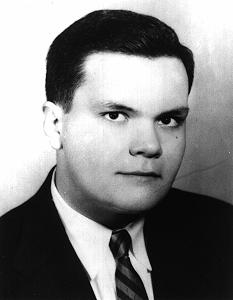
These factors must be why the novel won the Pulitzer Prize for Fiction in 1981. Sadly, its brilliant but ultimately alienated author committed suicide in 1969. Toole could identify with so many different social groups, it may have made it impossible to be fully accepted by any of them as the multifaceted person he truly was -- a supreme irony, if there ever was one, to befall this person who enjoyed the panorama of human experience and existence. Nevertheless, Toole obviously loved humanity -- it was certainly not misanthropy that led to his self-annihilation. In any case, his ability to relate to something truly human in everyone led him to create a novel perhaps too hard to accept by those who lacked that ability.

Subscribe to:
Post Comments (Atom)








































No comments:
Post a Comment