Thursday, December 22, 2011
The Lemmings of Profit
There has always been an element of the population which possesses an insatiable monetary greed. In the past the consequences have been the inevitable social trauma of a widening gulf between the "haves and the have-nots". Yet now there is the added dimension of a lasting environmental impact due to single-minded profiteering. It seems that no matter how much evidence scientists bring to the table about the destructive effects of using fossil fuels, it's like trying to tell a circle of gambling addicts to put away their cards or they are going to end up bankrupting their families. They just can't stop. But in this case what we are bankrupting is the ecological fund for life itself to exist on this planet. The super-rich are behaving like that fascinatingly self-destructive rodent, the lemming. They are racing to the precipice to dive into the sea of chaos and death. That might be all right for the rest of us if they were the only victims of their obsessive-compulsive disorder with regard to piling up wealth. Yet we are harnessed to these stock-market lemmings, whether we like it or not. We can recycle, we can support local and small businesses, we can support organic small farming, we can use green transportation and green housing, we can plant trees, but if the masters of our economy do not cease this lust to continue to keep the energy that generally fuels our civilization (i.e., petroleum, shale-gas deposits, coal) as a commodity of upwardly spiraling profit margins, we will destroy our planet. As it is, scientists say we have set into motion forces that will take hundreds of years to reverse, in terms of the trends that are already causing deterioration of climates amenable to flourishing life -- even if we finally get off our backsides and start using alternative energies now in a massive way. So now we are fracking the backyards and fields of our own living space in the United States, poisoning our well-heads and aquifers, and resorting yet again to a fossil fuel to unleash upon our already besieged atmosphere. All I can say is, there is no life on Venus, and greenhouse atmospheres a thousand times less harsh than those of our sister planet would still make for a very unhappy existence. The lemmings are marching steadily into that invisible deadly smog, and we are strapped to them. The innocent will be dragged over the precipice with the money-mad fools. Let us not make any claim that human beings are superior to rodents.

Wednesday, December 21, 2011
The New Tyranny of Monolingualism
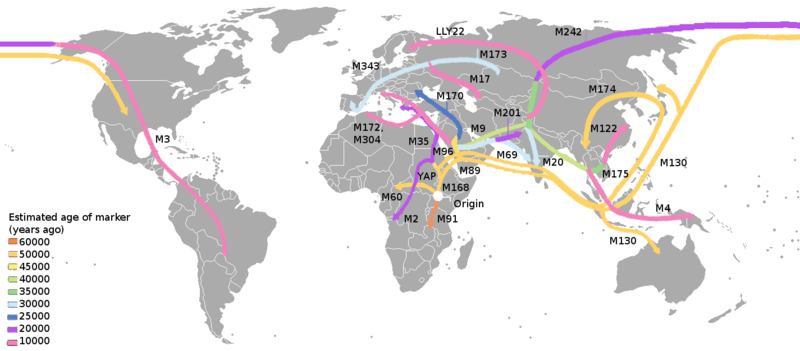
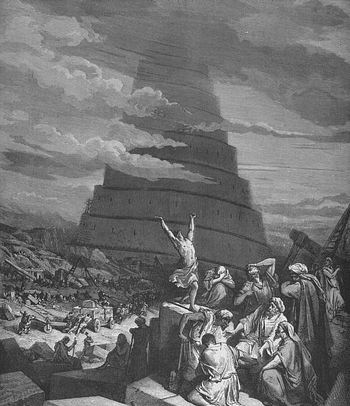
Language, pure and simple, is about communication. Humankind, perhaps very early on when we numbered only a few hundred individuals with the capacity and culture for speech, had one language. From there, linguistic differentiation began as separating bands of our species started to spread out across six continents and the islands of the Pacific. The Modern concept of political boundaries is a very recent factor. Before that territories were constantly changing hands, often peaceably through marriages of land-owning elites. Aside from that, much habitable topography lies on geographic margins and cultural fringes. It is in such places that languages mix, exchange vocabularies, and where bilingualism or even polylingualism becomes a practical necessity. Sometimes a patois or sign language emerges for purposes of necessary communication and economic barter. Today we have politicos across the planet who are pushing for an unnatural monolingualism within state borders, never mind that the state borders may have been created in a completely arbitrary fashion. The international community frowns on ethnic prejudice and genocide, and sometimes (though not often and forcefully enough) the international community intervenes before yet another country creates its own miniature (or even comparable) version of the Holocaust. So what we now see, especially in countries that are trying to preserve a veneer of respectability for purposes of trade alliances with wealthier countries, is the ethnic bigots trying to hide behind a "rational" argument for the legal enforcement of one language. Oh, we've seen it all before, even in countries of ancient "respectability" -- England forcing the Welsh and Gaelic children to speak English in school. France forcing Bretons and the Langue-d'oc region to speak the Parisian dialect of French. Now, just as the Latino community of underpaid disenfranchised workers are starting to exercise some political clout based on the very real and significant contribution they make to the American economy, we have the conservatives barking for "English" (or even "American") only speech in all affairs. Coincidence? In Slovakia, ethnic Magyars aren't allowed to speak Hungarian, even though they have lived in the towns and farms of eastern Slovakia for literally centuries. In general, minority speakers belonging to the Finno-Ugrian language family (of which Estonian and Hungarian are better-known examples) are being harassed across the European and Asian worlds, their books burned, their printing presses smashed, their radio broadcasts electronically smothered. On another front, languages thousands of years old are dying out every year simply because of the confiscation of lands from aboriginal peoples who are then scattered to the four winds as they brokenly relocate in urban settings, desperately searching for a way to survive in the ugliest side of the modern world. These phenomena are not about improving communication. They are about finding ways to separate portions of the population from political and economic enfranchisement. This is all about ethnic chauvinism, domination by the linguistic majority -- not about inclusion through homogenesis ("the melting pot"). There are three historical proofs against the seemingly "reasonable" arguments of conservatives on this issue: the Austro-Hungarian Empire, the Persian Empire, and the Jews. Austro-Hungary was the most cosmopolitan Modern state the world has yet seen. Anyone who wanted to be anyone had to be multilingual. In that state (of which a host of European countries were carved) people had to learn to speak such languages as German, Hungarian, Czech, Slovak, Slovenian, Yugoslavic (Croatian-Serbian-Bosnian), Wallachian and Yiddish! Business (political, economic and cultural) was carried out in all these languages between citizens of the Empire, whether as native speakers or as a second language. Many people knew other languages as intimately well as the one they learned at their mother's knee, and many households engaged in more than one language for daily domestic use. The Persian Empire of Antiquity was an ancient analogue to the Austro-Hungarian Empire. The Persian Empire lasted many centuries (much longer than the feuding Macedonian states that later carved it up in Alexander's destructive wake). Ruled from the grand city of Persepolis, the Persian Empire respected ethnic difference, multicultural education, encouraged religious freedom, and multilingualism was the order of the day. They ran an efficient, centralized, harmonious, bureaucratic state of equal citizenship integrating many more languages and cultures and over a much wider territory than Austro-Hungary. Then there are the Jews, who since at least Hellenistic times have been renowned for their multilingualism and cosmopolitan expertise. Jewish artisans and merchants prospered because they knew monolingualism was the bane of success. You learn to speak the language of your customers and trade partners and you out-compete everyone from the get-go. The Jews knew that learning other tongues was a way of showing respect and real interest in whom you were dealing with as human beings. A good example of this Jewish sensibility of linguistic neighborliness among non-Jews is the multilingualism that now flourishes in Central Europe, where many people speak French, Italian, German (and sometimes other languages to boot), and create a healthy everyday living from such polyglot facility. So please, don't give me this talk that if we all are forced to speak one language there will be prosperity and peace in the world. If such claims are correct, that "prosperity" and "peace" could only be paid for with blood and strangling exclusionism. Aside from the massive tragedy this would be in any of the world's regions, what would remain for the triumphant ethnic majority would be pretty damned boring.
Thursday, December 8, 2011
Are Poor Kids Only Worth Being Made Drudges?
We now have in America a front-runner for the presidential candidacy suggesting (by unavoidable implication) that we should do away with laws protecting kids from sacrificing their childhoods (the foundation of their lives) in the service of sweatshops and service industries. Besides the obvious question of creating a situation that would effectively deny children of a certain socioeconomic class the right to a public education, my basic common sense question is this: if there aren't enough jobs for adult citizens of the United States, what are these jobs we would make these poor children do? Are they jobs that adults wouldn't apply for because they would pay less than a living wage, going back to the pre-Fair Labor Standards Act rationale that children can be employed in menial adult positions and be paid less for their work? This of course would be another "killing" for the voracious corporations, who could tap into yet another slave-like workforce that they could poorly pay -- added to the cheap illegal migrant labor for the fruit and vegetable farms and for the fly-by-night, low-bid, sub-contracted construction companies. Presidential Candidate Newt Gingrich's defenders claim that the only thing he did wrong was in "just the way he said it" but that the "principle is sound". So how do you say nicely that you want to repeal the Fair Labor Standards Act and destroy the adult future of American children by making them drudges for corporations? Let's face it, if you don't get a chance at a decent education when you're young, you are fit for nothing but de facto economic slavery for the rest of your life. We citizens need to be watch-dogs about the things these politicians throw into the air. They are testing the waters, seeing how their radical notions are publicly received, and often the media tries to put on a straight face even when the reporters should express editorial outrage. If we allow these politicians to say these things over and over again without being properly challenged, the "appeasement crowd" will hold up these radical notions as the new "norm", and from there comes the boldness to create legislation that can erode our sacred body of human rights. The Nazis employed a similar technique, telling lies and proposing "solutions" to these lies, over and over again, creating a societal hypnosis, and people began to allow their government to support inhuman things that they would never have permitted but a few years before. A politician saying that the solution for financially struggling parents (who may already be collectively working two to four part-time minimum wage jobs) that they should also send their children to work, seems a far graver gaffe than that made by some other politico, who foolishly engaged in a sneaky episode of banal hanky-panky with an office aid. So please, let us not permit Newt or any of his "austerity" cohorts to one day in our Great Recession repeal a piece of humane legislation conceived and made into law during the Great Depression. Back in the 1930s, times may have been desperate, but they still had faith in a better future for their children. And because of that determined faith, their children got it!
Sunday, December 4, 2011
We Need Laughter to Cope -- Here is a Recommendation!
So often the kind of humorous stories we encounter these days are cynical, whether they are in cinematic or print forms. One can feel no human sympathy for the characters, and therefore what laughter it elicits leaves one feeling empty or wincing with discomfort. In short, a sense of the comic and the satiric that has compassion for humanity comes rarely these days. Comedy in the popular media today usually appeals to the bald one-dimensional humor that stimulates the undeveloped sense of laughter of an insecure pre-adolescent or early adolescent consciousness of life's irresistible imperfections and awkward social inhibitions. Comedy is also often grafted to a bizarre obsession with a precocious or obsessive (and jaded) "street-hipness", and the butt of the joke is the one who isn't "cool". The "uncool" are mocked and bullied with pranks and the manic goofballs or "hip" perpetrators are made to seem the "heroes" of the comedy. On the other hand, to attract the more "intellectual" or "literate" sense of comedy, the media usually serves up a form of storytelling that makes the consumer feel superior by identifying with the protagonist or narrator (if it is a book) who uses urbane "in-crowd" jokes and attitudes, slyly mocking the uninformed rubes of some more parochial part of the country. Finally, there is the "gross out"/"reality" comedy where a comic conman dupes unsuspecting people into humiliating situations, employing behavioral cues to engage multiple age groups for maximum profit, all of it weakly justified as "penetrating satire" but really just a dressed-up form of nihilistic puerile rebellion toward having a sensitive level of fully-realized adulthood. With such configurations dominating American humor these days, I find myself hardly ever laughing at "creative humor". Laughter for me more often comes from the half-subdued madness of daily life with its wonderful confusions and astounding social effusions.
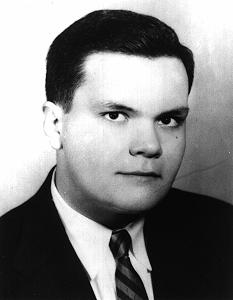
Which brings me to my recommendation. A book written in 1965, finally published (posthumously) in 1980: Confederacy of Dunces by John Kennedy Toole. Here is a work of comedy (more sober sorts might say "tragicomedy") which amounts to a loving satire of a New Orleans milieu of fully-fleshed characters from every social class and ethnic group, and while the author pokes fun at every fascinating character he so deliciously creates, he also bestows a genuine human sympathy for each. This complex authorial outlook creates a guffawing depth of humor precisely because it renders the characters into real people. The situations are by turns madcap and realistic. You get to learn about several subcultures, their foibles, their misperceptions, their inherent strengths, and the hilarity when personalities and agendas from these different subcultures collide with each other. The book is rooted in a world now disappearing but which was vibrantly real in the 1960s in a little corner of the American South that was a cosmos unto itself. At the same time there is a clever acknowledgement of its cultural opposite, supplied through a delightfully eccentric character from New York, Myrna Minkoff, an adorably inept left-wing activist whom we mostly know through her correspondence with an old friend and intellectual rival from her college days: a reclusive bachelor, New Orleans born and bred, who is her complementary opposite. This is Ignatius J. Reilly, social-reactionary, pretentious revolutionary, and a living anachronism of Medieval thought. In many ways, this novel was too honest to be published in the tense cultural time it was written (and written for) -- though the hilarity of its plot situations and humble human truths are timeless. It addresses a host of issues of the era in a satiric way, showing the mixed intentions and psychological needs behind any ostensible act of good will, the ways people get manipulated, and the ways people find to throw off such manipulation. In one sense the characters and situations are mostly hopeless cases (the "tragic" part) but on the other hand, they come through their experiences wiser and with new perspectives on life's possibilities. There is growth in these characters through all their comedic hardships, and you learn to love them all. The "villains" (as well as being the generators of part of the comic energy) are really the evenly-dealt presence of ignorance, presumption and misunderstanding, and these are overcome internally and externally by the characters. There is really only one character that remains a villain to the end, and that person's well-earned comeuppance is satisfying but not overdone. In this novel, education or the lack thereof are proven to both have their special pitfalls, while naivety and simple compassion are subtly prized. In the end, everyone is just trying to survive financially, psychologically, or both, and their struggles to coexist create strange and ingeniously funny social conjunctions. This is the only book I have ever read twice in a row. It is a work of art in its perfect construction, carefully laid plot, and believable yet surprising psyches.
These factors must be why the novel won the Pulitzer Prize for Fiction in 1981. Sadly, its brilliant but ultimately alienated author committed suicide in 1969. Toole could identify with so many different social groups, it may have made it impossible to be fully accepted by any of them as the multifaceted person he truly was -- a supreme irony, if there ever was one, to befall this person who enjoyed the panorama of human experience and existence. Nevertheless, Toole obviously loved humanity -- it was certainly not misanthropy that led to his self-annihilation. In any case, his ability to relate to something truly human in everyone led him to create a novel perhaps too hard to accept by those who lacked that ability.
Which brings me to my recommendation. A book written in 1965, finally published (posthumously) in 1980: Confederacy of Dunces by John Kennedy Toole. Here is a work of comedy (more sober sorts might say "tragicomedy") which amounts to a loving satire of a New Orleans milieu of fully-fleshed characters from every social class and ethnic group, and while the author pokes fun at every fascinating character he so deliciously creates, he also bestows a genuine human sympathy for each. This complex authorial outlook creates a guffawing depth of humor precisely because it renders the characters into real people. The situations are by turns madcap and realistic. You get to learn about several subcultures, their foibles, their misperceptions, their inherent strengths, and the hilarity when personalities and agendas from these different subcultures collide with each other. The book is rooted in a world now disappearing but which was vibrantly real in the 1960s in a little corner of the American South that was a cosmos unto itself. At the same time there is a clever acknowledgement of its cultural opposite, supplied through a delightfully eccentric character from New York, Myrna Minkoff, an adorably inept left-wing activist whom we mostly know through her correspondence with an old friend and intellectual rival from her college days: a reclusive bachelor, New Orleans born and bred, who is her complementary opposite. This is Ignatius J. Reilly, social-reactionary, pretentious revolutionary, and a living anachronism of Medieval thought. In many ways, this novel was too honest to be published in the tense cultural time it was written (and written for) -- though the hilarity of its plot situations and humble human truths are timeless. It addresses a host of issues of the era in a satiric way, showing the mixed intentions and psychological needs behind any ostensible act of good will, the ways people get manipulated, and the ways people find to throw off such manipulation. In one sense the characters and situations are mostly hopeless cases (the "tragic" part) but on the other hand, they come through their experiences wiser and with new perspectives on life's possibilities. There is growth in these characters through all their comedic hardships, and you learn to love them all. The "villains" (as well as being the generators of part of the comic energy) are really the evenly-dealt presence of ignorance, presumption and misunderstanding, and these are overcome internally and externally by the characters. There is really only one character that remains a villain to the end, and that person's well-earned comeuppance is satisfying but not overdone. In this novel, education or the lack thereof are proven to both have their special pitfalls, while naivety and simple compassion are subtly prized. In the end, everyone is just trying to survive financially, psychologically, or both, and their struggles to coexist create strange and ingeniously funny social conjunctions. This is the only book I have ever read twice in a row. It is a work of art in its perfect construction, carefully laid plot, and believable yet surprising psyches.
These factors must be why the novel won the Pulitzer Prize for Fiction in 1981. Sadly, its brilliant but ultimately alienated author committed suicide in 1969. Toole could identify with so many different social groups, it may have made it impossible to be fully accepted by any of them as the multifaceted person he truly was -- a supreme irony, if there ever was one, to befall this person who enjoyed the panorama of human experience and existence. Nevertheless, Toole obviously loved humanity -- it was certainly not misanthropy that led to his self-annihilation. In any case, his ability to relate to something truly human in everyone led him to create a novel perhaps too hard to accept by those who lacked that ability.
Saturday, December 3, 2011
Our Founding Fathers? -- Our Founding Multitudes!
So much credit has been given to the Founding Fathers, and rightly so, but they didn't do it single-handedly. They needed the support of the multitudes, and it was the multitudes who carried out their democratic covenant with the People from that generation to this.We've got our Sons and Daughters of the Revolution, Sons and Daughters of the Civil War. The Founding Fathers, other than mostly being well-off, were a motley group. Many of them scholars, some of them were military men, some of them were farmers (in the entrepreneurial sense), some of them were urban businessmen, inventors, shipping entrepreneurs, pressmen, high craftsmen. They represented a fair cross-section of our society at the time. Most of them were also very well-educated in political philosophy, economics, foreign languages, and principles of natural science. Many of them were religious, but never so much as to interfere with their belief in, study and implementation of scientific principles. For many, making a living was about achieving the leisure to pursue their true interests, which were scholarly, philosophical, literary and scientific. These gentlemen can be called "plain "or "simple" men only by comparison to certain social counterparts in England, who by comparison, were sometimes somewhat decadent and cynical on the European side of the English-speaking equation. So our Founding Fathers were idealists, and if that is provincial, then so be it. Their ideals were cosmopolitan in terms of the universal expectations they had for the spread of democracy. Recently people have tried to portray them as just "businessmen" who wanted to create a form of government (presumably democracy) that would enable them to more freely pursue their business interests. This is quite putting the cart before the horse. These men could have flourished economically had they not lifted a finger in rebellion to George III. No, they were thinking of the welfare of the multitudes, who were ready to join them. You see, the multitudes were fleeing troubles, such as political impotence, poverty, religious persecution by Official State (Sectarian) Religion. The many regular people who settled in America had one or two things at the forefront of their minds: a means to make a living so that they could set up a happy family life and a means to worship (or not worship) as they pleased in the fashion most comfortable for them individually. Many were debtor slaves, many belonged to persecuted sects whose resulting social ostracism kept them from decent employment, many were the victims of legal chicanery. Many were landless looking for a means to buy a simple homestead for a humble (yet untroubled) means of subsistence. Their ambitions were not great, but they wanted freedom and a stable (and protected) financial existence. That was why they fought in the Revolution, and they got land-grants for their service. Now we should talk about the Sons and Daughters of Ellis Island. They came by the millions from the middle of the nineteenth century until the beginning of World War I. Their sheer numbers enabled the Industrial Revolution to move into high gear, filling the spots needed in the big factories and mines, and in the construction and maintenance of a national transportation network of modern bridges and railroads. This second major wave of immigration came as the result again of religious persecution in Europe, but also because of a quashing of upward mobility by an alliance of old aristocracy and the nouveau rich in Europe who were benefiting from market speculation in global and regional industrial enterprises and wanted to keep the economic pie-slices few and fat in portion. When these mostly Irish, Eastern and Southern European immigrants came in this second major migration, they demanded that the rights and privileges of democracy and economic enfranchisement be extended to them once they established themselves in America. They were instrumental in enabling the Union Movement take on real strength, and voted in droves as their most prized right of citizenship. City life was liberalized, and the spirit of liberalism spread to the rural regions of productivity and transportation that supported the industry and high cultural life of the cities. So let us, with our great American poet Walt Whitman, sing songs of praise for our Founding Multitudes, without whom our Founding Fathers and Great American Figures would have had no legs to stand on.
Thursday, December 1, 2011
We'd Rather Grab a Profit Than Save Ourselves
There is no time to waste where climate change is concerned. Reducing its impact on the biosphere has to come from changes NOW. Yet conservatively-controlled government and profit-mad corporations make only token efforts at green energy development to appease the mildly concerned majority, with lush commercials and magazine ads inflating the impression of their feeble efforts at sustainable energy reform. Fracturing our shale gas deposits with millions of gallons of our public water, lacing it with catalytic carcinogenic chemicals (the disclosure of which is forbidden by law and is exempted from regulation by the Clean Water Act) is a violation of the human right to safe, clean drinking water, but the oil and gas companies pay their political cronies millions in campaign contributions and leave poisoned unsellable private properties in their wake when they pull up their parasitic derricks. And then you have people like former president Clinton sagely pronouncing that this practice of non-renewable energy extraction is the answer to our long-term employment problems?! Really? An inherently boom-bust form of employment is the salvation of our national economy? What comes next when the gas is all gone? When will it be time for engaging energies that are truly effective and liberating but just aren't amenable to the profit-making social pathology, such as geothermal? Who says our energy must be a commodity? Who says our medical care must be a commodity? Why can't these be non-profit services employing its servitors at a decent middle class station of life to perform morally worthy contributions to the quality of life and a higher standard of civilization? Must every speck of dirt be justified on the basis of its potential ability or failure to generate fantastic riches to satisfy the greed of the fractional few? Must the survival of life on this planet be balanced on the knife-edge of our primitive need to make boodles of money on what generates power for our so-called civilization? When our poor Earth starts to resemble the planet Venus, what other world are these human parasites going to jump to? Is there an alien planet with a monetary system where they can even spend the trillions they've made from stealing away the time and effort we could have used to save the Earth?
Subscribe to:
Comments (Atom)