
Saturday, July 9, 2011
Restoring the True Meaning of "Intellectual"
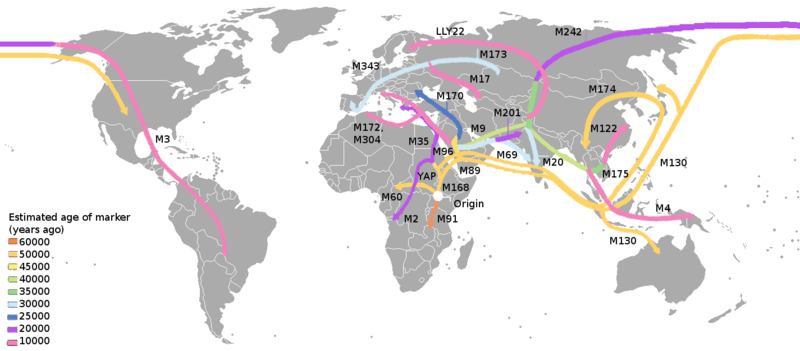
People who think democracy is a nuisance have never liked certain kinds of social groups they like to label as "intellectuals". Fascists and totalitarians alike claim that intellectuals are nothing better than "troublemakers". But what does the term "intellectual" really mean? There are the stereotypes that reactionaries have derisively painted for us in the media for generations the world over. Yet these stereotypes fall far off the mark of the real definition of the word. In point of fact, there are first of all many kinds; there are: religious intellectuals, artistic intellectuals, literary intellectuals, intellectuals of craftsmanship, architectural intellectuals, philosophical intellectuals, intellectuals of history, scientific intellectuals, liberal intellectuals, conservative intellectuals, intellectuals of design engineering, amateur intellectuals, aesthetic intellectuals, social intellectuals, intellectuals of law, economic intellectuals, intellectuals of land and resource use, and even (of course!) music intellectuals. The list goes on and on. But of whatever particular kind, an intellectual is simply a person who uses his or her intellect; or to put it another way, an intellectual is a person who does not passively accept whatever is said by someone claiming to be in authority over them. In short, an intellectual never just mindlessly does or believes whatever he or she is told by anyone with pretensions to authority. They demand proof of legitimacy. An intellectual first asks such questions as: if any dictate, policy or demand is legally sound, if it is fair to all concerned and affected, if it is just in a moral sense, if it it serves or preserves the integrity of the matter at hand, or if it is humanely reasonable. Perhaps the most sensitive distinguishing characteristic is that an intellectual often finds it necessary to ask the question "why?", when there is any room for doubt. The intellect is something that every human being has been endowed with by Nature, unless biologically thwarted by congenital defect. In fact, the intellect is what distinguishes our species, homo sapiens, from all our ape and monkey cousins, who rely only on instinct, emotional learning, social mimicry, and rudimentary reasoning capacities. So to use one's intellect, in effect, to be an intellectual, is to take and exercise full ownership of our natural mental capacities. In fact, to be an intellectual is to claim one's birthright to humanity. To do otherwise is to play oneself into the hand of folly. So as you can see, to be an intellectual does not mean a person has to have a college education, or be a professor, or a professional of some sort. As a public librarian, I have encountered a fair number of intellectuals who are farmers, mechanics, house-painters, electricians, and factory workers (though many of the last are unfortunately out of work these days). Every one of America's Founding Fathers was an intellectual. If they hadn't been, there would have been no American Revolution. They simply would have accepted all the edicts passed by King and Parliament without question. Those who never bother to ask "why" have abdicated their innate capacity for critical thinking, and they are also relinquishing their rights and responsibilities as citizens of a democracy. Yes, using your intellect does take work! And fundamentally, it requires at least a decent system of public education to objectively enliven the young to its powers of use and mutual benefit. Once out of school, you have to maintain the practice of reading all of your life to keep your intellect fit and prevent the decay of mind that would set it up to be misinformed and prone to manipulation by others seeking undeserved power. You have to compare different arguments and viewpoints, and weigh their words for sound truth or self-serving deceit. You have to reflect on the lessons you have learned from your own life and the lives you have observed around you. You have to engage in discussion with (and listen to) other people who like to think and read and reflect, because each of us is differently gifted intellectually and in terms of the ability to learn objective wisdom from personal life experiences. Someone once said with ironic understatement that if you are only giving ear to one sort of person, or relying on one sort of book, you likely don't have all the facts of the matter in question. The central challenge of being an intellectual is discerning who or what source is most authoritative in terms of endowing a person with an accurate or balanced understanding of any given issue we face as individuals or as a society. Chances are, the more black and white, cut and dried, and socially excluding a set of pronouncements are, the more likely they are to be a wrenching or distortion of what is true, what is wholesome, and what is morally just. One thing is for sure, the more you use your intellect (and conversely, the less mentally passive you are) the more you come to realize you are a citizen of the world. Perhaps the greatest gift an honestly used intellect can give to its owner is an understanding of how much we have in common with every fellow member of our species on this planet, both living and dead. It matters not your ethnicity, nationality, religious persuasion, socioeconomic class, level of education, or anatomical gender: we have all been given the same type of brain to use, which acquired its present form of refinement for homo sapiens some 60,000 years ago. You can thank evolution or you can thank God. Either way, be grateful, for without our intellectual capacity, we would still be apes in the trees. It is true, we can choose not to use this precious inheritance, but if we abandon our intellect, we are no better off than slaves living under a totalitarian state. Without freely active intellectuals, civilization stagnates and regresses. Authority loses its soundness when it is left unchallenged by intellectual criticism. As every intellectual knows: an authority is one that can establish its moral, ethical, scientific, technical or factual integrity -- in whatever field or domain of human endeavor or responsibility it claims to speak for. To be an intellectual is to be fully human, heart and mind in balance.

Subscribe to:
Post Comments (Atom)












































No comments:
Post a Comment