Tuesday, July 5, 2011
The King Oak of Sjaelland
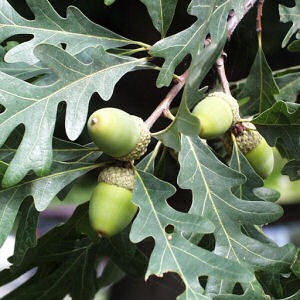
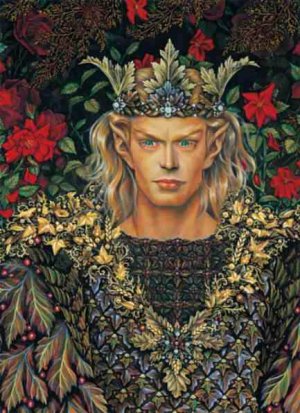
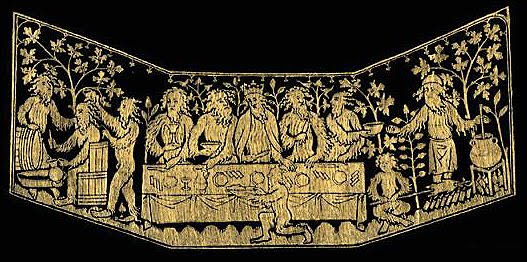
Called by native Danes "Konge Egen", it is a tree located on the island of Sjaelland ("Sea Land"), in the North Forest ("Nordskov"), near the town of Jaegerspris, in the country of Denmark. It is estimated to be anywhere from 1500 to 2000 years old, and is of the Pedunculate Oak species (scientifically known either as quercus pedunculata, or quercus robur), but more commonly known in Anglophone countries as "English Oak". The Konge Egan is extremely broad and squat, indicating that when its trunk took form, it grew in a meadow where there was no light competition. Ironically, today it is slowly dying because it is now surrounded by other deciduous trees, many of them its offspring or descendants, which are growing taller than it, and thus claiming more and more of the sunlight in the forest canopy. There are other examples of its kind stretching from the Caucasus Mountains to the British Isles, and they are all characteristically long-lived (most live at least a few centuries), and extremely hard timbered, bearing rugged branches, widening lobed leaves and stalked (pedunculate) acorns. Its heartwood is very durable and makes sturdy furniture and lasting house framework and rafterwork. Depending on whether they grown in a meadow or forest context, they can obtain heights ranging from 25 to 35 meters. The Konge Egen is what in some cultures would be called a "grandfather tree", and it was born in a time when the native inhabitants of Sjaelland would have practiced a native pagan religion. This religion believed a soul inhabited every tree, and had the ability to separate itself and take humanoid form, female or male, depending on the species of the tree. Beings known as "oak men" were the walking souls of oak trees. Generally, such beings were known as "wood elves". They were the protectors of the forest environment, and scourged any mortal who did not show respect to its flora and fauna and observe special taboos of sanctity. Just as the Plains Indians hunters showed proper respect to the buffalo herds, so did woodcutters and hunters have to honor the rules set by the wood elves, of which the oak men were the most martial. The oldest oak bore the elf who was king of the forest. The souls of men were thought to derive from ash trees and the souls of women were said to come from elm trees. With a natural electrical polarity attractive to lightning, oak trees in general were considered sacred to the god of thunder ("Thor", or more anciently, "Thunar"), who in turn was a protector of human beings (especially farmers and fishermen) against evil supernatural beings. Offerings of beer or milk were poured on the base of sacred trees and their emerging roots, strips of beautiful fabric tied on the branches, and people lovingly embraced the tree's trunk, all ritual acts seeking the favor of the soul of the tree to give human beings such things as protection, healing, fertility, general good fortune or successful childbirth (pregnant women in such cases put their backs to the tree and reached behind them for a backward embrace). However much the modern mind may find these interrelated beliefs puzzling, they were harmless, as they promoted conservation and a deep-seated kinship and respect for the natural world and its forces. These taboos and spiritual affinities for flora and fauna (despite Christian conversion and repeated attempts by Christianity to destroy the attitude of veneration toward natural objects and animals) persisted in rural areas throughout Europe well into the twentieth century -- just in time for the environmental conservation movement to take over in a less innocent age. If not for latent pagan attitudes that stubbornly survived for centuries through the Christian era, we would not likely have such ancient and magnificent trees as the Konge Egen. It would have been felled long ago to be rendered into tables, chairs, roof beams and wall frames, and those items would have already rotted away. The Konge Egen is a living testament to the awesome longevity and strength of Nature unfettered.

Subscribe to:
Post Comments (Atom)








































No comments:
Post a Comment