Thursday, May 26, 2011
Giving Thanks to the Little Ones Within Us
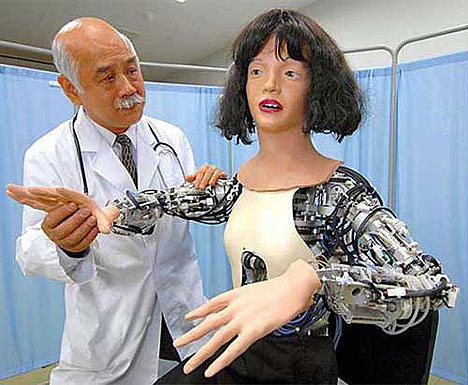
We may give thanks to God or gods, we may give thanks to friends or family. We may give thanks to a receptive audience or even a kindly stranger. But what of our bodies? People have likened our physical forms to a "biological machine." Such a metaphor does not support an entirely helpful attitude. Machines are often ill used or at least roughly used, and because we think of machines as inanimate and disposable, we often do not treat them with sensitive respect (though classic automobile restorers do show proper care for their machines). Our bodies unfortunately are disposable, but far less so if we only showed them the proper appreciation they deserve. A metaphor that better fits with what biologists and microbiologists now know about the human body would be to liken it to a biological community. We have been taught to think in terms of a functional hierarchy of fixed cells, tissues, organs and anatomical systems. But our physical forms also consist of untold numbers of mobile cellular entities of a highly varied nature, which (along with molecular hormones) communicate vital information between organs and tissues, protect them from microbial invaders of many kinds, see that certain nutrients are delivered to them, and strive to keep them from shutting down by shocking stresses. These busily moving life-forms created by our own body work endlessly to keep us in good form until they literally wear out from their selfless work. It occurs to me that our flesh and bones are like a coral reef, and there is a colony of myriad entities that give life to that reef. We should give thanks to these little intra-cellular forms, even if we may not know each of their long and complicated scientific names. These little beings are as critical to our survival as the nutrition we take in, and the water we drink. Think about it, even when we put our bodies through punishing stresses, or abuse alcohol or drugs, or eat unhealthy foods, these wee critters are still trying to hold us together, even under desperate circumstances with little to work with. They never ask us to try to treat our bodies with respect, rest, and healthful conditioning. They just keep working, endeavoring to maintain the life of our body, second after second, hour after hour, week in week out, month in month out, year after year, decade after decade, ceaselessly, until death is utterly unavoidable. So let us give thanks to these humble little beings that make it possible to walk and talk and think and work (and play) upon this precious Earth. Psychiatrists today say that good thoughts themselves form molecules of nourishment for the physical forms we inhabit. Food for thought -- or is it the other way around?

Subscribe to:
Post Comments (Atom)









































No comments:
Post a Comment