Monday, April 5, 2010
How to Judge a People
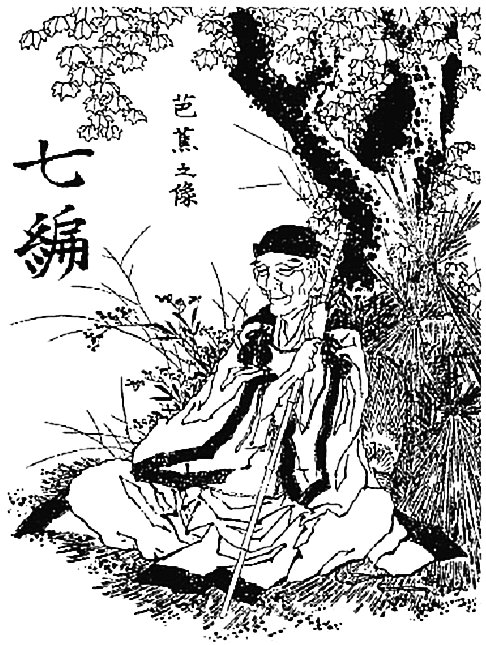
Throughout history human beings have stumbled upon a revelatory fact: the actual people of a political power may be quite different than the political power over them. Ironies form when you find a basic human affinity for someone you have been told is your enemy. In more recent centuries the basic agreement between human beings as opposed to the ambitions of political entities has come across most obviously between fellow scientists across the nations. In the Middle Ages, it was between fellow churchmen and churchwomen across feudal states promoting the cause of peace and compassion. During World War I and the American Civil War, Christmas was sometimes celebrated between opposing sides. There are World War II veterans and elderly civilians from eastern and southeast Asia who speak truthfully about how ill-treated they were by Japanese soldiers, and yet when General MacArthur occupied Japan to help them organize a new state, he found the common people of the civilian population more than ready to democratize, because they had been utterly unhappy ever since the imperialist military regime had mounted a coup d'etat over their democracy back in the mid-1930s. You cannot accurately (let alone justly) judge a people by the behavior of their government, even if that government claims to act by the will of the people. If you don't actually have the privilege to get to know a real live person from another country, another way to gauge the nature of their humanity is to read their poetry that relates to the natural world. It is in such poetry that clusters of refined spiritual qualities may be discovered. A great about thing about nature poetry is that it tends not to be a medium where poets seek to slip in propagandizing (and therefore hypocritical) airs. The natural world is neutral territory, by the very essence of its subject matter, a genre immune to the abuse of art seeking political advancement or to affirm political power, and therefore its creative canvas is a far more honest mirror into the real soul of a people through the nature-poets its culture produces. The haiku tradition of poetry in Japan (begun by the pacifist Basho) is a case in point, and shows that cold-blooded militarism was not at the core of Japanese culture, but lodged in the aristocratic periphery. Likewise the Chinese poetry by such reflective, nature-oriented poet-philosophers as Li Po and Tu Fu bears out the humanity of the Chinese soul, whatever one might say about the dread qualities of their historical empire. The Persian-language poet, Rumi evokes a wonderful unity of spiritual insight and keen natural observation. While the British Empire was wreaking havoc across the world, the true heart of their culture, exemplified by such Romantic and Victorian poets as William Wordsworth, John Keats, and Gabriel Rossetti wrote poems endeavoring to awaken the soul of humankind to its moral mirror in nature. Likewise while the United States was engaged in the slaughterhouse of its Civil War and the ethnic cleansing of the American Indian, you had poets like Walt Whitman and Emily Dickinson writing poetry about the healing and insightful qualities of beautiful nature. I could go on and on. However, just as the sharing of scientific learning is a cue to our basic and essential unity as homo sapiens on this planet, so also is the immediate appreciation we may discover across cultures in creative celebrations and explorations of the meaning of the natural world and human soul's place in it. Politics are a lie, but nature is ever true.

Subscribe to:
Post Comments (Atom)

































No comments:
Post a Comment