Wednesday, March 31, 2010
Culture Wars
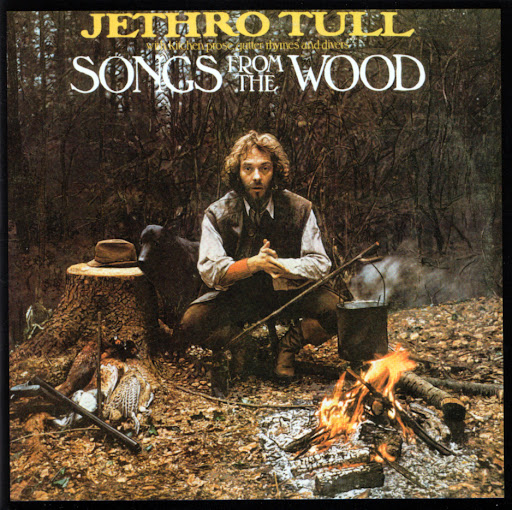
The media likes to talk about the "culture wars" in the United States between politically conservative Christian fundamentalists and politically progressive secularists. However, a far more serious culture war took place in the English past of our anglophone nation. Compared to other European nations, England had used the fact that it was separated from the Continent by a sea, to determine its own cultural climate. So, for instance, it only briefly flirted with the Inquisition during the conservatively-backed usurpation and reign of King Henry IV. When about a century later, King Henry VIII called in the cause of Protestantism to bail him out of his perceived marriage trouble of lacking a male heir (he wanted a divorce in order to remarry), the people of England surged forth with such glee at this liberalization of their Christian faith, that the King was taken quite aback, and began taking measures to quell their enthusiasm: the hard rules would be put back -- it's just that he would be "pope" now, and England, would be his little "papaldom". He wanted his cake and eat it too -- so to speak. Unfortunately, his weak commitment to religious reform, and his harsh punishment of those who took religious reform seriously within his own country, caused many of his reformist-spirited subjects to take matters far more seriously. They studied up on things, and decided to prioritize. Maybe if they really wanted true Protestantism in the country, it would have to be a more sober form of religion. Maybe it could not be a happy thing if it were to truly succeed. There were others, however, who were impatient with this weakly (and shamefully)-founded form of insular quasi-Catholicism, and wanted to get back to being real members of Catholic Christendom again. They got their wish when King Henry died (and then his one sickly Protestant male heir, Edward VI, died) and his eldest daughter, Mary Tudor, became Queen in her own right and restored Catholicism to England. But then she died without an heir, and that left the Protestant Elizabeth Tudor to take up the throne as Queen. Elizabeth I, to her credit, established something that could be called real Protestantism in England, nor was it a harsh brand of Protestantism. Unfortunately, she outlawed the practice of Catholicism, and Catholic subjects found themselves unable to enjoy government positions or run for Parliament. Yet these stubborn English Catholics were kept aflame by the mixed nature of religious change. While simple people were allowed to read the Holy Scriptures translated into the vernacular without fear of being jailed or worse, religious ceremony still had all the pomp of the Old Church. For the more hardened Protestants who had suffered under the bait-and-switch reign of Henry VIII and the repressive Catholic revival of Queen Mary, this was not going far enough, and the covert Catholics made them nervous as 1950s American McCarthyites toward covert communists. These radical Protestants were not yet dominant in national politics, but they were working on the local level to divest the country of all the things they perceived to be "popish remnants and refuges". These included the great peasant festivals of the seasons, which in origin were actually heathen, but which the Medieval Catholic Church had embraced and endowed with a veneer of Christianity (by switching pagan gods for Saints) in order to more expediently convert the Anglo-Saxons and preserve the membership of the English people over the course of generations. These festivals were seasonal in nature, numbering usually eight to sanctify different stages of work in the agrarian calendar, and going under various names from shire to shire -- and these rites were quite riotous (not to mention out-doorsy). They were full of mythical costumes, crude theater, boisterous music, the consuming of lots of ale, and tremendous dancing. These festivals were a wonderful safety valve from the great burdens of life upon which most everyone's life was balanced (and which constantly prowled the back of their minds): the threat of drought or swamping rain that could lead to crop failure and famine, the threat of plague which could literally wipe out half of one's family members, and the fact that winters were cruel and killed you by inches each year of your life (so best to get your last hurrah out in autumn, and then celebrate the fact you were still alive when spring returned). The sobered radical Protestants, however, did not like all these ancient expressions of gaiety and freedom of spirit. They could not worship with the austerity they preferred in the official state Anglican Church, so they came to view these old agrarian festivals as akin to the lapses into paganism by the ancient Hebrews, so common in the Old Testament books concerned with the period from the Exodus until their Babylonian exile. The revelers represented a weakness in the English character to embrace true Protestantism (read here, "Calvinism"). Thus slowly, these festivals began to be outlawed in different locales, or at least tee-tottering between happening one year and not the next because of different political compositions of village councils. Gradually, the festivals began to disappear altogether from places where the radical Protestants began to dominate (by now they were calling themselves "Puritans", because they wanted to "purify" the English Church). By the middle of the next century, their will finally won out: a king was deposed and ritually decapitated, a civil war was fought, a democratic theocracy (then later theocratic despotism) was put into place under Oliver Cromwell, and the "popish festivals" were outlawed everywhere for all time. Of course, in little out-of-the-way places, some pathetic vestiges survived for Victorian folklorists to discover in the more secular and scientific nineteenth century, but by then these rituals were a short way off from receiving the final nails to the coffin of heathendom by the culturally erasing cultural (and urbanizing) force of the Industrial Revolution moving into high gear. So whatever New Age books modern-day Neo-Pagans may depend upon for their heathen revival, they can ultimately thank the Victorians for recording (and thus saving for posterity) the remnant that was once England's Medieval glory before it disappeared utterly from oral memory and rarefied practice. This is to go a long way to explain why WASPs ("White Anglo-Saxon Protestants") have been seen (comparatively speaking) as so boring and self-repressed over the past many generations. And yet, the native English had only been this way for a relatively short span of their total cultural existence. Finally (and it did not take much), at least some of the Puritan legacy was overthrown in the late nineteen-fifties and certainly by the nineteen-sixties, when English teenagers discovered African American blues-music and African-American dominated and/or rooted Rock and Roll music. These teenagers became musicians themselves of these forms in their own right, and liberated their generation from social-staidness. They got everyone dancing and hooting again like in the old peasant festivals of yore, but now you could kick up your heals anytime of the year! At first they called this English brand of wild music "R & B" (for "Rhythm and Blues"), and by the end of the sixties, it had become something so much its own, that they were referring to it simply as "Rock". As it developed in the seventies, Rock was freely absorbing more elements into its vertiginous energy, including classical, jazz, and yes, "traditional folk music". People began raiding those old songbooks of such ballads that had managed to be taken down by eighteenth century antiquarians and nineteenth century Romantics, which otherwise the Puritans had tried to kill off for being "heathen hymns" and "devil's verses". English Folk Rock took off in this milieu of hybrid-forms of popular music. A beautiful culmination of this musical subgenre arose among the members of the rock group, Jethro Tull, whose leader, Ian Anderson, chiefly composed the music and lyrics of a tremendous folk rock album that came out in 1977, which the group entitled, Songs from the Wood. The album was a celebration of the group's removal from the urban scene (which was being taken over by the musically reactionary Punk movement) and their happy resettlement in the beautiful English countryside. The music of this album may be one of the truest evocations in our modern day of what those peasant festivals sounded like in terms of creative energy and passion, not to mention their inspiration in the wellspring of Nature and Myth. This is no timid, twilit, melancholy, nostalgic reaching back. This is the RIOTOUS ENGLISH PEASANT REINCARNATED IN ALL HIS AND HER BEAUTIFUL WICKEDNESS, JOY AND STRENGTH! Go out and buy SONGS FROM THE WOOD by JETHRO TULL; it has been digitally remastered and is available through Chrysalis Records. Here acoustic, electric, and electronic instrumentation are perfectly balanced, and the vocals, both solo and harmonic are wonderful. As for the the lyrics, they lick your brain like the deft and speedish tongue of a wild butterfly! Well, though there be those who say that commercialism is fundamentally evil, I say that putting a blogger in the stocks for promoting capitalism is like telling a Medieval Peasant he needs to stop dancing and start smoking a pipe instead! Thank you for reading this little lecture in English history and of how the English got their groove back! Now follow the advice of this tagged-on review and buy the album!

Subscribe to:
Post Comments (Atom)


































No comments:
Post a Comment