Sunday, January 15, 2012
No Shame When Our Origins Are Evidenced
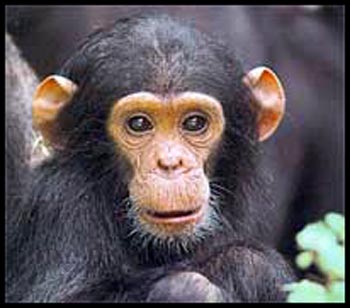
Between Weeks 13 and 16 of gestational development the fetus begins growing a special kind of hair called lanugo, which is a kind of fur. By Week 20, the body is entirely covered by this hair, which forms an actual pelt. By Week 35 it begins to be shed, and by Week 36 it has all fallen out except for traces on the upper arms and shoulders, which unless prematurely born, is nearly all gone by the time the baby emerges from the birth canal. Lanugo emerges in the fetuses of all other mammals, and for primates it remains to become the permanent body hair it will grow throughout its postnatal life. In humans it is an evolutionary echo of just how closely related we are to our fellow Great Apes (i.e., chimpanzees, bonobo, orangutans and gorillas). For some rare people, this thick growth of hair is not rescinded in the succeeding stages of gestation, but they are born with it (without being premature), and it remains with them for the rest of their lives. This is due to the rare pairing of two recessive throwback genes, but the individuals with this condition are otherwise normal and intelligent. Our relationship with other Great Apes should not be a source of shame but an enhancement of our sense of connection with the rest of the natural world. Such evidence of this hirsute stage in human gestation should serve to liberate us psychologically from a sense that we have somehow become wholly "exiled from Eden". We are fortunate and should value our gift of superior reason, but it is certainly a reflection of "unreason" to be ashamed and reflexively resentful that we are so intimately related to other primates. I take joy that I am a mammal like my dear canine and feline friends, and a primate cousin of the resourceful hanuman monkey and the glorious mountain gorilla. Yet just how much more advanced must be reconsidered when we have the example of the Iraqi Army years ago during its invasion of Kuwait slaughtering all the apes in the zoo because they were "abominations". This is not to single out one group of people for chiding. Christians have shown extreme resentment ever since the discoveries of Charles Darwin in the Victorian Period that we have an evolutionary connection to other species of apes. Fundamentalist Christians grow irate when it is suggested that we are apes (or even just animals) at all. How can any animal be an "abomination" when God (according to the religious scripture of every monotheistic faith) is the Creator (i.e., the Ultimate Parent) of all living things, in effect His/Her beloved "creatures". Well, we certainly are not "godlings", and "bestial" behavior seems more often practiced by "humans" rather than by the pseudo-separate group whom the scientifically aversive identify as "animals".

Subscribe to:
Post Comments (Atom)














































No comments:
Post a Comment