Saturday, February 5, 2011
The Falsity of Anthropomorphism as a Criticism
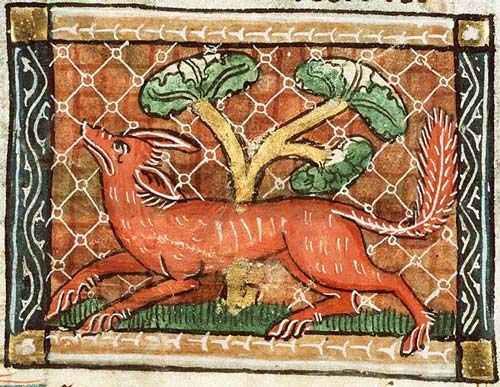
When a male and female fox bond as life partners, they signal their affinity by getting up on their hind legs and gently treading each others chests with their forepaws. Thenceforth, their devotion to each other through even difficult circumstances is an inspiring thing evident in the objective analysis of animal behavior. Yet in every species, the more intelligence and physical articulation nature permits, the more any given species will use those factors to amplify and refine the expressiveness of loving devotion to mates, offspring and group members, and this is observable in everything from albatrosses to baboons. Conservative scientists would like to neutralize any assignation of "love" to such behaviors as "anthropomorphizing". And yet, when the big picture of life on Earth is carefully considered, it becomes clear that we really ARE seeing what we think we're seeing! It is not so much that we are in any danger of assigning "human" traits to other animals, as that we are seeing what we have in common psychologically with other species. Remember that we share the same evolutionary heritage with all the rest of life on this planet. We like to think of ourselves as largely a product of cultural cues and training, but our emotions have a biological heritage too. Scientists are not comfortable with the term "love", so let's call it selfless devotion. Whatever one chooses to call it, this trait of behavior is a much more valuable and effective means of survival than all the much more attentively studied traits of aggression and competitiveness. And now I will depart into a layman's considered conviction, and make a claim science cannot permit. I have a strong sense that animals have souls. Even an atheist will have to admit that if they have ever really experienced animals, even just as pets, there is an observable "mind" at work. Other animals are not simply machines of instinct. Studies of animal social groups show variations of behavior, different levels of psychological maturity, and a range of devotion to their fellows from individual to individual. There are members in any given animal group that even possess discordantly selfish or even violently destructive behaviors. Just like us! It's not all hormonal programming. We are encountering personalities. "Bad" behavior exists in other species, but it cannot be generalized for any given species, because there is real variation from one member to the next. It can only be seen as within the realm of potential behaviors, just as in humans. Let's face it: we are not such an anomaly of natural evolution as some would prefer to believe. We have much in common with other living things, and I'm not talking about what we share in terms of physiological organs and functions. Perhaps we should not look at such perceptions of shared behavior as contemptible anthropomorphism, but rather as a reflection of the very real "zoomorphism" homo sapiens shares with its fellow branches on the evolutionary tree of Earth's truly wonderful biosphere.

Subscribe to:
Post Comments (Atom)










































No comments:
Post a Comment