Sunday, February 6, 2011
The Current Delusion of Technology
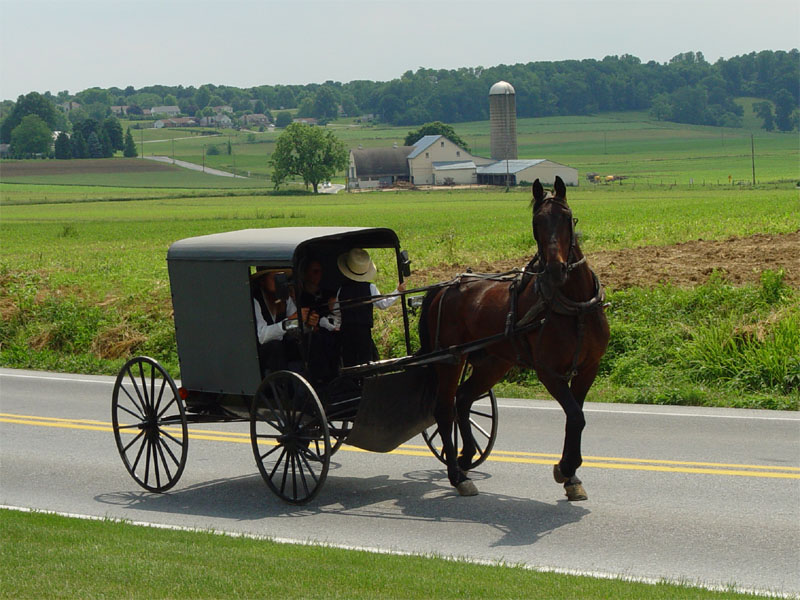
More and more our economy and functional society focuses on that portion of humanity which has mounted the raft of advanced media, information and communications technology. It seems evident that political concerns are also moving in that direction. This results in a strange and chilling evaporation of identity for those who cannot afford to access or consistently access this artificial world. The people on the raft increasingly behave as though they are unaware of those who are not on the raft and are treading water. Those with incomes that enable them to be full-spectrum consumers of relational technologies seem unable to confront the fact that the majority of the population of the United States and the world are either fully or partially disenfranchised with regard to these technologies. Already a blunt rebuttal of more traditional forms of communicating, relating and transacting basic business have begun to manifest. Trends indicate that soon it will become the exclusive rule that people must do their taxes on line, must apply for jobs on line, must do their bill-paying on line. If there were not public libraries to provide them with the means to do these things, there would be a massive crisis. And yet public libraries remain largely unacknowledged and unsupported in this critical capacity. In the meantime, library staff technicians are working diligently and creatively and desperately to keep their aging public computers functional in the face of rapidly repeating software and hardware upgrades in the most extreme economy of obsolescence ever seen. The dismaying thing is that currently those treading water are less outraged than meekly ashamed of their inability to hoist themselves up onto the raft that the computerization of our society has imposed. It is considered a form of social shame not to be able to participate in the high technology world. In the meantime the flood-waters of prohibitive expense and declining library funding continue to mount. Where are the life boats if we are going to continue to reduce funding for our public libraries? Why can't the raft be constructed to embrace the full expanse of humanity if government and business intend to make it the sole form of official human interaction? Even in the middle ages, peasants were not so winnowed out of the means of conducting business with other human beings. This grave and obvious fact makes all the glitzy facility of mobile phones, computer tablets, miniature laptops and e-book readers seem insanely superficial in terms of their effective utility to society as a whole. Aside from this, the computerization of our vehicles of personal transportation means that the poor can no longer repair their own cars, which has formerly been a vital strategy of financial management for them. To turn over the necessarily comprehensive responsibility of running an entire nation and economy in terms of its mass citizenry to the expensive and willfully evanescent modulations of microcomputer technology seems grossly premature. That is, if one cares at all about the welfare and legal maintenance of the have-nots. The paper and print media were at least functionally driven, rather than hyper-profit driven as computers are. Everyone could participate in the world of the typewriter, the printing press and the pen in hand, no matter if they lived in a shack in the country, or a high-rise apartment in a gentrified urban quarter. Computers are blindly worshiped now as our secular lares and penates, but they share their remarkable benefits only with the relatively few in terms of realistic economics. In their present form, computer technologies are a most undemocratic way to conduct the humble and necessary business of societal life. Remember the last great cultural shift in mode of life? It was everyone going from the horse and cart to the automobile. That was just about a century ago, but they did it the right way then. At first it was only the rich who had cars, but then lots of regular people got employment in assembly-line production jobs and thereby more people obtained liquid cash. The energized economy expanded to include people even indirectly related in their employment or vocation to the industrial heart of the formerly agriculturally-driven form of exchange. Cars were mass-produced. They were made to last, were affordable and eminently designed for easy maintenance by the owner. Soon nearly everyone could afford and indeed went on to own an automobile, or at the very least had a reliable friend or relative who did. No one was left behind. This is the way computers must be done if we expect them to supplant the world of paper transactions.

Saturday, February 5, 2011
The Falsity of Anthropomorphism as a Criticism
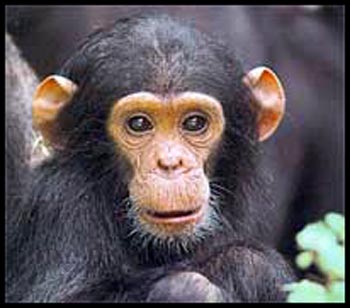
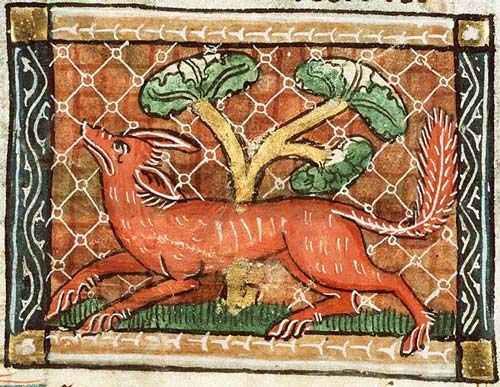
When a male and female fox bond as life partners, they signal their affinity by getting up on their hind legs and gently treading each others chests with their forepaws. Thenceforth, their devotion to each other through even difficult circumstances is an inspiring thing evident in the objective analysis of animal behavior. Yet in every species, the more intelligence and physical articulation nature permits, the more any given species will use those factors to amplify and refine the expressiveness of loving devotion to mates, offspring and group members, and this is observable in everything from albatrosses to baboons. Conservative scientists would like to neutralize any assignation of "love" to such behaviors as "anthropomorphizing". And yet, when the big picture of life on Earth is carefully considered, it becomes clear that we really ARE seeing what we think we're seeing! It is not so much that we are in any danger of assigning "human" traits to other animals, as that we are seeing what we have in common psychologically with other species. Remember that we share the same evolutionary heritage with all the rest of life on this planet. We like to think of ourselves as largely a product of cultural cues and training, but our emotions have a biological heritage too. Scientists are not comfortable with the term "love", so let's call it selfless devotion. Whatever one chooses to call it, this trait of behavior is a much more valuable and effective means of survival than all the much more attentively studied traits of aggression and competitiveness. And now I will depart into a layman's considered conviction, and make a claim science cannot permit. I have a strong sense that animals have souls. Even an atheist will have to admit that if they have ever really experienced animals, even just as pets, there is an observable "mind" at work. Other animals are not simply machines of instinct. Studies of animal social groups show variations of behavior, different levels of psychological maturity, and a range of devotion to their fellows from individual to individual. There are members in any given animal group that even possess discordantly selfish or even violently destructive behaviors. Just like us! It's not all hormonal programming. We are encountering personalities. "Bad" behavior exists in other species, but it cannot be generalized for any given species, because there is real variation from one member to the next. It can only be seen as within the realm of potential behaviors, just as in humans. Let's face it: we are not such an anomaly of natural evolution as some would prefer to believe. We have much in common with other living things, and I'm not talking about what we share in terms of physiological organs and functions. Perhaps we should not look at such perceptions of shared behavior as contemptible anthropomorphism, but rather as a reflection of the very real "zoomorphism" homo sapiens shares with its fellow branches on the evolutionary tree of Earth's truly wonderful biosphere.
Subscribe to:
Comments (Atom)