Monday, May 24, 2010
The Roses Must Remain
If there is a voice in Nature, it is its emphatic presence that stands (when it is allowed to stand) in disregard to the miseries we inflict upon each other and ourselves, and amidst the human chaos that we cannot control. I was sitting on my front stoop a few days ago and watched a bee gently gliding from one white clover flower to the next. From down the hill I heard a passing siren for an ambulance, and the peaceful scene continued. I thought about how many trillions of times this scene has been re-enacted, the plant and the insect in harmonious relationship. It has happened through all our wars, privations, oppressive regimes, plagues and personal tragedies. Nature remains in so many ways an imperturbable expression of beauty. What a valuable thing for someone who is depressed or distressed who can open their heart and mind to the beauty of a scene directed by the painterly wings of a butterfly or the rolling gait of a woodchuck or the graceful careening of a hawk's flight. Then consider it all banished, paved away, and the person walking alone in their misery does not have this happily accidental form of access to Nature's constancy. A profound form of subtle consolation has been taken away, and the person in misery loses a valuable spiritual perspective and a living embodiment of sturdy hope in the face of life's madness. There is a reason that is not maudlin or small-minded behind the old expression, "take time to stop and smell the roses". Humankind can create wonderful realities for itself, but it can also create artificial hells. Immersion in the creations of humankind, however beautiful or comforting, cannot elude the hard knocks of life. That is why the roses must remain -- for the sake of Nature (of which we are only a small part) and for the healing of ourselves. The persistent and consistent beauty of Nature in its forms and movements is also the root inspiration of all perdurable art. When art only derives from itself, its ability to enrich the soul grows paler and paler. The luster of Nature never fades, but vigorously renews.

Sunday, May 16, 2010
Human Beings in the Natural Scheme of Things
It is quite understandable and forgivable that the average person either does not believe or is ambivalent about the existence of extra-terrestrial life or the presence of remnant populations of hominid species on our planet (i. e., sasquatch, yeti, etc.). After all, there are literally thousands of distractions and burdens to preoccupy the life of any given individual that are far more demanding and confrontational. Nevertheless, there are those of us of perfectly sound mind who, through life's infinite variability and the accidents of experience, encounter something that does not fit into the natural scheme we were brought up to accept as forming reality. Then there are those of us that have never encountered such extraordinary things but for whatever reason are sensitive to the open-ended mysteries that really define our place in the world and the universe. The fact that believers and eyewitnesses are socially ostracized represents a political act of sorts in of itself. Then, when you have actual civic authorities denying the possible existence of such phenomena and abrogating (or at least belittling) scientific investigation into such matters, we have an overt political act of an authoritarian nature. So, in terms of how little it would practically cost society to officially honor the mounting physical evidence and persistent testimonials from people of all walks of life in terms of these outre matters, why is there such a blockade? Since one cannot really determine a practical reason for being utterly close-minded in these matters, it must be an ideological issue. The "cost", in short, is the threat such areas of understanding pose to a vested interest in an unequivocal position that is highly unscientific: the hubristic proposition that human beings are utterly unique! If there are remnant groups in the remote regions of this planet of fellow hominids, which possibly run in variety from Neanderthal populations in the Caucasus Mountains, to Australopithecines in the Himalayas, to homo heidelbergensis in Southeast Asia, to Gigantopitchecus in the Pacific Northwest of North America, then we must palpably (rather than merely theoretically) embrace the truth that we (homo sapiens) are really only once branch of the hominid family, and that, after all, we are animals like any other primate. Additionally, we must admit to populations of hominoid species which have successfully eluded our political control for tens of thousands of years. On the other hand, admitting that we are being visited and studied by extraterrestrials is to face the fact that we share the universe with sapient beings vastly more sophisticated than ourselves. Either way our sense of preeminence is threatened. The consideration that either we still have some close relatives surviving on Earth, or that we aren't "the only brightly-lit show in town", really is not a problem for those of us for whom it is natural to feel humbly captivated by the wondrous complexity and vastness of Nature and the Universe. Understanding a profounder chain of being only makes our experience of life more rich and profound, and indeed, more progressive in its broader insights. But the fact remains that there are those who are not content merely to simply and passively ignore (as most pragmatically do) the existential possibility of other human-like species, native or non-native to our world. There are those who instead expend intense and aggressive amounts of energy for no discernibly rational and constructive purpose to defame, distort, distract and destroy efforts to establish a broader understanding. It is with this portion of the population that you will coincidentally discover an obsession with power and control. Yes, many things do boil down to love or money, but we must not forget this third preoccupation our kind tends toward. The desire to preserve various kinds of inordinate power and its status quo affects intensely our progress in scientific endeavors even generally speaking, which is something many people fail to realize. However, to look at the very credible evidence that we either have living siblings clothed in a thick growth of their own hair, or that we experience visitors to our planet in suits of "interstellar silver", is to acquire a healthy measure of humility about our place in the cosmic order, and perhaps lead us to act with a healing modesty to our own fellow human beings.
Thursday, May 13, 2010
Self Awareness and Free Will
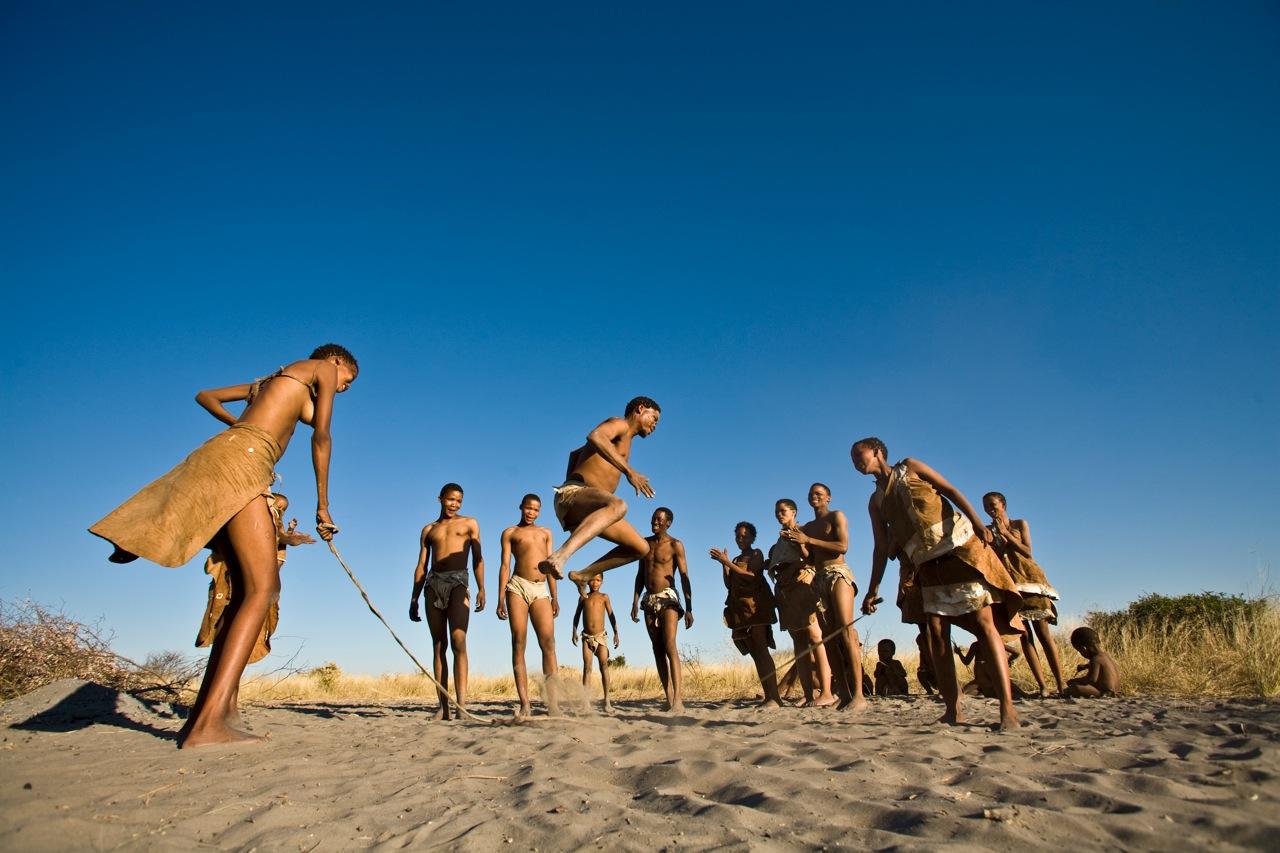
The animals "beneath" us in intellectual capacity should never be scorned as "stupid"; stupidity is the inability to be responsible in one's actions. The animals with whom we share this planet act with responsibility to their respective species. They do not need to be encouraged or compelled to nurture or protect each other. It is in their nature to do so. Human beings, on the other hand, though we have natural drives in each of us to act responsibly in these ways, must be raised and socially encouraged to solidify our commitment to nurture and protect our fellow human beings. In tribal times, it was much easier to communicate the value of such behaviors and create a sense of commonweal. Unfortunately, the human experience these days is largely one of social atomization. Ruthless competition and amoral self-interest are rewarded, whatever the official line may state to the contrary. In effect, we have (in a collective sense) become cleverly stupid. In our moral disunity, we have fallen beneath the behavioral level of our fellow animals, who are governed by wholesome instincts -- whatever else one might say about the inter-species ruthlessness of Nature's food chain. The fact remains that animals within any given species do not destroy or weaken each other for selfish gain; if they have conflict, it is to improve collective strength. We, however, have cultivated a drive to undermine each other, to the point that we are fast eroding our collective survival (and therefore, in the long run, the succession of every single member of our species). Not even those clever enough at amassing individual wealth and power over others may find escape from this internally generated threat-- which is an irony they fail to grasp for all their cunning. Religionists speak of a Fall from Eden. Moral ecologists speak of Fall from Nature. The two essentially refer to the same problem, and these days, it has become the crisis of our civilization. We as a species, whether through evolutionary fluke or Divine Gift, have two resources that distinguish us from other animals. Our self-awareness makes us able to take in the wonder of the universe by affording a perspective of our place in it. This same capacity has begotten the second distinguishing trait: free will. Put another way (one might say a more scientific way), we are no longer strictly governed by instinctual behaviors. Here I am not talking about sex drive and fight or flight. I'm talking about the vital genetic programming to nurture and protect one's fellows without a second thought. Our free will has positive gifts: we are able to improve the quality and conditions of our lives outside the harsh rules of raw Nature. However, that freedom from instinctual control also means that we can choose not to do the right thing on behalf our fellow human beings. We must learn to be heroic in our ownership of these dimensions of mind, and at least do better than simple animals, who lack our perspective and ability to transcend environmental constraints.
Saturday, May 1, 2010
Fatalism -- An Unnatural Behavior
There are only one two situations where you will see an air of fatalism affecting the behavior of animals. One is when they sense they are terminally ill and they stoically wander off from their social group to die in a private hidden place. The other situation is an artificial one: when animals are held in prolonged captivity or are chained up for a long time; in these circumstances you are seeing a broken spirit. Yet various degrees of fatalism have been present as a cultural phenomenon among human beings ever since we ceased being nomads and opted for a settled existence. There are religions that have appeared at different times and been described more or less accurately as "fatalistic". Such religions are psychologically symptomatic of the more limited survival options and the imposed constraints of social stratification, all of which resulted with the rise of agrarian and urban civilizations. Yet there seems to be a new sort of fatalism crowding out a reasonably hopeful consciousness in humankind today. This fatalism is not wholly religiously sourced -- though we do have the 2012 and Revelations millenarians feeding the miasma of pessimism. This more secular fatalism is, however, artificially induced. We have been led to believe that our business infrastructure simply cannot effectively switch in a timely way to sources of energy that do not create terminal climate change. This is the bluff of the madmen that run our energy industries. It is not that they cannot readily mobilize a shift; it is that they are unwilling. They are riding the high tide of greed, and they will not let go of coal and oil until it runs out -- even though the extractive procedures are destroying our marine ecosystems and the life-supporting qualities of our mountain landscapes and freshwater systems. The real revelations of fuel-oil derived from algae is one blatant example that indicate the lie we have been fed. Algae-oil does not harm our climate balance, does not pollute our biosphere, is cheaply produced in massive quantities, and has been proven to drive energy efficient motors and with a propensity comparable to fossil fuels. Ditto for wind machines for power-plants, and their energy can serve power-grids encompassing areas where there is not plentiful wind. How is it that we as a species so imbecilically demand that energy must be commodified as a "high-profit" venture. When the remnants of the biosphere are dying off a few decades from now in the withering final stages of global-warming's firestorms, where will these fossil-fuel industrialists take all their piles of money -- to the moon? The moon is as good a grave as the one they will have made of the Earth.
Subscribe to:
Comments (Atom)