Wednesday, March 31, 2010
Culture Wars
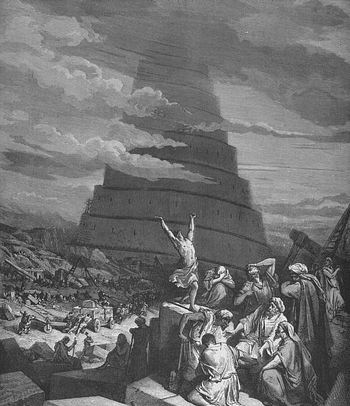
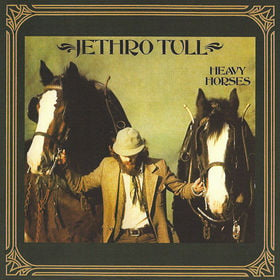
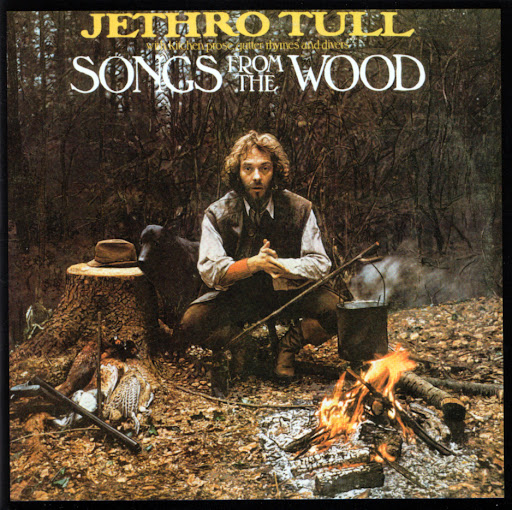
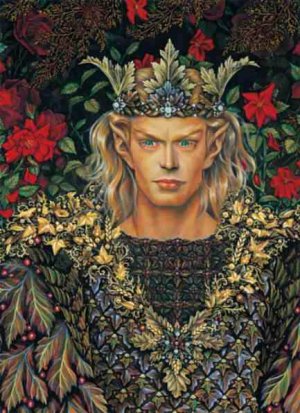
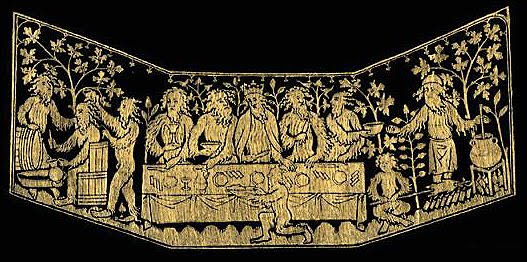
The media likes to talk about the "culture wars" in the United States between politically conservative Christian fundamentalists and politically progressive secularists. However, a far more serious culture war took place in the English past of our anglophone nation. Compared to other European nations, England had used the fact that it was separated from the Continent by a sea, to determine its own cultural climate. So, for instance, it only briefly flirted with the Inquisition during the conservatively-backed usurpation and reign of King Henry IV. When about a century later, King Henry VIII called in the cause of Protestantism to bail him out of his perceived marriage trouble of lacking a male heir (he wanted a divorce in order to remarry), the people of England surged forth with such glee at this liberalization of their Christian faith, that the King was taken quite aback, and began taking measures to quell their enthusiasm: the hard rules would be put back -- it's just that he would be "pope" now, and England, would be his little "papaldom". He wanted his cake and eat it too -- so to speak. Unfortunately, his weak commitment to religious reform, and his harsh punishment of those who took religious reform seriously within his own country, caused many of his reformist-spirited subjects to take matters far more seriously. They studied up on things, and decided to prioritize. Maybe if they really wanted true Protestantism in the country, it would have to be a more sober form of religion. Maybe it could not be a happy thing if it were to truly succeed. There were others, however, who were impatient with this weakly (and shamefully)-founded form of insular quasi-Catholicism, and wanted to get back to being real members of Catholic Christendom again. They got their wish when King Henry died (and then his one sickly Protestant male heir, Edward VI, died) and his eldest daughter, Mary Tudor, became Queen in her own right and restored Catholicism to England. But then she died without an heir, and that left the Protestant Elizabeth Tudor to take up the throne as Queen. Elizabeth I, to her credit, established something that could be called real Protestantism in England, nor was it a harsh brand of Protestantism. Unfortunately, she outlawed the practice of Catholicism, and Catholic subjects found themselves unable to enjoy government positions or run for Parliament. Yet these stubborn English Catholics were kept aflame by the mixed nature of religious change. While simple people were allowed to read the Holy Scriptures translated into the vernacular without fear of being jailed or worse, religious ceremony still had all the pomp of the Old Church. For the more hardened Protestants who had suffered under the bait-and-switch reign of Henry VIII and the repressive Catholic revival of Queen Mary, this was not going far enough, and the covert Catholics made them nervous as 1950s American McCarthyites toward covert communists. These radical Protestants were not yet dominant in national politics, but they were working on the local level to divest the country of all the things they perceived to be "popish remnants and refuges". These included the great peasant festivals of the seasons, which in origin were actually heathen, but which the Medieval Catholic Church had embraced and endowed with a veneer of Christianity (by switching pagan gods for Saints) in order to more expediently convert the Anglo-Saxons and preserve the membership of the English people over the course of generations. These festivals were seasonal in nature, numbering usually eight to sanctify different stages of work in the agrarian calendar, and going under various names from shire to shire -- and these rites were quite riotous (not to mention out-doorsy). They were full of mythical costumes, crude theater, boisterous music, the consuming of lots of ale, and tremendous dancing. These festivals were a wonderful safety valve from the great burdens of life upon which most everyone's life was balanced (and which constantly prowled the back of their minds): the threat of drought or swamping rain that could lead to crop failure and famine, the threat of plague which could literally wipe out half of one's family members, and the fact that winters were cruel and killed you by inches each year of your life (so best to get your last hurrah out in autumn, and then celebrate the fact you were still alive when spring returned). The sobered radical Protestants, however, did not like all these ancient expressions of gaiety and freedom of spirit. They could not worship with the austerity they preferred in the official state Anglican Church, so they came to view these old agrarian festivals as akin to the lapses into paganism by the ancient Hebrews, so common in the Old Testament books concerned with the period from the Exodus until their Babylonian exile. The revelers represented a weakness in the English character to embrace true Protestantism (read here, "Calvinism"). Thus slowly, these festivals began to be outlawed in different locales, or at least tee-tottering between happening one year and not the next because of different political compositions of village councils. Gradually, the festivals began to disappear altogether from places where the radical Protestants began to dominate (by now they were calling themselves "Puritans", because they wanted to "purify" the English Church). By the middle of the next century, their will finally won out: a king was deposed and ritually decapitated, a civil war was fought, a democratic theocracy (then later theocratic despotism) was put into place under Oliver Cromwell, and the "popish festivals" were outlawed everywhere for all time. Of course, in little out-of-the-way places, some pathetic vestiges survived for Victorian folklorists to discover in the more secular and scientific nineteenth century, but by then these rituals were a short way off from receiving the final nails to the coffin of heathendom by the culturally erasing cultural (and urbanizing) force of the Industrial Revolution moving into high gear. So whatever New Age books modern-day Neo-Pagans may depend upon for their heathen revival, they can ultimately thank the Victorians for recording (and thus saving for posterity) the remnant that was once England's Medieval glory before it disappeared utterly from oral memory and rarefied practice. This is to go a long way to explain why WASPs ("White Anglo-Saxon Protestants") have been seen (comparatively speaking) as so boring and self-repressed over the past many generations. And yet, the native English had only been this way for a relatively short span of their total cultural existence. Finally (and it did not take much), at least some of the Puritan legacy was overthrown in the late nineteen-fifties and certainly by the nineteen-sixties, when English teenagers discovered African American blues-music and African-American dominated and/or rooted Rock and Roll music. These teenagers became musicians themselves of these forms in their own right, and liberated their generation from social-staidness. They got everyone dancing and hooting again like in the old peasant festivals of yore, but now you could kick up your heals anytime of the year! At first they called this English brand of wild music "R & B" (for "Rhythm and Blues"), and by the end of the sixties, it had become something so much its own, that they were referring to it simply as "Rock". As it developed in the seventies, Rock was freely absorbing more elements into its vertiginous energy, including classical, jazz, and yes, "traditional folk music". People began raiding those old songbooks of such ballads that had managed to be taken down by eighteenth century antiquarians and nineteenth century Romantics, which otherwise the Puritans had tried to kill off for being "heathen hymns" and "devil's verses". English Folk Rock took off in this milieu of hybrid-forms of popular music. A beautiful culmination of this musical subgenre arose among the members of the rock group, Jethro Tull, whose leader, Ian Anderson, chiefly composed the music and lyrics of a tremendous folk rock album that came out in 1977, which the group entitled, Songs from the Wood. The album was a celebration of the group's removal from the urban scene (which was being taken over by the musically reactionary Punk movement) and their happy resettlement in the beautiful English countryside. The music of this album may be one of the truest evocations in our modern day of what those peasant festivals sounded like in terms of creative energy and passion, not to mention their inspiration in the wellspring of Nature and Myth. This is no timid, twilit, melancholy, nostalgic reaching back. This is the RIOTOUS ENGLISH PEASANT REINCARNATED IN ALL HIS AND HER BEAUTIFUL WICKEDNESS, JOY AND STRENGTH! Go out and buy SONGS FROM THE WOOD by JETHRO TULL; it has been digitally remastered and is available through Chrysalis Records. Here acoustic, electric, and electronic instrumentation are perfectly balanced, and the vocals, both solo and harmonic are wonderful. As for the the lyrics, they lick your brain like the deft and speedish tongue of a wild butterfly! Well, though there be those who say that commercialism is fundamentally evil, I say that putting a blogger in the stocks for promoting capitalism is like telling a Medieval Peasant he needs to stop dancing and start smoking a pipe instead! Thank you for reading this little lecture in English history and of how the English got their groove back! Now follow the advice of this tagged-on review and buy the album!

Saturday, March 27, 2010
Putting the Cart Before the Horse
The National Aeronautics and Space Administration has big dreams about one day making the planet Mars a habitable planet. I must admit I am fascinated with our fellow planet, which shows evidence that it once had rivers, life, and a breathable atmosphere. The theoretical process whereby a dead and frigid desert planet with water-ice poles might be ogiven an atmosphere so that organic life could (once again?) be supported is called "terra-forming". The word "terra", of course, comes from the Latin word for "Earth". So, we will make it like our own planet. Scientists have carefully outlined all the progressive stages whereby this might be accomplished. It seemingly requires only the concerted wherewithal on the part of the human race to accomplish this, and in a century or so, Mars might be made a living planet (perhaps for the second time in its existence). Of course, for such a project to succeed, our own planet would have to enjoy true political unity, full economic, technological and scientific cooperation, and be on top of alternative energies in a dedicated and developed form. And then, of course, the project would run into the trillions and trillions of dollars over the ensuing decades. Yet the talk of this project is so palpably enthusiastic in the slew of documentaries that come out on the United States Space Program and extra-planetary science that it seems to be a matter more seriously considered than the will to save our own planet, which is the hidden, unacknowledged and absolutely critical factor that must be accomplished before we can even truly (and ethically) consider performing an act of technological resuscitation/revivification/necromancy on the Red Planet. In the meantime we have political parties, pundits, corporations and organizations that claim that Global Warming is a hoax. However, the longer we drag our heels on this matter, the closer we get in developing a process I call "Marti-forming". The adjective-forming stem of "Mars" is "marti-"; for instance, the ancient Romans called their military practice field "Campus Martius", or, "The Field of the God of War". As we heat up our planet with the unrestrained burning of fossil fuels, marginal land becomes desert, arable land becomes marginal land, rivers and lakes dry up, and it keeps progressing. It is happening as we speak, and people who once could grow crops and graze livestock are starving in newly made wastelands, or they are fleeing to cities, not finding work, and starving there. And wars are being waged over the dwindling arable and water-fed land, whatever ideological reasons they may overtly give for their warfare. S0, while we dream and plan (and even read epic science fiction novels about making Mars a green planet) we are destroying our own. If we don't turn off the oil tap on greed, if we don't stop leveling mountains for coal, we are going to "marti-form" our planet. And then, there will be no more talk about trying to "terra-form" Mars. All our bold dreams will have dried up along with our own dear and precious parent, Mother Earth.
Sunday, March 14, 2010
Welcome to My Preserve
This is my nature preserve of the mind. Here there are no all-terrain-vehicles, no loud-mouthed Tea Partiers, no global warming debunkers, no gun-toting militia racists, no fascists pretending to be conservative populists, no clearcutting lumber companies, no real estate developers, no unregulated mining companies, no watercourse-diverters, no mountain-top removers, no industrial waste spewers, no pesticide pilots, no fossil-fuel entrepreneurs. There's a big sign posted every twenty paces for all those rogues that says: KEEP OUT/PRIVATE PROPERTY/NO HUNTING/NO DUMPING/NO CUTTING/NO LOGGING/NO SPRAYING/NO TEARING UP THE FOREST FLOOR/NO TURNING THE MEADOWS INTO A MUDDY CROSSHATCH.
Then there is my sign of welcome, which is posted between my ethereal eyes, and it is situated at the one proper entrance to the preserve. From there other paths branch off but curl gradually inward to form a labyrinth. That single sign reads: WELCOME ALL WHO LOVE THE WORLD AS GOD OR GAIA GAVE IT TO US. The world within should prove welcome to a vast throng of sound-minded people: hikers, campers, herbalists, bird-watchers, wild-flower enthusiasts, butterfly-seekers, tree-lovers, conservationists, ecologists, naturalists, botanists, zoologists, entomologists, mycologists, photographers, freshwater biologists, painters, poets, writers, progressive thinkers and activists, mothers, children, fathers, brothers, sisters, cousins, uncles, aunts, companions, husbands, wives, life-partners, heterosexuals, homosexuals, asexuals, spiritual people, natural people, honest people, people who remember their own humanity and that others are human beings and not things.
In this metaphysical preserve, which you may technically call a blog, there lives the untrammeled idea of justice for the natural world and those who remember they belong to it.
Then there is my sign of welcome, which is posted between my ethereal eyes, and it is situated at the one proper entrance to the preserve. From there other paths branch off but curl gradually inward to form a labyrinth. That single sign reads: WELCOME ALL WHO LOVE THE WORLD AS GOD OR GAIA GAVE IT TO US. The world within should prove welcome to a vast throng of sound-minded people: hikers, campers, herbalists, bird-watchers, wild-flower enthusiasts, butterfly-seekers, tree-lovers, conservationists, ecologists, naturalists, botanists, zoologists, entomologists, mycologists, photographers, freshwater biologists, painters, poets, writers, progressive thinkers and activists, mothers, children, fathers, brothers, sisters, cousins, uncles, aunts, companions, husbands, wives, life-partners, heterosexuals, homosexuals, asexuals, spiritual people, natural people, honest people, people who remember their own humanity and that others are human beings and not things.
In this metaphysical preserve, which you may technically call a blog, there lives the untrammeled idea of justice for the natural world and those who remember they belong to it.
Friday, March 12, 2010
Why the Impala?
When one peruses the junk shops, pawn shops, antique shops, and now even museums of the popular arts, in any country of the so-called Western World, the 21st century browser/visitor often encounters an interestingly recurrent decorative motif, chiefly from the 1920s: the figure or image of a southern African species of antelope, called the impala. It is found in blown glass, brasswork, carved wood, cast bronze, carved stone, in bas reliefs and intaglio, on the handles of canes, as bookends, as the bodies or on glass shades of lamps, as table center-pieces, and decorating cases, chests and intimate containers of the boudoir, all of it running in quality from the carnival trophy to the Cartier masterpiece. As to why this animal should have struck a chord with Westerners in that era has never been sufficiently explained beyond the mere aesthetic analyses of Art Deco theoreticians of art history. However the image of the impala might have agreed in form with the general cultural milieu of decorative trends, I have a special hunch about why this creature in particular resonated with the spirits of everyone from the working class to the elite. The 1920s was when Westerners began to dare take deep soulful breaths again. During the preceding decade of the 'teens, a four-year war (1914-1918) had been fought (i.e., WWI) in which 15 million people had died (both civilian and military). Then the Great Influenza Pandemic hit (1918-1920) killing possibly as much as another 50 million people in Western nations alone. All this death shook people to their core of tolerance, and it was a major slap in the face of the optimism that had dominated Western Civilization for a century, born of decades of unimpeded scientific and technological advancements. People were dismayed that all that progress had largely culminated in the lethal facilitation of a scale of warfare never before known to human history. Not surprisingly, artists, craftspeople, and folk just wishing to create a happy domestic refuge turned to simple embodiments of nature, of which the impala was one of the most popular. So what might this creature stand for as a symbol to those people living (already) some 90 years ago from where we now stand? In nature, the impala is one of the most beautiful animals to behold, possessing an anatomical grace of organic design and movement that is nearly matchless across the animal world, and this creature obtains levels of speed and agility that, by comparison, make even the most athletically accomplished human beings de facto "slugs" in terms of our own optimal physical accomplishments. And yet, the impala is the most vulnerable and preferred prey of the hunting beasts sharing its environment, every stripe of carnivore from jackals to cheetahs. In essence then, the impala is fragile beauty, and I think that is the touchstone of meaning that moved people's psyches back in the "retreat-to-dreamland-to-lick-our-wounds" years of the 1920s. I wonder what animal strikes the most touching chord in us now?
Thursday, March 4, 2010
For the Record
Well, there are many nowadays who say the old lease is up on Planet Earth, and there will be evictions before a new rate is calculated. The landlord is variously characterized as God, Extraterrestrial Aliens or Mother Nature herself. Incredibly, the vast majority of people in several faith traditions are hoping they will be physically delivered from Planet Earth, and taken to some realm that truly suits their tastes. I do not deny that existence here is difficult, but we must own up to the fact that much of what makes existence difficult is the callousness and brutality of our fellow tenants. If we might prolong the conceit of this essay of the Earth being like a great house, we must consider that we share rooms with people who behave like drunken louts bashing the place to bits. However, these rapacious types never seem to lack for the rent money, or money to smooth over ill feelings about damages, so their behavior is never corrected. Then there are the rest of us, who are constantly worrying when one of these half-mad fellow boarders will decide to knock out a protective wall, vent in some un-breathable gas, pipe in some un-potable liquid, and make our portion of the house unlivable. Some of us are constantly trying to paint over the ugliness with a bit of sanity-preserving decoration, or work laboriously and skillfully to preserve the beauty that remains, or preserve the sturdiness of the dwelling against the threats of the stubbornly careless, or race to repair the endless round of damages committed by our drunken roommates. Then there are those who try to get past the symptoms and go to the root of the problem by fostering respect and good feeling between the various tenants to cure people of mindless misuse of the structure. Yet there are constantly insane rages from those whose selfish and intrusive addictions for wealth and power cause them to lapse in their consideration for this house we must share, thus often undoing the good work done in far less time that it took to accomplish such good renovations. And now we've got many of the roomers who have just stopped thinking about the place they're standing in, choosing instead to wonder and worry in a state of mental paralysis as to when the absentee landlord is going to show up in person, instead of just collecting the rent by mail. Some ask, why this landlord built such a place for us that once was so beautiful when we first took up residence, but has shown itself to be so fragile at the hands of those without the capacity for lasting sentiment. Will these wreckers be punished, or were we all never meant to really care about this our temporary abode, but only that better abode promised to us after our tenancy has expired? I think that there is indeed a happier abode, but that the one we share right now holds some true reflection of it, however imperfect this immediate habitation may be. There is so much that is beautiful in this world, running in a continuum from the aesthetically sensuous to the aesthetically moral. That such nourishing qualities exist at all is indicative not only that there must be a place where these qualities better thrive, but also that there is real virtue in our planet itself that should not be discarded, despite the competing and disruptive forces of unraveling cruelty, moral ugliness and purposeful blighting of living environments. The cosmic connection in our present world to a more perfect future home for the soul (however tenuous) means that Mother Earth deserves our respect and love and protection. In so doing we may learn to better love and respect our fellow beings with whom we share this place, simultaneously teaching them to properly value this family dwelling we have all been given in this life. How might we ever be worthy of a heaven if we turn this once lush planet into a desert? If the cosmic landlord or landlady does come to inspect this place for a reassessment, could such an owner be at all pleased that we might have turned his or her property into an ash heap? For the record, I love this place we call Planet Earth in its natural state and in the healthy modifications we make of it when we follow our natural and sound predisposition of simian interdependence and fellowship. On the other hand, there are many who do not like this planet, nor the compassionate instincts that belong to our natural evolutionary heritage as a branch of the Family of Great Apes. Perhaps these others would prefer the sulfuric hells or blanched wastelands that are the only alternative types of real estate up for offer among the other planets in our Solar system? It must be so that their tastes run thus, for soon the Earth will be like one of those worlds, if we do not stop the hell-bent remodeling of our power-intoxicated roommates.
Tuesday, March 2, 2010
The Many Faces of Being
If this blog were a poem, it would be "Helpstone", by John Clare. If it were a piece of classical music, it would be "L'Apres Midi du Faun", by Claude Debussy. If it were a painting, it would be "Wanderer Above the Sea of Fog", by Caspar David Friedrich. If it were a children's book, it would be "The Lorax", by Dr. Seuss. If it were a rock song, it would be "Apeman", by The Kinks. It if were a movie, it would be "The Emerald Forest", directed by John Boorman. If it were a pop song, it would be "Rocky Mountain High", by John Denver. If it were a sermon, it would be the Tao te Ching by Lao Tzu. If it were a folksong, it would be "Sumer is Icumen In", by an anonymous Middle English minstrel. If it were an essay, it would be "Walking" by Henry David Thoreau. It if were a parable it would be "The Lilies of the Field" by Yeshua ben Maria. If it were a memoir, it would be Never Cry Wolf, by Farley Mowat. It if were a solemn compact, it would be based on the speech given by Chief Seattle on March 11, 1854. It it were a novel, it would be Mythago Wood, by Robert Holdstock. It if were a folktale, it would be the ORIGINAL (heathen) version of "One Tree Hill", featuring three dryads and their soul-trees, as collected in A Dictionary of British Folktales in the English Language, edited by Katharine Mary Briggs. If it were a hymn, it would be "Jerusalem", by William Blake. If it were a songbird it would be a wood thrush. If it were a religion, it would be the pantheism of the Romantic Movement. If it were two lovers, it would be Richard Plantagenet and Anne of Bohemia. And if it were a place, it would be and could only be Appalachia, for Sherwood was lost long ago.
Subscribe to:
Comments (Atom)