Thursday, July 22, 2010
Imagination
When we are children our imaginations flow as freely as our curiosity, and the two of them reinforce each other. Happiness in adulthood relies in part on imagination, as well as that other thing that comes naturally to us first as children: love. Love is the awakener, healer, restorer and expander of our spirits. With the loving attitude of respect, curiosity delves the mysteries and makes us a grow in mind and reality. But the fruits of curiosity and love cannot be fully actualized without imagination. Imagination helps us to understand others in a dynamic rather than nominal way, and it helps us make a better society, both socially and materially. The great irony of the era in which we now live is that the realization of imagination is completely lacking among those who have the power and means to affect the common good. The monetary resources that can make our people and civilization shine are trapped by those who make no constructive use of it. A massive concentration of capital under the control of the few who would rather just hoard it, who live lives higher than most can even conceive, and they (along with future generations of their families into the imperceptible horizons of time) will only ever need a fraction of this immense wealth to see to their every necessity, fancy, notion and whim. They could use this huge surplus of wealth to fund ec0nomic rehabilitation here and abroad through useful projects of life ameliorating research, dynamic education and mentorship programs, cultural exchange and development, life-enhancing physical structures, green energy. infrastructures of humane utility and transportation, which could together easily pull our world out of economic decline, civil strife, urban decay, political agony. Please remember we are talking about billions of dolllars, and collectively as a class adding up to trillions. Think of what it would take to make any given social project or service happen and operate at truly effective and optimal levels. Most would amount only to several millions of dollars, and a billion is a million millions! A visitor from another planet would think that the wealthy and powerful are utter fools to have as their highest aspiration to bleed their societies dry and sit on their piles of money, monitoring its accumulation as electronic blips on a computer screen with moronic avidity. Is that any way to run a world that is not headed for termination? Somehow, somewhere, at some point in their lives, the wealthy of our nation traded their imaginations for the very flat intelligence of bestial cunning. The rest is just the fumes of the dragon's lair.

Friday, July 2, 2010
What Appeals to and What Preys Upon the Emergent Popular Mind
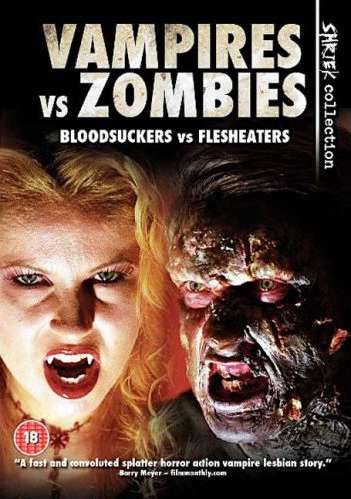
A co-worker of mine who has a master’s degree in Art once told me that trends in the creative expressions of culture are symptomatic of the social psychology of that culture. As a librarian, I come into contact with all sorts of media, including juvenile, young adult and adult [comprehension] materials that betray a growing obsession with zombies and vampires. At first one could easily ignore such things as just a couple of the myriad derivative expressions of American culture that get recycled ad nauseam. But after the past few years, these two particular “expressions” have obviously revealed themselves as “obsessions”; they proliferate comics, movies, and novels to such a degree that you would have to be a very dull-minded librarian indeed not to conclude that there is something very peculiar about it all. I have my own theory about this trend, and it is guided by my colleague’s insight. This is more than just some faddish diversion that will soon be replaced by another. Zombies and vampires have been a part of American popular culture for some time now, but I have noticed that there have been definite phases or incarnations of these fantasy figures. Vampires were originally loathsome in folklore, being dead souls who refused to abandon their hideously-animated corpses, but through black magical means would sustain themselves by murdering and feeding off the blood of the living to maintain their limbo-like existence. Later these rough edges of folklore began to receive a polish, turning vampires, male and female, into figures of forbidden sexuality, feeding off the blood of the living but not always killing them – instead welcoming them into the fold of a glamorously cursed existence of undeath through an eroticized form of parasitic rite. And yet, vampire stories, whether in the cinema or in books, were just one of an array of horrific figures to play upon the Freudian subconscious and divert the imagination. Zombies have undergone just as serious an evolution in popular culture, appearing first merely as people who have unknowingly ingested a “voodoo” serum that robs them of their independent will and makes them obedient slaves of their voodoo-masters. This was the zombie of the ‘30s and ‘40s. Then in the late ‘60s and early ‘70s, zombies became people infected with some sort of microbe or perhaps radioactive mutation that made them a violent horde of unreasoning destroyers of human life; this second stage in the myth obviously played upon societal fears that the more riotous aspects of the emergent counterculture would undermine the traditional social fabric of America. Today zombies and vampires are again strangely altered. Vampires are now wholly "sympathetic figures, having become the most sexually and heroically alluring characters in the popular imagination, bar none. They are in the mainstream romance novels now, and we need say nothing of young adult novels. In the meantime, zombies now are presented in science fiction as an inevitable and omnipresent threat in our near future. They will enfilade the remnants of civilization and those privileged to have escaped the contagion. Though now presented as generally cannibalistic, their delicacy is human brains. If one can see the mythic argument that these two figures play upon in the imaginations of people (especially those between 13 and 30) more now than ever, it seems quite reasonable, even imperative, that some form of constructive analysis occur, as these are morbid obsessions, however entertainingly "refined" they may currently be as escapist forms of dark fantasy. This is not to pursue a moralistic line on what people choose to entertain themselves, but to ask objectively, why these things and not something else? From my vantage point, such peculiar interests have risen to a level interpretable by social psychology. So what in society might have bearing on these engrossing subgenres? If you look at American culture today, whatever whitewash is given, the highly successful people are those who engage on some extreme level of economic exploitation of the environment itself and the human labor to make capital profitable. There is very little reciprocity in the economic arrangements we find today. And our natural environment, reduced by mountain-top-removal coal-extraction and fast-food/junk-mart strip development is becoming as wan as the complexion of the vampire's victim. The masters have crushed and undermined the powers of collective bargaining. The wealthy and powerful are a small elite, and their exquisite reputation depends on how much they can extract from the land and human beings without cost to themselves. The males among these folk often have trophy wives and mistresses, and whether male or female, they get their way by manipulating the political and judicial systems to favor their business interests, not to mention their free hand with media spin. Anyone who does not play this game and play it well is a "no-account" and may become one of their victims (if not by being reduced to wage slavery then at least through economic exclusion through their policy of investing minimally in the domestic economy). The message is there for young people to see every day in the “information” media; the advertisements using male and female models is intensely aristocratic in its packaging and context, and actors and actresses mimic the power-culture in their high-profile daily lives and in their dramatic roles in movies. This “sexy” powerful elite of our society who take and give nothing back but their superficial sheen have their arguable psychological avatars among the fantasy figures of the vampires, a rare and elite group, presented in contemporary media as being appealingly cursed by their youthful immortality, which depends on the blood (the essence of vitality) of those whom they make their victims. The zombies, on the other hand, simply embody the anxieties of such an exclusive culture both among the high and low in its society: more and more of us find our work has been replaced by wage-slaves in the Developing World -- people treated as "subhuman" and denatured of their human rights. Those who have secure remunerative employment in the game as it is now played know deep down how fragile their position is, for there are monthly more and more people who are becoming unemployed or under-employed. Many people have given up trying to find even a slender slice amidst all the "reserved wedges" of the economic pie. What will become of these hordes of disenfranchised people? What will such vulnerable people do (or what will become of them in the social scheme) if no real hope is given to them by the “in club” of financial vampires? What degradations of human identity will occur among them as they are increasingly shunted into undesirable slums where drugs and drug-dealing form the only remunerative economy? The brains that have concocted such a hell would definitely be a delicacy that these unwilling zombies would (subconsciously) wish to devour in revenge. But there is no need for there to be socio-economic "zombies" nor "vampires" in our society. Give people work that will enable them to enjoy a humane existence, and they can be citizens again. Invest a chunk from otherwise uselessly enormous profits to develop the national economy, and vampirism may be replaced by healthy spirituality. In this way capitalism can humanely rid itself of the zombies of its guilty conscience. Humanity will flourish again if it rids itself of such parasitism.
Subscribe to:
Comments (Atom)