Tuesday, June 29, 2010
Freedom Can Be a State of Being
Just as there are those who have evolved culturally, politically, psychically to hold the Earth in contempt, there are those of us who have evolved otherwise. Though fear and despair may weaken our connection to what we love, spiritual discipline may strengthen our connection to each other and this precious world that is our own special home. If we let our love flow freely, so may we maintain the freedom of the Earth from those who would destroy it. This beautiful world is all that we have. It matters not there may be other habitable worlds many light years away. Even if we could reach them, non would have the same character of beauty as this one. This must be as true as the fact that each of us, however many superficial similarities we may bear to one another, is observably a unique being to the lights of those sensitive and patient enough to listen and perceive. We must face the fact that we share this world with fellow members of our species who are motivated by set of values that are utterly alien to the good of our world. It is a shame that this must be so, but we must not seek their mercy, for they will not give it. They are blind. We must instead win the support of those who would love the Earth as we do, if they were not trapped by confusion and fear. The expression of freedom, especially love, is one of the most joyous acts of being, and it is infectious, because it is the natural inclination of any spirit not absolutely weighted down by darkness. Express your love of living things, and others will join you. One by one, as a composite being, like a great jelly fish, we might act to save this Earth from under the grasping hands of those who bear it no good will. We are born of this world, nourished by this world, shaped by this world. Let us act as though we are grateful, and the Earth will respond.

Saturday, June 26, 2010
Meddling vs Nurturing
These days those who speak most vociferously about liberty seem not to know what that word means. When one looks at the actions of such people, the following fact emerges: these people seem to think that liberty means the right to interfere with the liberty of others. In other words they have decided that they (unlike pettier criminals) should not have their actions ethically regulated by a governing body, that they are somehow above what is just for the greater good. I would like to suggest an alternative view of liberty: liberty is the freedom to grow as a human being without doing harm to others, or exacting a cost upon the well-being of others. Thousands (and later millions) of people fled Europe to Canada and the United States over the last few centuries because they were fleeing disenfranchisement and/or persecution. Here, by varying and increasing degrees, immigrants of different ethnic groups and their descendants could worship or not worship as they chose, access public education, enjoy public parks, start businesses, enter higher education, pursue professional careers. And yet these freedoms were always overshadowed by the presence of racial slavery, and later Jim Crow Laws, and new permutations of educational, entrepreneurial and job discrimination. This cancer, never obliterated by even legal reforms and social education, has grown to poison the well of liberty for people of all "races". We are recycling the shackles that our forebears escaped when they fled other parts of the world to come here: economic disenfranchisement, religious prejudice, severe social stratification, unfettered elite power, reduced rights of the small farmer and entrepreneur, financially onerous licensing, oligarchic public codes, political-corporate cronyism, dismissal of social justice as a legal issue in jurisprudence, destruction of our public spaces of recreation and restfulness, hyper-militarism, the de facto indifference of legislators to the interests of he poor and the middle class. In the meantime, the places that were once sources of such oppression are now what America had once been progressing toward: the governments and citizens of Europe and parts of Asia promote and protect a humane existence for all: the freedom to be spiritual in your own way, the freedom to be able to take care of your infants and children without interference from onerous and unreasonable work responsibilities or constraints, the freedom from fearing the loss of shelter, medical care, adequate nourishment or employment, the freedom to speak truth to power, the freedom to be artistic according to one's own lights, the freedom of academia to discuss the issues of the world without threat of dismissal from the influence of special interest groups, the freedom to financially afford higher education and specialized training, the freedom to enjoy quality public education in which critical thinking and imagination are espoused, the freedom to access all pertinent information on serious global, ecological and human issues, the freedom to enjoy affordable pervasive public transportation, the freedom from discrimination in employment because of age, gender, religion. The "liberty" of a society not to care for its members is the destruction of real freedom. It leads to the complete derangement of society, cultural meltdown and the end of civilization (read your history books, folks!). What is especially sad is that this derangement in the human species is spilling over into the psychological equilibrium of the animal world: marginal wilderness lands are being seized and desperate elephants denied their food sources are now rampaging through encroaching human settlements, the denizens of housing developments that have erased forest and meadows have been attacked by swarms of birds. What is worse is that human greed for real estate is driving animals of the same species (for example, lions and chimpanzees) to begin attacking and killing each other because of severely reduced environments for food resources. The old saying "freedom isn't free" is right, but the price of freedom is not always purchased with violence in foreign wars or hounding people with increased armies of law enforcement officers and private security. Our more precious liberties are won and protected by a fully-empowered government that represents the collective will of those who cannot otherwise protect themselves and freely exercise the responsible liberties that make for a humanly decent life. The wealthy can always buy their freedom and the liberty of their will, but democracy was created to extend the freedoms the wealthy can take for granted to those of humble means. When there is true liberty for all, only the petty sociopaths enact crimes. The normal person who can find good work and see proper reward for his or her good work will always choose the honest path rather than the brief self-destructive rewards of materialistic criminality. However, when there is only freedom and access to the necessities and amenities of life for the few, the sociopathic will governs the country, and democracy withers away. So then wither also the ecosystems that are always under the mercy of such an economy of power and privilege.
Tuesday, June 8, 2010
Why Beauty is Good for Us
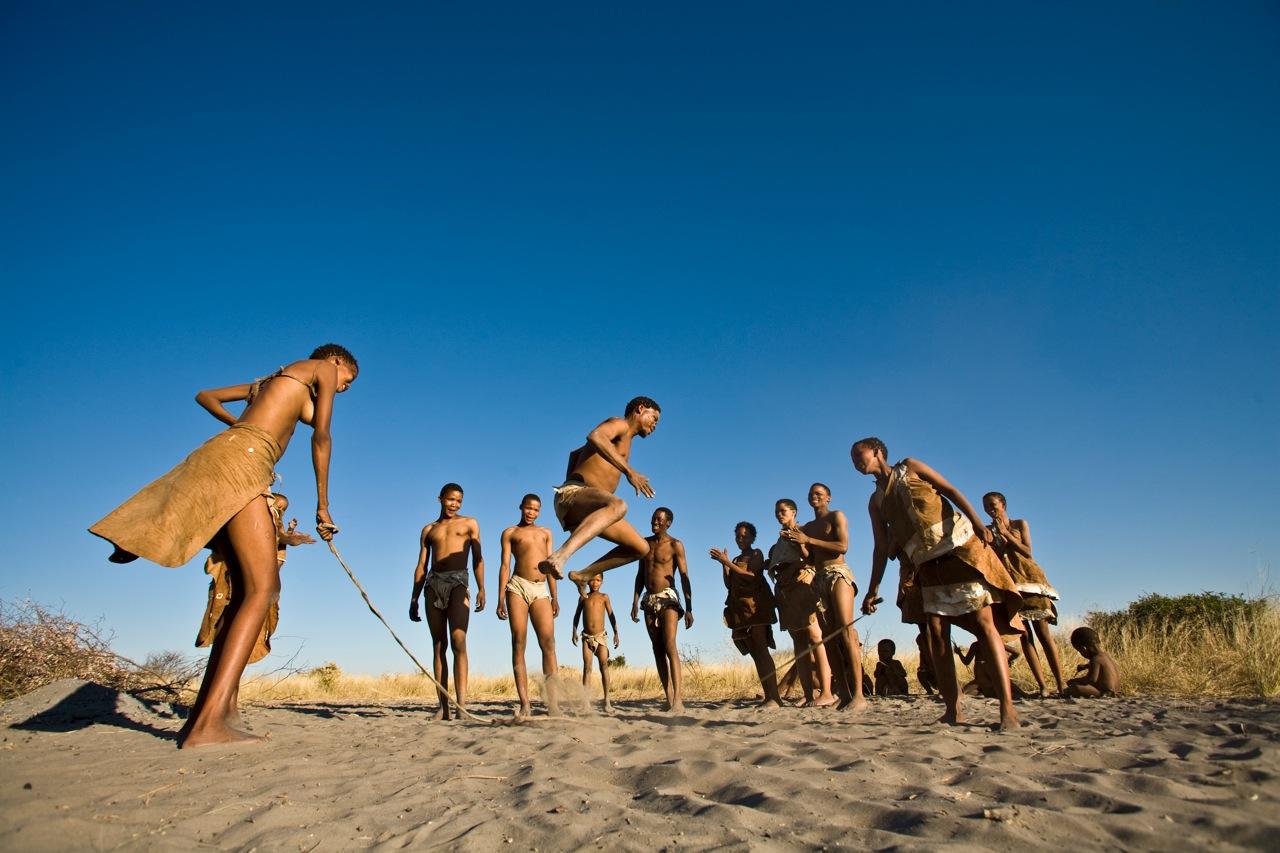
We are drawn to natural beauty by spiritual (or psychological) instinct. We can be culturally trained to ignore or even despise natural beauty, and such training always serves dubious purposes -- usually to encourage or condition people to settle for or endure an ugly existence. I deal not in superficialities here. I'm not talking about beauty as defined in magazines and movies. I also do not confine myself to visual beauty, nor even a single standard of beauty. Beauty can be intellectual as well as physical, sensory as well as imaginative. Art, if it is honest, can be another aspect of what I speak, for if we are in touch with Nature (including that within ourselves), we express Nature. Thought art is technically "artificial", if it is inspired it is not artificial in the sense of being false. There are many people who have been desensitized to beauty, and programmed to fixate on culturally negotiated concepts of beauty that do not uplift the spirit. There are people who can be shown a meadow or a forest or a river passing through a beautiful dale, and they will feel nothing. In cases where the person is not in some way mentally damaged or congenitally wanting, the root cause of this lack of responsiveness may lie in the fact that their culture has trained them to commidify all elements of existence. Material value is all with such people. The training may have begun in childhood through something as simple as physical deprivation from Nature, but surely it has been actively ingrained beginning with adolescence. The concept of Nature as having an intrinsic, independent, even magical value is something emotionally real to children; not only did I experience it as a child, but I have seen it repeatedly occur in children during my adulthood. The divorce of our nature from Nature happens as a consequence of what is presented to us as a "mature" and "realistic" attitude toward the natural world. De-spiritualized societies institutionalize this training. That it is not healthy can be construed not merely from the heedless damage we do to our very living environment in our current age. Conversely, there is also the positive evidence that love and respect for Nature exists on a society-wide level among tribal groups where the psychological health of the entire group remains a priority of survival as much as the acquisition of material necessities for group success. The divorce from Nature seems to coincide in the evolution of civilization at the same time that ideologues encourage a divorce from the natural affinities between human beings that otherwise naturally arise out of sharing a common social purpose. Just as human societies begin to parasitize Nature, one can detect parasitization of certain social groups upon others within that society. Where one finds a respect for Nature and a responsible use of its gifts. one finds a similar respect for and just compensation toward the fellow members of the society so collectively engaged. In such circumstances one also inevitably discovers a deep appreciation of Nature for its quality of beauty, and personal artistic evocations of that appreciation accompany this -- though never of one single standard from one such culture or person to another, for Nature itself is infinitely complex in its beauty. We must first teach our children to not be ashamed of their love of Nature's beauty (which lies in its movements, sounds and scents, as well as appearance), and other more broadly beneficial behaviors will inevitably follow. From the seed of a child's simple love of Nature's beauty will follow the positive and informed associations necessary for a mature sponsoring of our biosphere's survival.
Wednesday, June 2, 2010
In Finland You Will Find It
I have had the good fortune to have twice visited the country of Finland, visiting in particular a friend my wife had made years before when she spent her senior year of high school as a Rotary International Exchange Student in Helsinki. Her lovely friend, an educator of children and master of children's musical theater, now dwells in the nearby town of Lohja with a delightful family of two bright sons, two gifted daughters, along with a musically-talented, quiet and good-hearted husband. On both visits, I also enjoyed the company of various members of the extended family of this Finnish couple, going with them into the breathtaking wooded lake country. In J. R. R. Tolkien's Lord of the Rings, the adventuring fellowship of heroes find a brief but restorative respite among the Sylvan Elves and their queen, Galadriel. The love the Sylvan Elves had for their land -- both what grew upon it and the fellow beings who took their sustenance from it -- is a collective love that stands in good mythic comparison to the social reality I came to understand on my two visits to Finland in 2005 and 2006. The Finnish people, comprising the Saami in the Far North, and the Suomi in the southerly provinces, have lived in their part of Scandinavia for literally thousands of years. Other than a highly respected Swedish minority descended from immigrant settlers during the days of Sweden's rule (the country is legally bilingual in all its signage, product labels and official documents), the majority of the populace do not speak Indo-European languages, but Ural-Altaic languages. The beginning of their limited participation in European Continental civilization began really only in the 1500s, and most of their country (with the exception of its Baltic coastal cities) remained much as it had for untold centuries until the latter part of the nineteenth century. For most of their history as an organized political region they have been either a province of the Kingdom of Sweden or the Empire of Russia. Compared to other European countries, it can be said that, while in intrinsic terms Finland is very old, in modernist terms, this country is very young, even compared to the United States. All this is an introduction to my central point: it is a very unspoiled country both in terms of its natural environment and its people. The citizens I have met there and the individuals I have actually gotten to know communicated to me something wonderfully different in their patriotism: they actually love the land itself for itself and they love each other (all the citizens!) as one great family. This is a spiritual and social depth of connection that is wanting in places where patriotism is all about idolatrous flag-worship, spiritually-bankrupt saber-rattling and religiously protecting the narrow interests of an almighty stock exchange over the well-being of the labor force. There is still a sense of community in Finland like that which was once common in America. Their country is in the northern part of the hemisphere, so they have long dark days in the winter. This can have a depressive effect, so neighbors visit each other for fun social games, sympathetic conversation, storytelling, refreshments and spontaneous jocularity to keep each other's spirits up until the days begin to lengthen again. Their population and capitalist economy is growing, but they are taking pains to preserve what they know to be a rare state of natural pristineness and healthy traditional fellowship in their country. They have fought off Nazi Germans and Soviet Russians with only humble resources, and they would do it again to any other that would despoil their hard-won country and do harm to their modestly spoken, hardy fellow citizens. Global political and business trends seek to shame them for their social welfare state as somehow "backward", and try to shame Finland into paving over their land to make room for invasive globalized business ventures. However, the Finnish people as a whole remain stoutly resistant to these testing claw-swipes on their pride. A simple illustration is their dedication to see to the free university education of any citizen who would stand to benefit from it. To do otherwise is in their minds (as clearly stated to me) tantamount to an abandonment of their children. Collectively, they take care of each other like a big family. People are free to work without fear of how they will take care of themselves when they are too old to work. Young people are free to pursue their studies without fear of how they will manage to pay off their academic debts once they enter the world of professions. I saw very few obese people in Finland. They are hard-working, but they have not yet been deceived by the free market myth that selfish individualism is the only legitimate form of society. In Finland, the less you earn, the less you're taxed; the more you earn, the more you're taxed. People there aspire to achieve creative contributions not greed. Yet none of them ever need fear homelessness due to joblessness, nor being able to afford any form of health care that their well-being might require. In Finland, they have not forgotten that other law of nature that social darwinists and libertarians seem to forget (or ignore): that members of a species do not merely compete to succeed materially; they also take care of each other in order to succeed psychologically -- which is everything! This tradition of mutual care is evident in the remains of even our distant ancestors in the evolutionary tree of the Hominid Family: bones that were lovingly buried and showing signs of handicaps from injuries suffered many years before their deaths; evidence, in short, that when alive, they were taken care of by a group of their fellows. Well, this spirit remains alive, in some places more than others. Finland, I salute you! If Americans would, just as the Finns do toward their own country, learn to actually love the natural living land of America and all the life upon it, including their fellow citizens, imagine the things we could accomplish! For one thing, climate change could be overturned.
Subscribe to:
Comments (Atom)